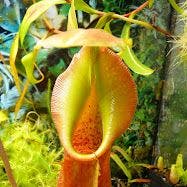
Am I Starving My Nepenthes ampullaria? Fertilizing 101
Nepenthes ampullaria
By the Greg Editorial Team
Feb 09, 2024•4 min read
This article was created with the help of AI so we can cover more plants for you. May contain errors. See one? Report it here.
Nourish your pitcher plant to perfection 🌿 with our fail-safe fertilization secrets!
- Organic vs. Synthetic: Choose based on your Nepenthes' needs.
- NPK & Micronutrients: Essential for pitcher plant health.
- Timing & Signs: Fertilize twice a month in growing season.
Choosing the Right Fertilizer for Your Pitcher Plant
🌱 Organic vs. Synthetic: Which is Best for Nepenthes ampullaria?
Organic fertilizers are like slow-release energy bars for your Nepenthes ampullaria, providing nutrients as they break down. They're the tortoise in the race: steady and sustainable. Synthetic options, on the other hand, are the hare, offering a quick nutrient boost. But remember, too much too fast can lead to nutrient burn.
📊 Understanding NPK Ratios and Micronutrients for Pitcher Plants
The NPK ratio is your plant's dietary label, detailing the balance of nitrogen, phosphorus, and potassium. Think of nitrogen as the muscle-builder, phosphorus as the root-strengthening protein shake, and potassium as the all-around health supplement. But don't overlook the micronutrients; they're the multivitamins for your plant's overall well-being.
🌿 The Lowdown on Foliar Feeding and Root Fertilization
Foliar feeding is like a quick spritz of nutrient mist for your plant's leaves, while root fertilization is a hearty meal served directly to the roots. Both methods have their place, but root fertilization is generally more filling for your Nepenthes ampullaria, ensuring a steady supply of nutrients where it counts.
Timing is Everything: When to Feed Your Nepenthes ampullaria
🌱 Growth Cycle and Seasonal Fertilization Tips
Light levels are your Nepenthes ampullaria's dinner bell. During the growing season, when days are longer, your plant is like a teenager during a growth spurt—hungry and ready to chow down on extra nutrients. This is when you can fertilize with gusto, typically twice a month.
Come winter, the plant's metabolism slows down. It's not the time to pile on the fertilizer buffet. Once a month should suffice, as your plant isn't expending as much energy and can't process the same amount of nutrients.
📊 Reading Your Plant: Signs It's Time to Fertilize
Your Nepenthes ampullaria will tell you when it's time to eat—if you're paying attention. Pitcher production is a tell-tale sign. If your plant is slacking on making new pitchers, it might be hinting for more food. Conversely, a sudden spurt in leaf growth without pitchers can mean it's overfed.
Color is another clue. Pale leaves might signal a cry for more nutrients, while dark green leaves without pitchers suggest you've been a little too generous with the feedings. Keep an eye out for these signs and adjust your fertilization routine accordingly. Remember, it's about finding that sweet spot where your plant is producing pitchers and maintaining a healthy color.
The Fertilization Process: A Step-by-Step Guide
🌿 Mixing and Applying Liquid Fertilizers: Dos and Don'ts
When it comes to liquid fertilizers, think of yourself as a bartender for your Nepenthes ampullaria. The key is to mix a nutrient-rich cocktail that's just right. Start by halving the recommended dosage on the package to avoid overfeeding.
- Dilution is crucial. Imagine you're making a light soup, not a thick gravy.
- After mixing, water the plant thoroughly to help the fertilizer penetrate the soil and reach the roots.
🌱 Using Solid Fertilizers: How to Do It Right
Solid fertilizers require a different approach. They're the slow burners of the nutrient world, releasing food gradually.
- Incorporate them into the soil at the base of your plant, ensuring an even distribution.
- Avoid direct contact with the plant's stem to prevent damage.
Remember, with fertilization, less is often more. Over-enthusiasm can lead to nutrient burn, so always err on the side of caution. Keep an eye on your plant's response and adjust accordingly. Your Nepenthes ampullaria will thank you with vigorous growth and stunning pitchers.
Recognizing and Responding to Fertilization Issues
🌱 Spotting the Signs of Under-Fertilization
Your Nepenthes ampullaria is a bit of a diva when it comes to nutrients. Yellowing leaves or stunted growth are its dramatic way of saying, "Feed me better!" If the pitchers are more lackluster than a B-movie, it's time to reassess your fertilization game plan.
🚫 Dealing with Over-Fertilization: Symptoms and Solutions
Over-fertilization is like giving your plant a triple espresso—it's too much of a good thing. Brown leaf edges and a general look of exhaustion are your plant's way of crying uncle. To fix this, think of flushing the soil as a detox spa for your plant's roots. Remove visible fertilizer, and flush with water to wash away the excess. Remember, this isn't a one-and-done deal; keep an eye out for recovery signs and repeat if necessary.
⚠️ Safety First
This content is for general information and may contain errors, omissions, or outdated details. It is not medical, veterinary advice, or an endorsement of therapeutic claims.
Always consult a qualified healthcare professional before using any plant as food, medicine, or supplement.
Never eat any plant (or feed one to pets) without confirming its identity with at least two trusted sources.
If you suspect poisoning, call Poison Control (800) 222-1222, the Pet Poison Helpline (800) 213-6680, or your local emergency service immediately.
Spotted an error? Please report it here.
Revitalize your Nepenthes ampullaria's growth by leveraging Greg's tailored reminders 🌿 for the perfect fertilization schedule.