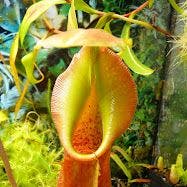
🪰 How Much Should I Water My Nepenthes ampullaria?
Nepenthes ampullaria
By the Greg Editorial Team
Feb 09, 2024•3 min read
This article was created with the help of AI so we can cover more plants for you. May contain errors. See one? Report it here.
Avoid pitcher plant pitfalls 🌿 by mastering the art of watering Nepenthes ampullaria for peak health and growth.
- Seasons dictate watering - more in summer, less in winter.
- 🌧️ Use distilled or rainwater to avoid mineral harm.
- Bottom watering promotes health, avoids pitcher rot.
Nailing the Watering Frequency
💧 Assessing Your Environment
Temperature, humidity, and light exposure are the puppeteers of your Nepenthes ampullaria's thirst. High humidity means less watering; dry air means grab that watering can more often. If your plant's soaking up the sun or sitting in a heated room, it'll need more frequent drinks. A cooler, shadier spot? Less is more.
🌦 Seasonal Watering Adjustments
Summer turns your Nepenthes ampullaria into a hydration fiend, while winter induces a water-conserving hibernation mode. Adjust your watering routine to match the season's ebb and flow. Hot spells? Water more. Cold snaps? Ease up on the aqua.
👀 Observing Plant Cues
Your plant won't send an SOS when it's parched. Keep an eye on the pitchers and soil moisture. Droopy or dry pitchers scream for water, while soggy soil is a no-go. Use the finger test or a moisture meter to gauge the soil's thirst before you water.
The Right Water for Your Pitcher Plant
💧 Why Water Quality Matters
Water quality is not just a detail—it's pivotal for the health of your Nepenthes ampullaria. Minerals and chemicals common in tap water, like fluoride and chlorine, can be detrimental to your plant, potentially leading to leaf yellowing or poor pitcher development.
Choosing Your Water Source
Distilled water is the gold standard for Nepenthes hydration, devoid of the minerals that could harm your plant. Rainwater is a natural alternative, capturing the essence of a plant's native hydration without the additives of municipal water systems. For those with larger collections, investing in a reverse osmosis system could be the key to providing pure water consistently. Avoid using water from softeners or pitchers that may introduce sodium or harbor bacteria. Always remember, the purer the water, the happier your pitcher plant.
Avoiding Watering Pitfalls
🌊 Overwatering Woes
Yellow leaves and soggy soil are the telltale signs of overwatering your Nepenthes ampullaria. If the pitchers start to look more like water balloons, it's a clear signal to cut back on the H2O. To address this, stop watering and let the soil dry out. In severe cases, repotting in fresh, well-draining soil can be a lifesaver. Remember, pots with drainage holes are non-negotiable to prevent waterlogged roots.
🏜️ Underwatering Red Flags
Conversely, if your plant's leaves resemble a crumpled paper bag, it's begging for a drink. Dry soil past the first inch is your cue to water. But don't just flood it; aim for a gentle, thorough soaking. Consistency is key—establish a watering routine that doesn't leave your Nepenthes gasping for moisture or drowning in excess.
Watering Techniques for Thriving Pitchers
💧 Mastering Bottom Watering
Bottom watering, a tray method, ensures your Nepenthes ampullaria gets just the right amount of moisture without the fuss. Fill a tray with water and let your plant's roots do the drinking—think of it as a self-service bar for your green buddy. This technique encourages deep root growth and prevents the soil from becoming too soggy, which is a no-no for these tropical gems.
🍹 Keeping the Pitchers Happy
While your Nepenthes ampullaria loves a good drink, its pitchers are not cocktail glasses. Avoid pouring water directly into them; it's like sending an invitation to rot and fungal infections. Instead, water at the base and let the soil's capillary action quench the plant's thirst. Remember, a happy pitcher is a dry pitcher—inside, at least.
⚠️ Safety First
This content is for general information and may contain errors, omissions, or outdated details. It is not medical, veterinary advice, or an endorsement of therapeutic claims.
Always consult a qualified healthcare professional before using any plant as food, medicine, or supplement.
Never eat any plant (or feed one to pets) without confirming its identity with at least two trusted sources.
If you suspect poisoning, call Poison Control (800) 222-1222, the Pet Poison Helpline (800) 213-6680, or your local emergency service immediately.
Spotted an error? Please report it here.
Keep your Nepenthes ampullaria perfectly hydrated 💧 with Greg's reminders, ensuring you adjust to every season's whim without the guesswork.