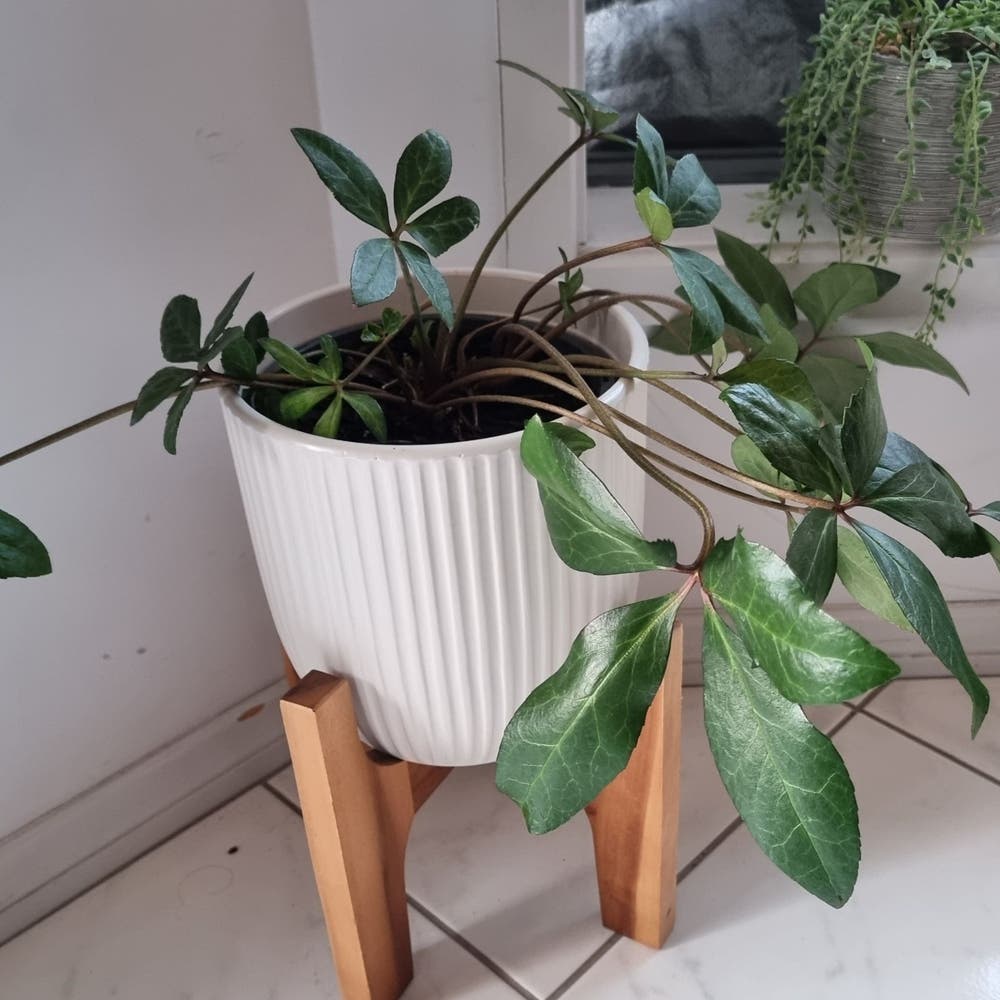
Why Are My Lenten Rose Leaves Curling?
Helleborus orientalis
By the Greg Editorial Team
Jun 18, 2024•4 min read
This article was created with the help of AI so we can cover more plants for you. May contain errors. See one? Report it here.
Unravel the mystery of curling Lenten Rose leaves and revive your plant's splendor 🌿🔍!
- Early signs of trouble: Lenten Rose leaf curling signals potential issues.
- 🌱 Balance watering and soil health to prevent and fix curling.
- Prune and monitor regularly to maintain Lenten Rose health and prevent disease.
Spotting the Signs of Leaf Curling
🌱 Early Indicators
Initial signs of leaf curling in Lenten Rose may not scream "emergency," but they're a plant's whisper for help. You might spot leaves subtly turning inwards, a prelude to more dramatic contortions if ignored.
🚩 Advanced Symptoms
When leaf curling escalates, it's like the plant's waving a flag, begging for intervention. Leaves may exhibit necrotic blotches, akin to a distress beacon of dead tissue. Discoloration often joins the fray, with leaves donning a sickly yellow or ominous brown. These are not just aesthetic issues; they're symptoms of a potentially deeper problem that needs immediate attention.

Common Culprits Behind Curling Leaves
💧 Thirsty Roots or Drowning Plants?
Watering is a balancing act. Too little, and your Lenten Rose's leaves curl upwards, a silent plea for hydration. Too much, and they droop downwards, signaling a soggy, oxygen-starved root system. Consistency is crucial; erratic watering schedules can send your plant into a state of stress, manifesting in curled leaves.
🐜 Uninvited Guests: Pests and Diseases
Pests and diseases are like uninvited guests at a dinner party—they wreak havoc. Aphids, spider mites, and fungal infections can cause your Lenten Rose leaves to curl as a distress signal. Look for fine webs, yellow speckling, or the presence of tiny insects. These are the red flags that it's time for pest control.
When the Soil Just Isn't Right
Soil conditions are the bedrock of plant health. If your Lenten Rose is planted in soil that's too dense, it may hold water like a sponge, leading to root rot. Conversely, soil that's too sandy might drain too quickly, leaving your plant's roots gasping for moisture. Check for compaction and ensure the soil is rich in organic matter for optimal health.

Turning Over a New Leaf: Fixing the Curl
🌱 Pruning with Purpose
Pruning isn't just about playing garden stylist; it's crucial for the health of your Lenten Rose. Snip off those curled leaves to stop any potential spread of disease and to signal your plant to focus on fresh, flat growth. Remember, it's a delicate operation—more like trimming split ends than shearing a sheep.
💧 Adjusting Your Watering Ways
Watering is an art form, and your Lenten Rose is the canvas. If leaves are curling, it's time to reassess your technique. Let the soil dry out a bit before you water again. Think of it as the plant's thirst-quenching happy hour. Consistency is key—too much and you'll drown it, too little and you'll parch it. Find that watering sweet spot.
🐜 Evicting Pests and Treating Diseases
Pests and diseases are like uninvited party crashers. If they're the reason behind the curl, show them the door with targeted treatments. For fungal foes, consider a fungicide. For bugs that bug, insecticidal soap might just be your new best friend. Always read labels and apply carefully—it's about being a bouncer for bugs, not going scorched earth on your garden.

Keeping Leaves Happy and Flat
🛡️ Shielding from Stress
Bright, indirect light is your Lenten Rose's best friend; too much sun is its nemesis. Think of a shade cloth as sunscreen for your plant during those peak UV hours. Temperature stability is key—no sudden chills or heat waves, please. Keep your plant away from drafty windows and avoid placing it near heat sources that could cause dramatic temperature shifts.
👩🌾 Ongoing Vigilance
Like a plant detective, keep an eye on your Lenten Rose's environment. Regular monitoring is non-negotiable. Watch for signs of stress in leaf color and texture—they're your plant's way of waving a red flag. And when it comes to watering, think Goldilocks: not too much, not too little, but just right. Adjust your care with the seasons—less water in winter, more shade in summer. Spot pests? Show them the door, pronto. Your vigilance will keep those leaves flat and fabulous.
⚠️ Safety First
This content is for general information and may contain errors, omissions, or outdated details. It is not medical, veterinary advice, or an endorsement of therapeutic claims.
Always consult a qualified healthcare professional before using any plant as food, medicine, or supplement.
Never eat any plant (or feed one to pets) without confirming its identity with at least two trusted sources.
If you suspect poisoning, call Poison Control (800) 222-1222, the Pet Poison Helpline (800) 213-6680, or your local emergency service immediately.
Spotted an error? Please report it here.
Keep your Lenten Rose thriving and leaf curl-free 🍃 with Greg's personalized care reminders that ensure just the right watering and care for your plant's unique needs!