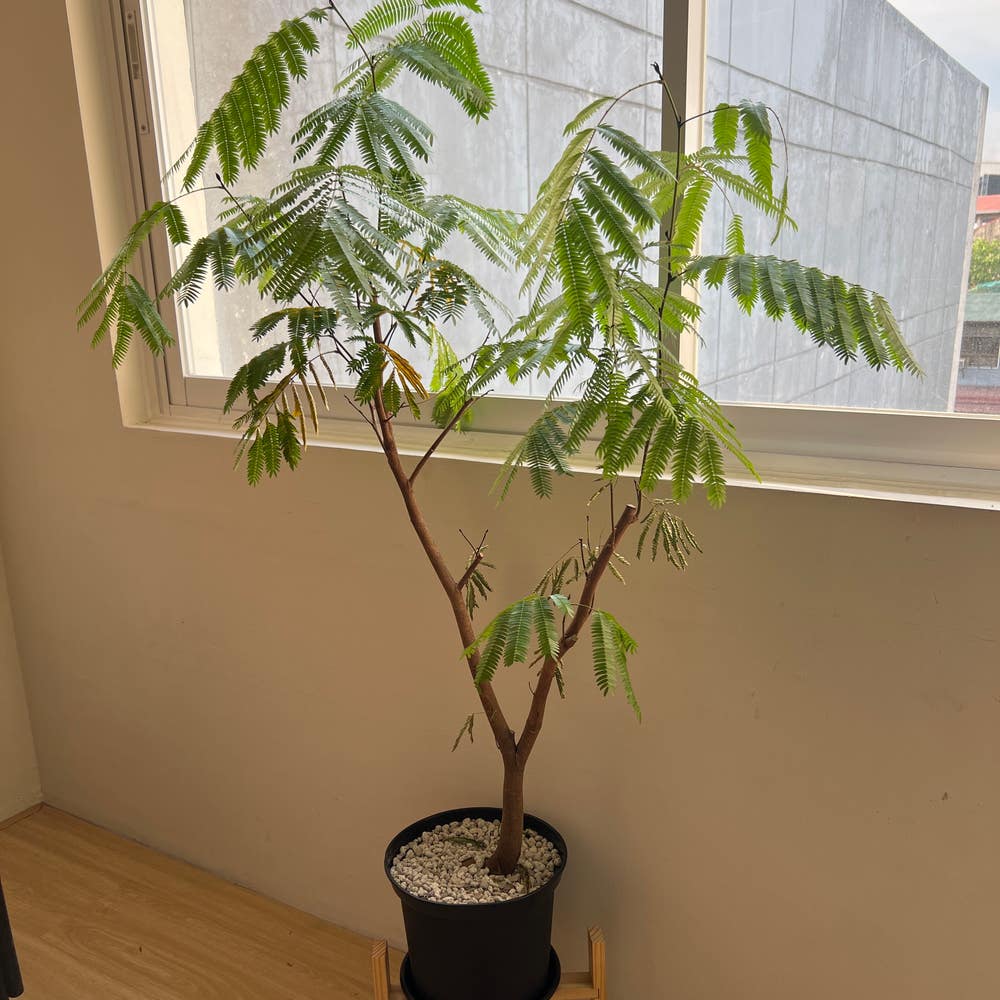
Why Does My Pink Silk Tree Have Yellow Leaves? 🍂
Albizia julibrissin
By the Greg Editorial Team
Jun 18, 2024•4 min read
This article was created with the help of AI so we can cover more plants for you. May contain errors. See one? Report it here.
Unveil the secrets behind your Pink Silk Tree's yellow leaves and revive its beauty 🌿✨!
- 🍂 Nutrient deficiencies cause yellow leaves; check for nitrogen, iron, magnesium.
- 💧 Water wisely: Overwatering and under-watering both lead to yellowing.
- ☀️🌡️ Balance light and temperature to prevent stress-induced yellow leaves.
Spotting the Signs: What Yellow Leaves Can Tell You
💡 Nutrient Deficiency Clues
Yellow leaves might be your Pink Silk Tree's way of saying, "Feed me!" Nitrogen scarcity often turns older leaves yellow as the tree reallocates resources to new growth. If young leaves are pale, it could be an iron deficiency. And when leaves yellow between the veins, it's time to consider a magnesium top-up.
🚰 Watering Woes
Overwatering is like giving your tree too much of a good thing. Look for swollen, translucent leaves that fall off at a touch. Under-watering, on the other hand, leaves leaves dry, curled, and crispy. It's a delicate balance, but your tree's foliage will tell you if you're tipping the scales.
🌞 Environmental Stress Signals
Your Pink Silk Tree might be feeling the heat—or the cold. Temperature stress shows up as wilting or curling leaves. And light? It's a Goldilocks situation. Too little, and leaves reach out as if saying, "I need more!" Too much, and they fade or scorch. Keep an eye on the leaf color; it's the best indicator of whether your tree's basking or baking.

Getting to the Root of the Problem
🔍 Soil Sleuthing
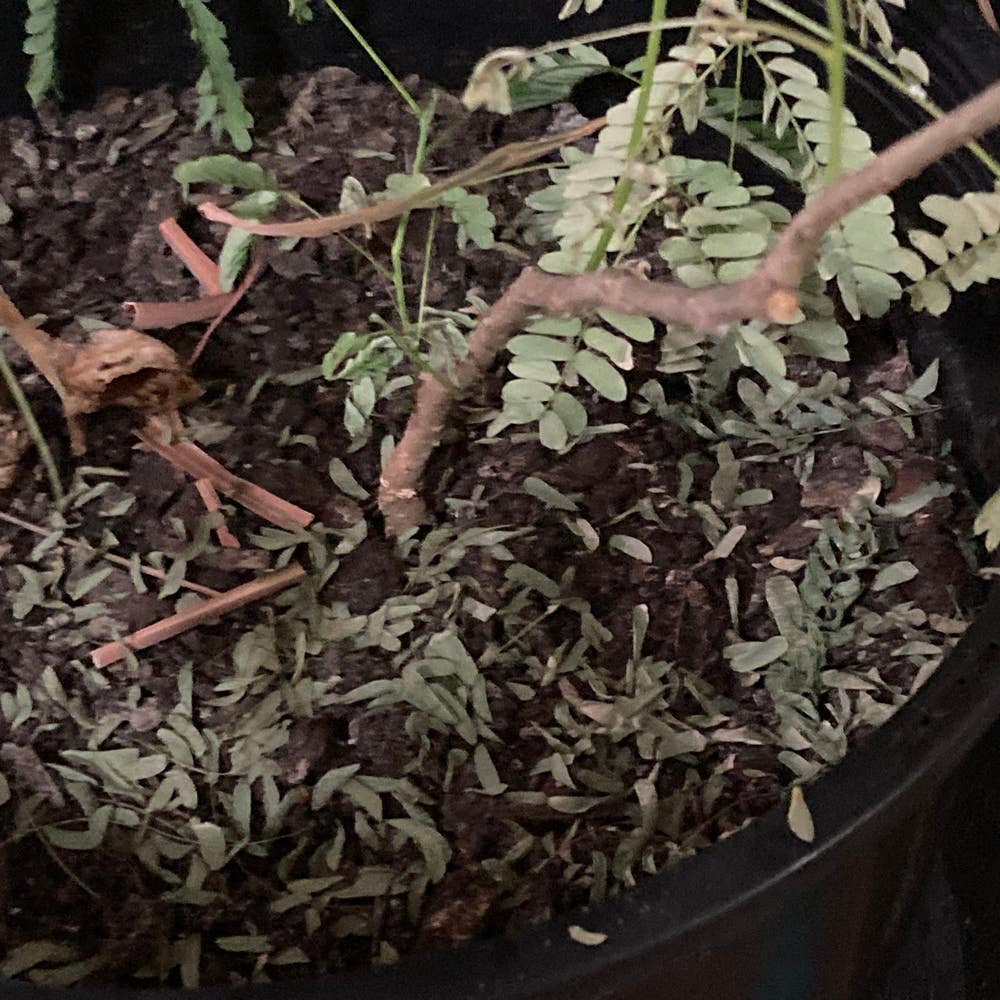
Dive straight into the soil conditions of your Pink Silk Tree. It's time to play detective with the dirt. Grab a handful; it should clump but not stick—think chocolate crumble, not mud pie. Odor is a dead giveaway; a healthy earthy smell is good, but a whiff of decay signals trouble.
🌱 Root Health Check-Up
Now, for the root inspection. Gently unearth a section of the root system. Healthy roots are firm and cream-colored. If they're brown, mushy, or smell like last week's compost, you've got a case of root rot. Check for critters too; if the soil's loose or has tunnels, pests might be freeloaders at your tree's expense.
Compaction is another culprit. If the soil's as tight as a packed elevator, it's suffocating the roots. Loosen it up with some organic matter—your tree will thank you with a flourish of green, not yellow, leaves.
Remember, this isn't a one-time deal. Regular root and soil check-ups are as crucial as your annual physical—skip them, and you'll miss the early signs of distress. Keep your tree's foundation strong, and it'll stand tall and vibrant.

Turning Over a New Leaf: Solutions for Yellowing
🌱 Feeding Your Pink Silk Tree Right
Choosing the right fertilizer is like picking a tailored suit—it should fit your tree's specific needs. A balanced, water-soluble fertilizer is your go-to during the growing season. Apply it at the start, and always follow the package instructions to avoid overindulgence.
Before fertilizing, make sure the soil is moist to prevent root burn. It's like making sure your hands are wet before handling soap—it just works better.
💧 Watering Wisdom
Finding the sweet spot for soil moisture can be a game of precision. Check the top inch of soil; dryness means it's time to water. Water until it runs free from the drainage holes, then let the soil dry out somewhat between waterings.
Tools like moisture meters can help you avoid the extremes of a soggy or Sahara-dry soil. Aim for a reading between 1-3 to maintain that perfect moisture balance.
🌿 Crafting the Perfect Environment
For temperature, think of your tree as needing a steady, comfortable climate. Avoid placing it where drafts or temperature fluctuations are common.
Sunlight is a balancing act. Your Pink Silk Tree craves bright, indirect light. Too much direct sun can lead to a sunburn, while too little can leave it in the shadows. Keep it in a spot where the light is just right, and you'll avoid those yellowing leaves.

⚠️ Safety First
This content is for general information and may contain errors, omissions, or outdated details. It is not medical, veterinary advice, or an endorsement of therapeutic claims.
Always consult a qualified healthcare professional before using any plant as food, medicine, or supplement.
Never eat any plant (or feed one to pets) without confirming its identity with at least two trusted sources.
If you suspect poisoning, call Poison Control (800) 222-1222, the Pet Poison Helpline (800) 213-6680, or your local emergency service immediately.
Spotted an error? Please report it here.
Prevent your Pink Silk Tree's leaves from yellowing by balancing 🌡 soil moisture and nutrients with Greg's custom care plans and real-time community support.