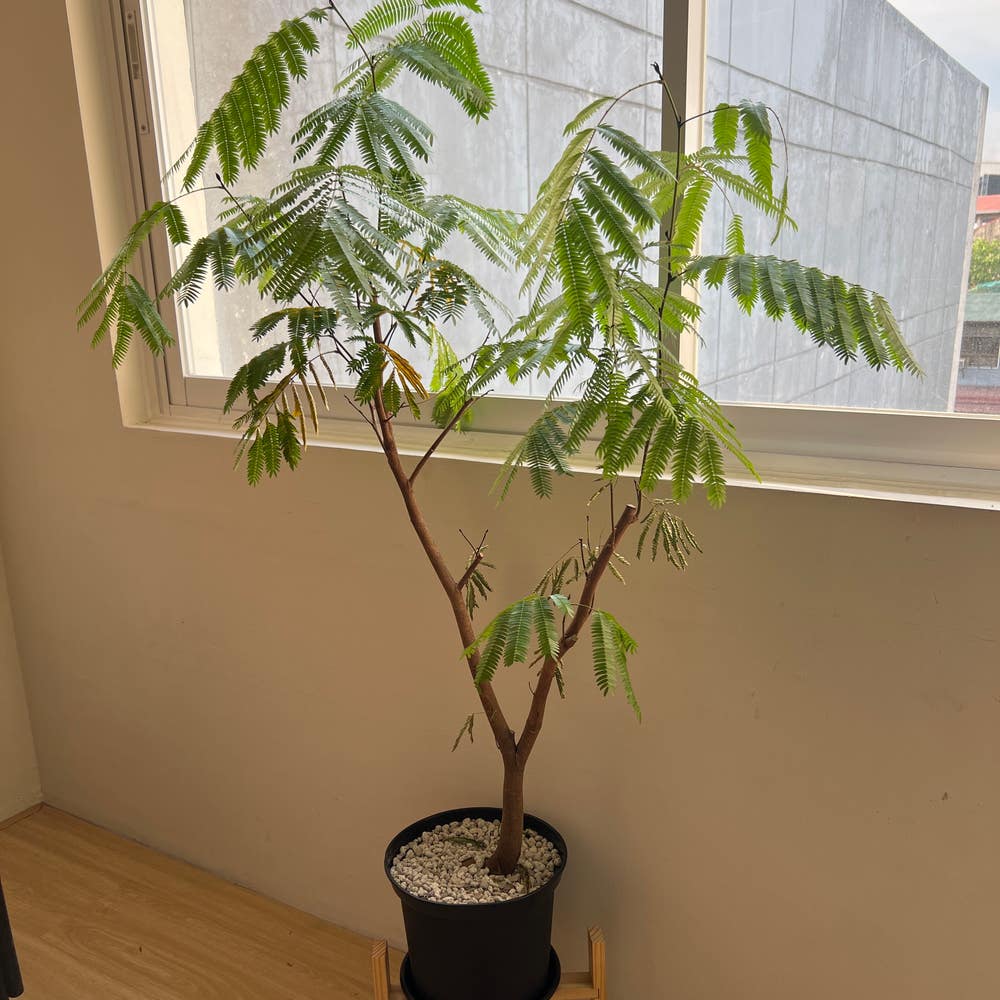
🌳 Dealing with Droopy Leaves on Your Mimosa Tree
Albizia julibrissin
By the Greg Editorial Team
Oct 09, 2024•5 min read
This article was created with the help of AI so we can cover more plants for you. May contain errors. See one? Report it here.
Transform droopy leaves into vibrant growth 🌱 with essential tips on watering, soil care, and pest control!
- 💧 Droopy leaves indicate watering issues; check for overwatering or underwatering.
- 🌱 Well-draining soil is crucial; poor drainage leads to root rot and health problems.
- 🌡️ Mimosa trees thrive in 65°F-85°F; monitor temperature and humidity for optimal growth.
Causes of Droopy Leaves
💧 Overwatering and Underwatering
Droopy leaves on your mimosa tree can often be traced back to watering issues. Overwatering typically shows up as yellowing leaves, soggy soil, and even root rot, while underwatering manifests as crispy leaf edges, dry soil, and wilting.
Maintaining a balanced watering practice is crucial. This means adjusting your watering frequency based on the season and the tree's specific needs.
🌱 Soil Drainage Issues
The type of soil you use plays a significant role in your tree's health. Ideally, mimosa trees thrive in well-draining, sandy loam soil.
Poor drainage can lead to severe consequences, including root rot and nutrient deficiencies. To improve drainage, consider adding perlite or sand to your soil mix.
🌡️ Environmental Stress
Temperature
Mimosa trees prefer a temperature range of 65°F to 85°F (18°C to 29°C). Extreme temperatures can cause leaf wilting and droop, making it essential to monitor the environment.
Humidity
Humidity levels between 40% and 60% are ideal for these trees. Low humidity can lead to leaf curling and drooping, so keep an eye on moisture levels in the air.
🐛 Pest Infestations
Common Pests
Pests can wreak havoc on your mimosa tree's health. Aphids leave behind a sticky residue and cause leaves to curl, while spider mites create fine webbing and stippled leaves.
Regular pest monitoring is vital to prevent infestations. Catching these pests early can save your tree from significant damage.
🦠 Diseases Affecting Leaf Health
Root Rot
One of the most concerning issues is root rot, which presents as wilting leaves despite adequate watering. This condition often arises from overwatering and poor drainage.
Fungal Infections
Fungal infections can also affect your mimosa tree, leading to discolored leaves and leaf drop. To prevent these issues, ensure proper air circulation and avoid overhead watering.
Understanding these causes is the first step in addressing droopy leaves on your mimosa tree. By recognizing the signs and taking action, you can help your tree thrive. Next, we’ll explore how to diagnose droopy leaves effectively.
Diagnosing Droopy Leaves
👀 Visual Signs to Look For
Droopy leaves can signal underlying issues. Look for color changes like yellowing or browning, which often indicate stress.
Texture is another clue; wilting or crispy edges suggest your mimosa tree may need attention.
💧 Assessing Soil Moisture Levels
Checking soil moisture is crucial for diagnosing droopy leaves. Use the finger test—stick your finger into the soil up to the second knuckle to assess moisture.
Alternatively, a moisture meter can provide a more precise reading. Aim for soil that is consistently moist but not soggy.
🐛 Checking for Pests and Diseases
Regular inspections can help catch pests or diseases early. Look under leaves and check stems for any unusual signs.
Common indicators include sticky residue from aphids or fine webbing from spider mites.
🌬️ Evaluating Environmental Conditions
Environmental factors play a significant role in leaf health. Assess temperature and humidity levels around your tree.
Consider the tree's location too; it should receive ample sunlight while being shielded from harsh winds. This balance is key to keeping your mimosa thriving.
By diagnosing these aspects, you can better understand the causes of droopy leaves and take appropriate action. Next, let’s explore effective solutions to alleviate these issues.
Solutions for Alleviating Droopy Leaves
💧 Adjusting Watering Practices
To keep your mimosa tree thriving, aim to water it once a week. Adjust this frequency based on weather conditions; if it's particularly hot or dry, your tree may need more moisture.
Deep watering is key. This technique encourages roots to grow deeper, making your tree more resilient to drought.
🌱 Improving Soil Drainage
Enhancing soil drainage is crucial for your tree's health. Start by amending the soil with organic matter like compost to improve its structure.
If your mimosa tree is potted, choose containers with drainage holes. This prevents water from pooling at the bottom, which can lead to root rot.
🐛 Treating Pest Infestations
Regularly check for pests to catch infestations early. Organic methods, such as neem oil and insecticidal soap, are effective and safe for your tree.
Early intervention is vital. Addressing pest issues promptly can prevent severe damage and keep your tree looking its best.
🌡️ Addressing Environmental Stressors
Managing temperature extremes is essential for your mimosa tree's well-being. During heat waves, provide shade to protect it from scorching sun.
Increasing humidity can also help. Consider using a humidifier or placing pebble trays filled with water near your tree to create a more favorable environment.
🌿 Using Appropriate Fertilizers
Fertilizing your mimosa tree can boost its health and vigor. Opt for balanced NPK fertilizers, which provide essential nutrients.
A fertilization schedule of every 4-6 weeks during the growing season will keep your tree nourished and thriving.
By implementing these solutions, you can effectively alleviate droopy leaves and ensure your mimosa tree flourishes. Next, let's explore preventative measures to maintain its health long-term.
Preventative Measures
Best Practices for Watering 🌊
Establishing a consistent watering schedule is crucial for your mimosa tree's health. Adjust your frequency based on weather conditions; for instance, increase watering during hot, dry spells.
Choosing the Right Soil Mix 🌱
A well-balanced soil mix is key to a thriving mimosa tree. Aim for a blend of 50% potting soil, 30% perlite, and 20% compost, and don’t forget to test your soil for pH and nutrient levels to ensure optimal growth.
Regular Pest Monitoring 🐛
Set a schedule for pest inspections, ideally bi-weekly during the growing season. Keeping a pest journal can help you track infestations and treatments, making it easier to manage any issues that arise.
Proper Placement in the Garden 🌞
Choose an ideal location for your mimosa tree, aiming for full sun with some afternoon shade. Avoid spots exposed to strong winds or extreme temperature fluctuations to promote a healthy environment.
By implementing these preventative measures, you can significantly reduce the chances of droopy leaves and ensure your mimosa tree thrives. Next, let’s explore effective solutions for alleviating droopy leaves when they do occur.
⚠️ Safety First
This content is for general information and may contain errors, omissions, or outdated details. It is not medical, veterinary advice, or an endorsement of therapeutic claims.
Always consult a qualified healthcare professional before using any plant as food, medicine, or supplement.
Never eat any plant (or feed one to pets) without confirming its identity with at least two trusted sources.
If you suspect poisoning, call Poison Control (800) 222-1222, the Pet Poison Helpline (800) 213-6680, or your local emergency service immediately.
Spotted an error? Please report it here.
Keep your mimosa tree vibrant and healthy 🌳 by using Greg's tailored watering reminders and expert tips to prevent droopy leaves and ensure optimal growth!