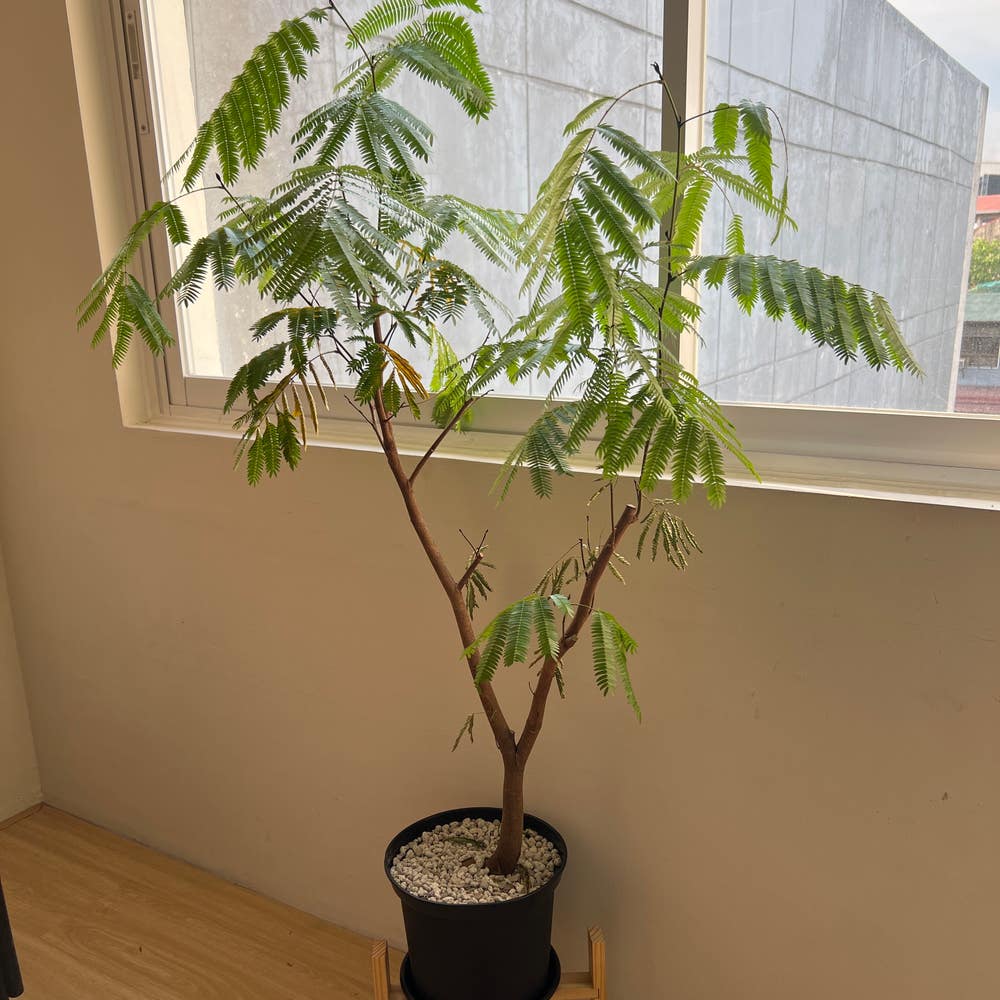
Pink Silk Tree - Fertilizing 101
Albizia julibrissin
By the Greg Editorial Team
Jun 18, 2024•4 min read
This article was created with the help of AI so we can cover more plants for you. May contain errors. See one? Report it here.
Nurture vibrant Pink Silk Tree blooms with tailored fertilizing tips—bloom success guaranteed! 🌺📊
[[Thoughts]]: The revised statement is more concise and within the character limit. It promises a guarantee of success, which is aspirational and practical, and the emojis are more specific to the content, with a flower representing the blooms and a chart for the precision of the fertilizing process.
- Start fertilizing at growing season's onset for optimal growth.
- Higher phosphorus for blooms: Look for 5-10-5 or 10-20-10 ratios.
- Avoid over-fertilization; watch for yellow leaves with dark veins.
Timing is Everything: When to Fertilize
🌱 The Start of the Growing Season
Spring heralds a new cycle for your Pink Silk Tree. It's time to kickstart growth with an initial dose of fertilizer. Begin as the last frost fades, typically in early spring, to align with the tree's awakening.
🌸 During the Blooming Period
Adjust fertilization to bolster the Pink Silk Tree's blooming. When buds appear, it's a signal to supplement with a phosphorus-rich fertilizer. This extra push helps develop robust, long-lasting blooms.
🌿 Reading the Tree's Cues
Stay vigilant for your tree's nutrient signals. Yellowing leaves can indicate a need for more fertilizer, but tread carefully. Overdoing it can lead to nutrient burn, a real setback for your tree's health.

Choosing Your Pink Silk Tree's Food Wisely
🌸 N-P-K: The Magic Numbers for Blooming
When it comes to fertilizing your Pink Silk Tree, the N-P-K ratio is like the secret sauce for stellar blooms. Nitrogen (N) is great for greenery, but too much and you'll have a bushy tree with shy flowers. Phosphorus (P) is your bloom booster—think of it as the wingman for those eye-catching blossoms. Potassium (K) is the all-around health guru, keeping your tree fit to fight off diseases and stress.
Aim for a fertilizer with a higher phosphorus content compared to nitrogen and potassium. This isn't a one-size-fits-all; it's a tailored suit for your tree's blooming needs. Look for ratios where the middle number (P) is higher than the first (N), like a 5-10-5 or 10-20-10 blend.
🌿 The Micronutrient Sidekicks
Micronutrients might not get the limelight, but they're essential for your Pink Silk Tree's blooming performance. They're like the stage crew that ensures the show goes on without a hitch. Elements like iron, manganese, and zinc might be needed in smaller amounts, but they're crucial for photosynthesis and other plant functions.
Keep an eye out for fertilizers that include these micronutrients. They often come as part of a complete fertilizer package, but you can also find them in supplements if your soil test indicates a deficiency. Remember, it's about creating a thriving ecosystem for your tree, not just a surviving one.

Fertilizer Application: Doing it Right
💧 Dosage and Distribution
Precision is your ally when applying fertilizer to your Pink Silk Tree. Measure the exact amount recommended on the fertilizer package—no eyeballing! For liquid fertilizers, a measuring syringe can be your best friend. Apply the fertilizer evenly around the tree's drip line, not directly against the trunk or stem. This ensures roots have room to absorb nutrients without being overwhelmed.
💦 Watering and Fertilizing: A Balancing Act
Integrating fertilization with your watering routine isn't rocket science, but it does require some finesse. Water your Pink Silk Tree before and after applying fertilizer to prevent nutrient burn and aid in absorption. Think of it as a nutrient sandwich—the moisture is the bread and the fertilizer is the filling. Keep the soil moist, not soggy, to maintain the perfect environment for nutrient uptake.

Oops, Too Much! Dealing with Over-Fertilization
🚨 Spotting Trouble: Symptoms of Excess
Yellowing leaves with dark-green veins often signal a nutrient imbalance. If you spot a crusty fertilizer layer on the soil or notice your Pink Silk Tree's growth stunted with a lack of blossoms, it's likely suffering from over-fertilization. Burned or brown leaf tips and edges are classic distress calls from your tree, indicating it's time to reassess your fertilizing strategy.
🛠️ The Recovery Plan
First, stop fertilizing immediately to prevent further damage. Carefully remove any visible fertilizer from the soil's surface. Flush the soil with water to dilute and wash away excess nutrients; this may need to be repeated every few days. Monitor your Pink Silk Tree for signs of recovery, and remember, patience is key during this rehabilitation phase. Moving forward, stick to the recommended dosage and frequency to avoid repeating the mistake.
⚠️ Safety First
This content is for general information and may contain errors, omissions, or outdated details. It is not medical, veterinary advice, or an endorsement of therapeutic claims.
Always consult a qualified healthcare professional before using any plant as food, medicine, or supplement.
Never eat any plant (or feed one to pets) without confirming its identity with at least two trusted sources.
If you suspect poisoning, call Poison Control (800) 222-1222, the Pet Poison Helpline (800) 213-6680, or your local emergency service immediately.
Spotted an error? Please report it here.
Ensure your Pink Silk Tree has perfectly-timed 🌸 fertilization with Greg's reminders for the right amounts, avoiding over-fertilization and encouraging vibrant blooms.