🐝 Attracting Pollinators to Your Bromeliad
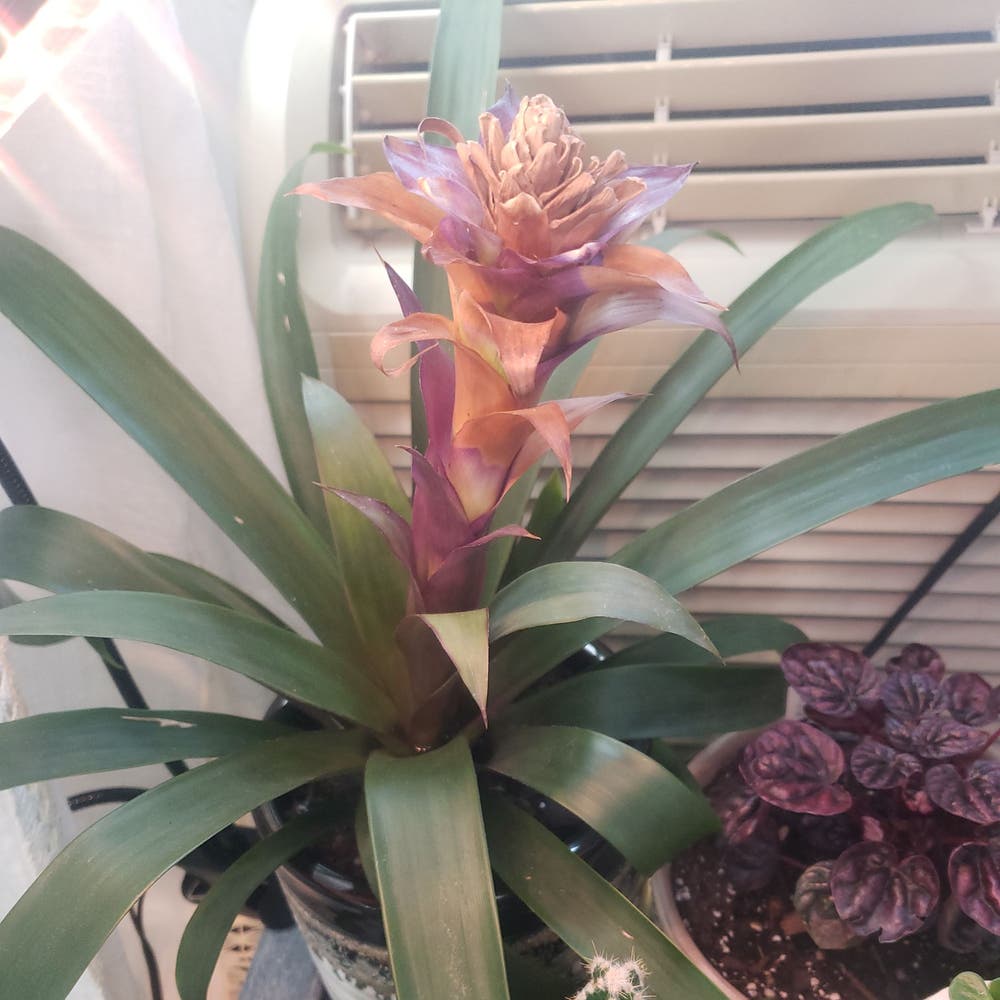
Neoregelia 'Shenba'
By the Greg Editorial Team
Jul 26, 2024•5 min read
This article was created with the help of AI so we can cover more plants for you. May contain errors. See one? Report it here.
- 🌸 Bromeliads need pollinators for reproduction and genetic diversity.
- 🐝🌺 Create a pollinator-friendly habitat with companion planting.
- ✋ Hand pollination techniques can help overcome environmental challenges.
Bromeliad Flower Structure
Bromeliads captivate with their striking flower anatomy, designed to lure in pollinators. Their blooms, often brilliant and long-lasting, come in various colors and shapes, each playing a role in the plant's reproductive dance.
The flower's central feature is its rosette-like leaf formation, which creates a cup or tank at the base. This not only collects water but also acts as a habitat for potential pollinators. The petals, sepals, stamens, and pistils are arranged to maximize exposure to visiting pollinators, ensuring effective pollen transfer.
- Petals: Typically vibrant, they serve as visual beacons to attract pollinators from afar.
- Sepals: These protect the flower bud before it blooms and often contribute to the flower's overall allure.
- Stamens: Loaded with pollen, they are strategically positioned to brush against pollinators.
- Pistils: Awaiting the touch of pollen, they are central to the fertilization process.
Adaptations such as filament attachment to the petal tube and specialized stigma structures, like the conduplicate-spiral form, enhance the efficiency of cross-pollination. These features not only facilitate the interaction with pollinator species but also underscore the intricate relationship between Bromeliads and their ecological partners.
Cross-Pollination Essentials
Bromeliads are fascinating in their reliance on cross-pollination for reproduction. Let's delve into the mechanics of this process and the key players involved.
🌸 Understanding Cross-Pollination in Bromeliads
Cross-pollination is the botanical equivalent of a meet-cute for plants, where pollen from one flower finds its way to the stigma of another, leading to genetic diversity and seed production. In Bromeliads, this is crucial for their survival and propagation. Unlike some plants that can self-pollinate, Bromeliads often depend on external forces to shuffle their genetic deck.
🐝 Role of Pollinators in Bromeliad Reproduction
Pollinators are the matchmakers in this process, ensuring that Bromeliads can continue to thrive. These include:
- Bees, with their pollen-packed legs, buzzing from flower to flower.
- Hummingbirds, dipping their beaks like nature's syringes into the nectar and pollen.
- Moths, the unsung heroes of the night, flitting silently to spread pollen under the cover of darkness.
Each pollinator species has its unique interaction with Bromeliad flowers, contributing to the plant's pollination success.
🌼 Pollen Transfer Mechanisms
The transfer of pollen in Bromeliads is a delicate dance, orchestrated by nature's design:
- Flowers may exhibit protandry or protogyny to prevent self-pollination, ensuring that genetic exchange is between different plants.
- The structure of Bromeliad flowers, with their vibrant colors and strategic shapes, is tailored to attract specific pollinators.
- Timing is everything, as the receptivity of stigmas and the release of pollen are often synchronized with the pollinators' visitation schedules.
Understanding these mechanisms can help gardeners and enthusiasts ensure the successful pollination of their Bromeliads, leading to a diverse and robust population.
Attracting Natural Pollinators
Creating a pollinator-friendly habitat is key to ensuring your Bromeliads thrive. Here's how to roll out the welcome mat for these vital garden visitors.
🐝 Identifying Primary Bromeliad Pollinators
Bromeliads rely on a variety of pollinators, including:
- Hummingbirds: Attracted to vividly colored Bromeliad flowers.
- Bees and Bumblebees: Drawn to the plant's nectar.
- Moths: Active pollinators during twilight hours.
🌺 Creating a Pollinator-Friendly Habitat
To make your garden irresistible to pollinators:
- Introduce a water source, like a birdbath, for hydration.
- Plant a mix of native species that bloom in different seasons to provide a consistent food supply.
- Use trees and shrubs to offer shelter and nesting spots.
🌼 Companion Planting for Pollinator Attraction
Companion planting enhances Bromeliad pollination by attracting a diverse pollinator species. Consider these companions:
- Daylily and Kangaroo Paw for variety and year-round blooms.
- Hardy Geraniums and Evening Primrose for attracting bees.
- False indigos and sunflowers for late-season nectar sources.
Hand Pollination Techniques
Hand pollination of Bromeliads is a valuable skill for gardeners looking to produce seeds or create hybrids. It's particularly useful when natural pollinators are not present or when precise control over cross-pollination is desired.
🌺 When and Why to Hand-Pollinate Bromeliads
- To produce seeds for expanding your collection without additional cost.
- For hybridizing plants to create unique Bromeliad varieties.
- When natural pollinator species are scarce or environmental conditions limit their activity.
🛠️ Step-by-Step Hand Pollination Guide
- Identify Flower Parts: Locate the male pollen stamens and the central female pistil within the Bromeliad flower.
- Choose the Right Time: Pollinate early in the morning when flowers are most receptive, typically around 7:00 am for large vrieseas and around 9:00 am for neos and nids.
- Prepare Tools: Use a magnifying lens for visibility, a long pointer like a knitting needle, and tweezers for handling pollen.
- Collect Pollen: Gently remove a pollen stamen with tweezers or cut it off if self-pollinating is not the goal.
- Transfer Pollen: Wipe the pollen stamen on the stigma of another flower or the same flower if self-pollinating, ensuring a visible mound of pollen is left on the stigmatic surface.
- Label Crosses: If creating hybrids, label the cross to track parentage and characteristics.
Remember, timing and observation are key. Monitor your plants closely to understand their specific pollination needs and adjust your technique accordingly.
Overcoming Pollination Challenges
Bromeliads face unique hurdles in pollination, often due to environmental factors and a scarcity of natural pollinators. Let's explore how to navigate these challenges.
🌡️ Common Issues with Bromeliad Pollination
- Extreme temperatures can inhibit pollinator activity and affect pollen viability.
- Inconsistent watering may lead to poor flower development, hindering pollination.
- Pesticide use can decimate beneficial insect populations, reducing pollination opportunities.
🛠️ Solutions for Environmental and Pollinator-Related Challenges
- Create a microclimate using shade cloth or windbreaks to mitigate temperature extremes.
- Adjust watering schedules seasonally to maintain consistent moisture levels without overwatering.
- Plant a variety of flowering species to provide a continuous food source for pollinators.
- Minimize pesticide use, opting for organic or natural pest control methods to protect pollinator species.
- Consider hand pollination as a reliable alternative in areas with low natural pollinator presence.
⚠️ Safety First
This content is for general information and may contain errors, omissions, or outdated details. It is not medical, veterinary advice, or an endorsement of therapeutic claims.
Always consult a qualified healthcare professional before using any plant as food, medicine, or supplement.
Never eat any plant (or feed one to pets) without confirming its identity with at least two trusted sources.
If you suspect poisoning, call Poison Control (800) 222-1222, the Pet Poison Helpline (800) 213-6680, or your local emergency service immediately.
Spotted an error? Please report it here.
Ensure your Bromeliads flourish 🌺 with Greg's custom care plans and a community of experts sharing secrets to attract the perfect pollinators.