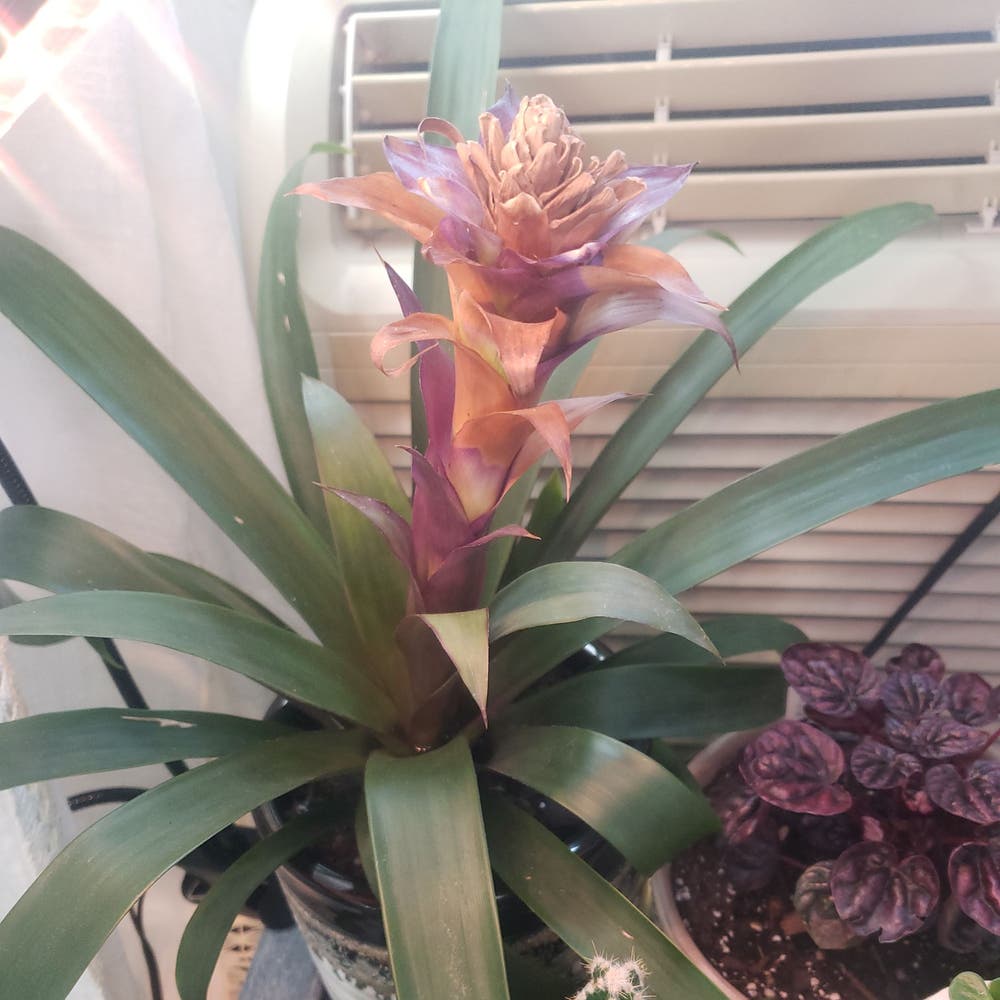
Mature Height of Your Bromeliad
Neoregelia 'Shenba'
By the Greg Editorial Team
Jul 26, 2024•5 min read
This article was created with the help of AI so we can cover more plants for you. May contain errors. See one? Report it here.
- 🌱 Bromeliads mature in years; light, temperature, humidity affect growth.
- 📏 Average height and spread guide garden planning and Bromeliad placement.
- ✂️ Pruning and repotting help manage Bromeliad size for desired shape.
Growth Rate Insights
🌱 Typical Growth Patterns
Bromeliads exhibit a range of growth rates, but many species are known for their moderate pace, reaching maturity in several years. Understanding the average time to maturity helps gardeners anticipate the lifecycle and blooming period of their plants.
🌿 Influencing Factors
Several environmental factors play a pivotal role in the growth rate of Bromeliads:
- Light: Adequate indirect sunlight is crucial for growth and flower production. Varieties may differ in their light needs, with some thriving in lower light conditions.
- Temperature: A comfortable range between 60°F to 85°F promotes healthy growth. Extremes can slow down the plant's development.
- Humidity: While Bromeliads are adaptable, a humidity level around 50% is often ideal. High humidity can enhance leaf structure and color vibrancy, especially in glossy-leaved species.
By managing these conditions, gardeners can influence the growth rate and overall health of their Bromeliads, ensuring a lush and vibrant display.
Mature Dimensions
📏 Average Height and Spread
Bromeliads boast a diverse family, with sizes ranging as widely as their species. Here's what you can typically expect:
- Height: From the petite 1-inch varieties to the more statuesque 2-3 feet tall.
- Spread: Depending on the species, the width can be just as variable as the height.
🔮 Predicting Plant Size
Estimating your Bromeliad's eventual size involves considering a few key factors:
- Species: Each has its own genetic blueprint for size.
- Care: Good care can mean reaching the upper end of the size range.
- Environment: Light, temperature, and humidity levels play a significant role.
- Pot Size: Larger pots generally allow for more growth, but there's a balance to strike.
- Age: Younger plants have different water storage capabilities, affecting their growth and survival rates.
Size Variability
🌿 Environmental Impact
Bromeliads are adaptable, but their final size can be significantly influenced by their environment. Here's how:
- Light: Bright, indirect light can encourage a Bromeliad to flourish, while lower light levels may limit growth.
- Temperature: Consistent warmth promotes robust growth, whereas temperature swings can cause growth to stall.
- Humidity: High humidity can support larger Bromeliad sizes, particularly for varieties that form water-storing tanks.
🏺 Pot Size and Root Space
The size of the pot you choose for your Bromeliad isn't just about aesthetics; it's about potential. Consider these points:
- A snug fit: Bromeliads often prefer to be slightly root-bound, so don't rush to upsize your pot.
- Root growth: Larger pots allow more room for roots, which can lead to a larger plant over time.
- Repotting: As a Bromeliad matures, moving it to a slightly larger container can support continued growth.
Dwarf and Giant Bromeliads
🌺 Compact Varieties
Bromeliads come in a fascinating range of sizes, including some charming compact varieties that are perfect for smaller spaces or as desktop companions. Here's a shout-out to some popular dwarf species that pack a punch in a pint-sized package:
- 'Floral Carpet': A petite beauty with a lush, colorful presence.
- 'Kolibri': Small in stature but vibrant in hue, ideal for tight spots.
- 'Royal Carpet': A regal choice for those with limited room but unlimited taste for the exotic.
- 'Tahiti': Brings a tropical flair without demanding much space.
🌿 Larger Specimens
On the flip side, if you're looking to make a bold statement, giant Bromeliads are your go-to. These larger-than-life varieties command attention and require ample space to showcase their grandeur:
- Aechmea imperialis ‘Rubra’: A true showstopper with leaves that can reach 1.2 meters and a flower spike soaring up to 3 meters.
- Neoregelia 'Fireball': While not the tallest, its fiery foliage spreads wide, demanding room to be admired.
- Orthophytum gurkenii: A sun-loving specimen that grows outward as much as upward.
Remember, with great size comes great responsibility—these giants need space to thrive and impress.
Size Management Techniques
🌿 Pruning Practices
Pruning is not just about aesthetics; it's a crucial tool for managing your Bromeliad's size. Here's a straightforward guide to pruning your Bromeliad:
- Identify any dead or damaged leaves at the base of the plant and remove them by gently pulling or cutting them close to the stem.
- Trim off any overgrown or unwanted leaves to maintain the desired shape and size of your Bromeliad, using clean, sharp scissors or pruning shears.
- Always prune during the plant's active growth phase, usually in spring or early summer, to ensure quick recovery.
📏 Growth Control Methods
Beyond pruning, there are other ways to keep your Bromeliad's growth in check:
- Dividing: Bromeliads can be propagated by removing and potting up the pups that form around the base of the mother plant. This not only controls the size but also rejuvenates the plant.
- Repotting: If your Bromeliad is outgrowing its pot, consider repotting it into a container that's just one size larger to prevent overwatering and root rot.
- Environmental Adjustments: Modulate light exposure and humidity levels to influence growth patterns. Bromeliads prefer bright, indirect light and moderate humidity.
- Plant Growth Regulators (PGRs): For commercial growers or those with specific size constraints, PGRs can be used to control the size of the leaves and overall plant. However, this should be done with caution and expertise.
⚠️ Safety First
This content is for general information and may contain errors, omissions, or outdated details. It is not medical, veterinary advice, or an endorsement of therapeutic claims.
Always consult a qualified healthcare professional before using any plant as food, medicine, or supplement.
Never eat any plant (or feed one to pets) without confirming its identity with at least two trusted sources.
If you suspect poisoning, call Poison Control (800) 222-1222, the Pet Poison Helpline (800) 213-6680, or your local emergency service immediately.
Spotted an error? Please report it here.
Achieve your Bromeliad's mature height 🌱 with Greg's personalized care reminders, ensuring they flourish in your home's unique conditions.