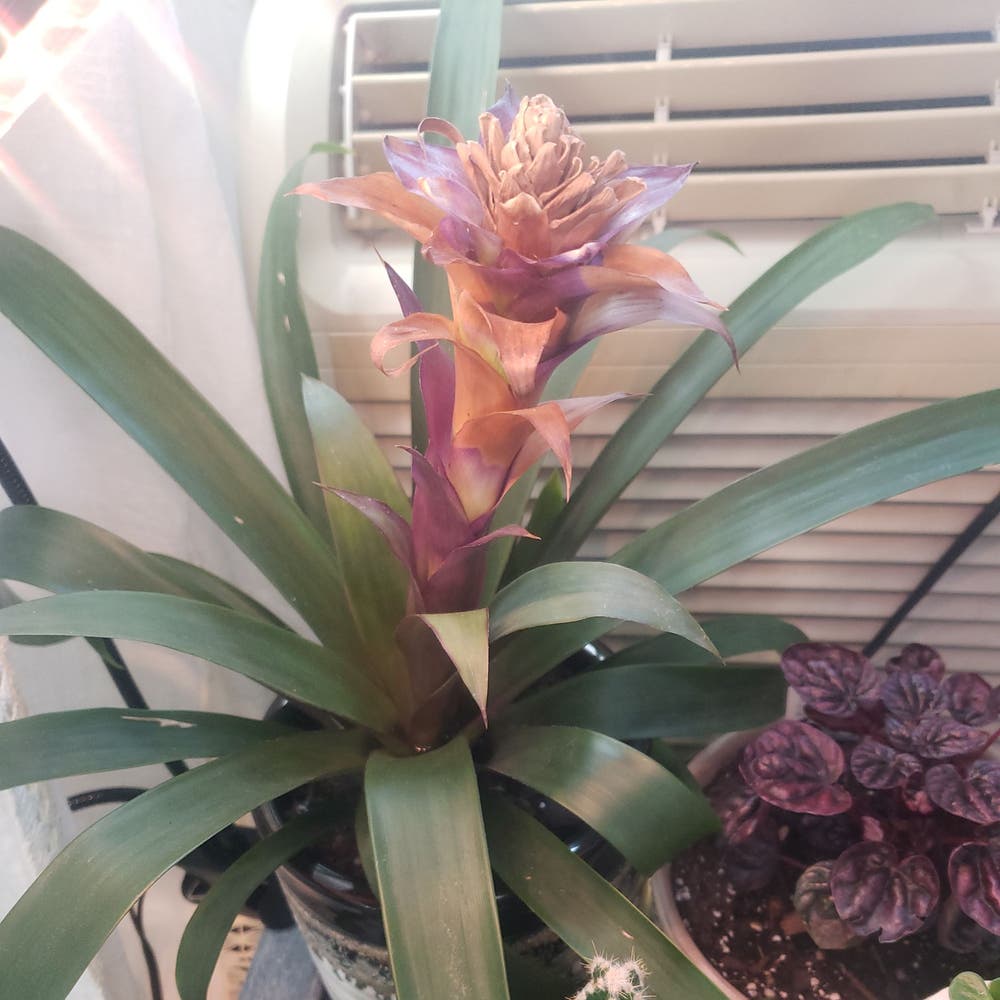
How to Get a Bromeliad to Bloom
Neoregelia 'Shenba'
By the Greg Editorial Team
Jun 14, 2024•5 min read
This article was created with the help of AI so we can cover more plants for you. May contain errors. See one? Report it here.
- 🌞 Medium to bright indirect light is key for Bromeliad blooms.
- 💧 Maintain 40-60% humidity and the right temperature for flowering.
- 🌱 Phosphorus-rich fertilizer during growing season encourages blooms.
Light the Way to Blooms
🌞 The Right Rays
Bromeliads are sun worshippers in moderation. They thrive in medium to bright indirect light, soaking up those rays without the risk of a sunburn. A little morning sun won't hurt, but think of it as a light appetizer rather than the main course.
Positioning is key—rotate your plant to ensure it gets even exposure, avoiding the one-sided tan. If your Bromeliad starts stretching out like it's reaching for something, it's time to give it more light. But remember, too much direct sunlight is the botanical equivalent of a bad beach day.
🌑 Dark Days, Bright Blooms
Now, let's talk about the dark arts of Bromeliad blooms. Sometimes, these plants need a nudge, and a period of darker treatment can be just the trick. It's like flipping a switch to tell your Bromeliad, "Hey, it's showtime!"
To pull this off, you'll need to play with shadows. Think of it as setting the mood for a bloom-inducing slumber party. But don't leave your plant in the dark for too long; it's not a teenager who can sleep till noon. Just a short stint to trigger the bloom, and then back to the bright side.

Temperature and Humidity: The Bloom Thermostat
🌡️ Warmth and Cool Breezes
Finding the sweet spot in temperature for Bromeliad blooms is like tuning a guitar – it has to be just right. Bromeliads prefer a consistent temperature range, typically between 65°F and 80°F. This range mimics their native tropical conditions and encourages flowering. Remember, your plant doesn't have a sweater or a fan, so keep it away from drafts and direct heat sources that could cause temperature swings.
💦 Mist and Moisture
Humidity is the secret handshake between your Bromeliad and its environment. Aim for a humidity level of 40-60% to keep your plant in the comfort zone. If your home's air is as dry as yesterday's toast, use a humidifier or a pebble tray to up the ante. But don't turn your living room into a sauna; too much humidity can lead to mold or rot. And please, for the love of leaves, ensure good air circulation – a gentle fan can help avoid a stagnant, soggy situation.

Feeding Time: Fertilizer Focus for Flowers
💡 The Phosphorus Push
Phosphorus is crucial for Bromeliad blooms. This nutrient sparks and sustains the flowering process. While Bromeliads aren't greedy feeders, they need a phosphorus-rich fertilizer to signal it's showtime for blooms. Look for a fertilizer with a higher middle number in the N-P-K ratio, indicating more phosphorus. But remember, moderation is key; too much can lead to all leaves, no flowers.
🕰️ Fertilizer Timing is Everything
Timing matters. Feed your Bromeliad during its active growing season, typically the warmer months. Once every month or every other month should suffice. Avoid high nitrogen fertilizers, as they encourage foliage growth at the expense of blooms. And don't fertilize right before you're trying to force a bloom or immediately after it starts. Night temperatures should stay above 65°F to complement your feeding regimen for optimal blooming.
Ethylene: The Bloom Booster or Buster
🌸 The Ethylene Effect
Ethylene, a natural plant hormone, plays a critical role in the blooming of Bromeliads. This gas can either signal your Bromeliad to burst into bloom or, conversely, sabotage the flowering process. While it's a natural byproduct of ripening fruits like apples, which can be used to encourage Bromeliads to flower, too much ethylene can lead to premature aging and decay of the plant.
🚫 Keeping Ethylene at Bay
To harness the power of ethylene without the drawbacks, consider these practical tips:
- Isolate your Bromeliad from ripening fruits and vegetables to prevent overexposure to ethylene.
- Use ethylene-blocking products like EthylBloc to shield your plant from the potentially harmful effects of this gas.
- Apply ethylene-inducing treatments, such as those containing Ethefon, with caution and strictly follow the manufacturer’s instructions to avoid damage.
- Ensure good air circulation around your Bromeliad to disperse any ethylene that may be present in the environment.
By carefully managing ethylene levels, you can tip the scales in favor of a vibrant Bromeliad bloom.
When Blooms Don't Happen: Troubleshooting Tips
🕵️ Spotting the Signs
- Quick checks to see why your Bromeliad isn't blooming.
Bromeliads not blooming? Don't panic. First, assess the light; too much or too little can be a buzzkill for flowers. Next, consider your watering routine—overdoing it or neglecting it can lead to bloom-gloom. Check for brown spots or limp leaves; they're tattletales for potential problems.
🛠️ The Fix-It List
- Simple solutions to common non-blooming problems.
Lighting: If your Bromeliad is throwing shade instead of flowers, it might need more light. Aim for bright, indirect sunlight. Too much direct sun, and you'll have a crispy critter on your hands.
Watering: Got a thirsty or waterlogged plant? Time to channel your inner Goldilocks—water just right. Check the soil before you water; it should be moist, not soggy or bone-dry.
Fertilizer: If you've been heavy-handed with the feed, ease up. Bromeliads prefer a light touch with fertilizer, especially those high in phosphorus to encourage blooming.
Temperature: These tropical treasures like it warm but not hot. Keep them in a cozy spot without drastic temperature swings.
Airflow: Stagnant air is a no-go. Bromeliads enjoy a gentle breeze, just like a beach vacation.
Ethylene gas: Keep your fruit bowl away from your Bromeliad. Ripening fruit emits ethylene, which can mess with your plant's blooming mojo.
Pests and Diseases: Play plant detective. Look for freeloaders like spider mites or signs of disease. Spot them? Isolate and treat your Bromeliad with the right remedy.
If all else fails, remember: some Bromeliads are just late bloomers. Patience is a virtue, and sometimes the bloom is worth the wait.
⚠️ Safety First
This content is for general information and may contain errors, omissions, or outdated details. It is not medical, veterinary advice, or an endorsement of therapeutic claims.
Always consult a qualified healthcare professional before using any plant as food, medicine, or supplement.
Never eat any plant (or feed one to pets) without confirming its identity with at least two trusted sources.
If you suspect poisoning, call Poison Control (800) 222-1222, the Pet Poison Helpline (800) 213-6680, or your local emergency service immediately.
Spotted an error? Please report it here.
Ensure your Bromeliad flourishes 🌺 with Greg's tailored light and feeding schedules, making bloom-triggering a breeze.