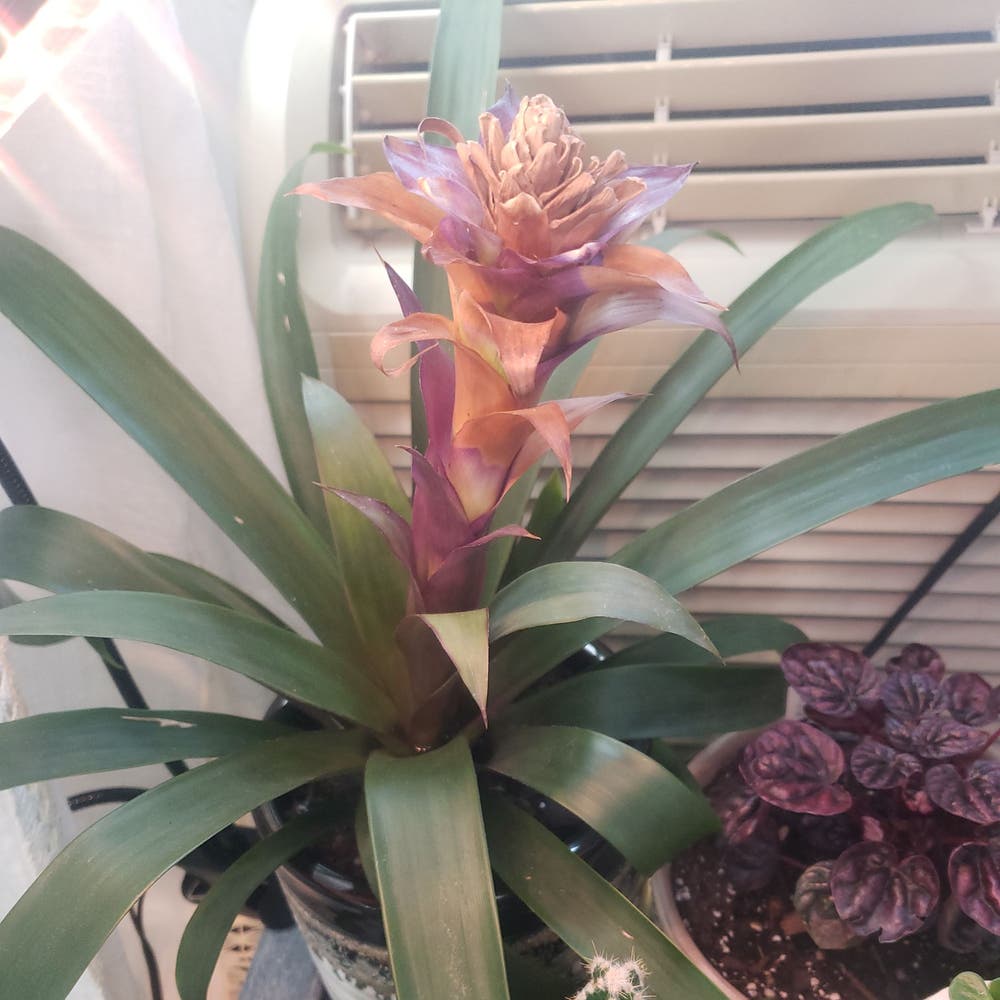
Why Are There Brown Spots on My Bromeliad Leaves?
Neoregelia 'Shenba'
By the Greg Editorial Team
Jun 14, 2024•3 min read
This article was created with the help of AI so we can cover more plants for you. May contain errors. See one? Report it here.
- 🌤️ Adjust light exposure to prevent sunburn-induced brown spots.
- 💧 Use rain or filtered water to avoid chemical-induced spots.
- 🍃 Maintain cleanliness and proper humidity to keep spots at bay.
Spotting the Culprits: Common Causes of Brown Spots
🌞 Too Much Sun, Too Little Comfort
Bromeliads enjoy the spotlight, but direct sunlight can leave them with unsightly brown autographs. If your plant's leaves sport crispy brown spots, it's likely crying out for some shade. Adjusting light exposure is key; aim for bright, indirect light to keep your Bromeliad's leaves vibrant and spot-free.
🦠 Unwanted Guests: Fungal and Bacterial Invasions
When brown spots appear with yellow or red halos, it's time to suspect fungal or bacterial diseases. These spots are the plant world's distress flares, signaling an invasion. To combat these pathogens, select a fungicide that fits the crime and tweak your care routine to reinforce your plant's defenses.
💧 Water Woes: The Impact of H2O Quality
Tap water is a cocktail of chemicals that can leave your Bromeliad's leaves dotted with brown. The culprits? Often chlorine and fluoride. To avoid these unwelcome effects, use rainwater or filtered water for hydration. Remember, when it comes to watering, think Goldilocks: not too much, not too little, just right.

Turning the Tide: Treating Brown Spots
🌿 Natural Remedies vs. Commercial Solutions
Nature's pharmacy often holds the key to treating brown spots on Bromeliads. A simple mix of baking soda and soap can be your first line of defense against fungal foes. When these spots prove stubborn, copper fungicides may step in, but remember, the label is your law—follow it to a T.
Commercial products should be your plan B. They're like the cavalry coming over the hill when the battle gets tough. Use them wisely, and don't let them take over your entire plant care strategy.
Step-by-Step Recovery
Identify the culprit behind those unsightly brown spots. Is it a sunburn, a fungal gossip, or bacterial blabbermouth? Once you know, you can tailor your treatment.
- Isolate your Bromeliad if it's contagious.
- Prune affected leaves with sterilized scissors—think surgical precision.
- Adjust your watering habits; your plant's thirst should be quenched, not drowned.
- Monitor new growth as a sign of recovery.
Stay vigilant and adjust your care routine as your Bromeliad heals. It's not just about fixing the problem; it's about tuning into your plant's needs. Keep an eye out, and you'll both grow from the experience.
Keeping Spots at Bay: Proactive Plant Parenting
🌿 Cultivating the Ideal Environment
Air circulation and humidity levels are the yin and yang of Bromeliad bliss. To avoid the brown spot blues, keep the airflow steady and the moisture just right. Think of it as setting the stage for a leafy performance where every Bromeliad is the star.
Location and temperature aren't just details; they're the script for a healthy plant life. Place your Bromeliad where it gets the morning sun's gentle embrace but is shielded from the harsh afternoon soliloquy.
🧼 Cleanliness is Key
Regular maintenance isn't glamorous, but it's the secret handshake to a spotless existence. Wipe leaves gently with a soft cloth to keep them dust-free and shining like the top of the Chrysler building.
Water pooling is a no-go. It's the equivalent of leaving a wet towel on a wooden floor—eventually, it'll leave a mark. Prevent water accumulation in your Bromeliad's center to keep rot and unwanted brown spot parties at bay.
⚠️ Safety First
This content is for general information and may contain errors, omissions, or outdated details. It is not medical, veterinary advice, or an endorsement of therapeutic claims.
Always consult a qualified healthcare professional before using any plant as food, medicine, or supplement.
Never eat any plant (or feed one to pets) without confirming its identity with at least two trusted sources.
If you suspect poisoning, call Poison Control (800) 222-1222, the Pet Poison Helpline (800) 213-6680, or your local emergency service immediately.
Spotted an error? Please report it here.
Banish those pesky brown spots 🍂 on your Bromeliad by using Greg to monitor your plant's environment and tweak its care routine for pristine leaves.