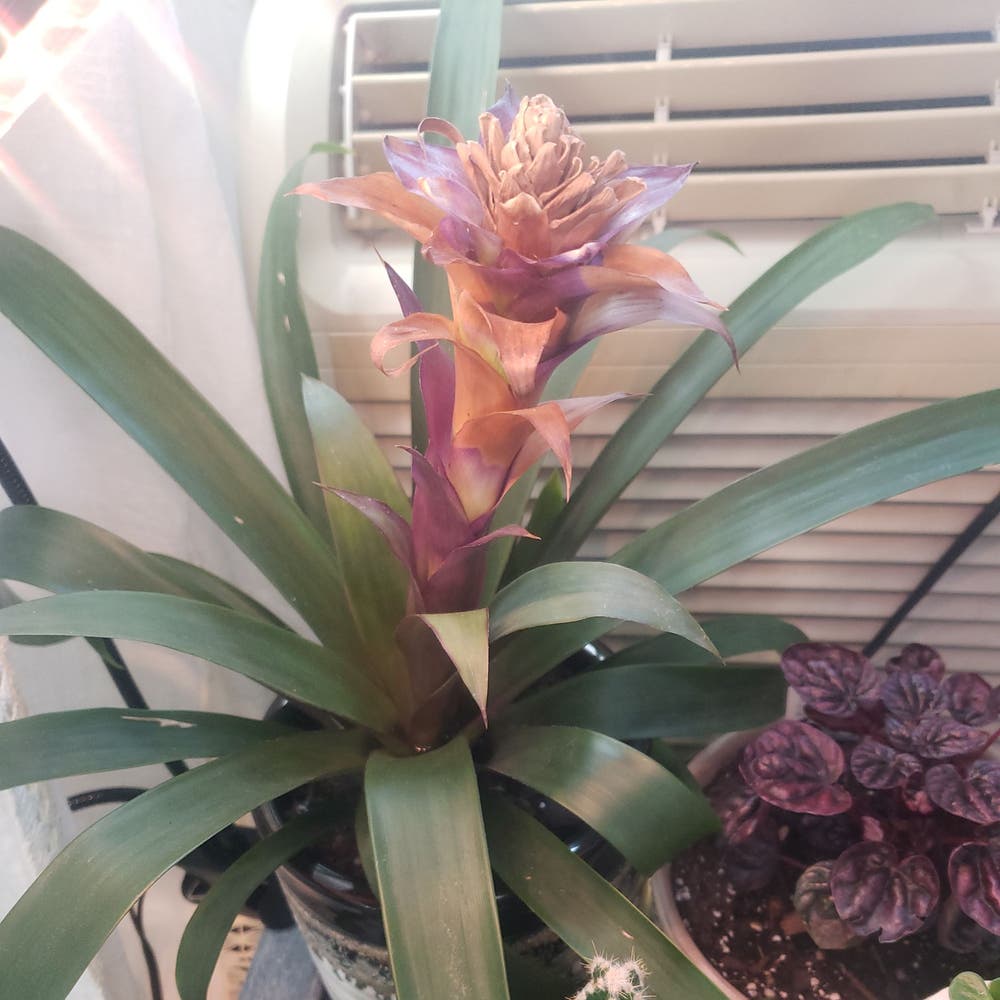
Why Are My Bromeliad Leaves Droopy? 😔
Neoregelia 'Shenba'
By the Greg Editorial Team
Jun 14, 2024•5 min read
This article was created with the help of AI so we can cover more plants for you. May contain errors. See one? Report it here.
- Droopy leaves signal distress; intervention is crucial for Bromeliad health.
- Balance watering and drainage to prevent over/underwatering and root issues.
- Adjust light, temperature, humidity to revive and maintain Bromeliads.
Spotting the Signs of Droopy Leaves
🌿 Visual cues of droopiness
Droopy leaves on a Bromeliad are the plant's SOS—a visual distress call. The once firm, vibrant leaves begin to sag, resembling a weary dancer after a long performance. This droopiness is distinct from the natural graceful arch of a healthy Bromeliad leaf. Crispiness or discoloration at the edges can accompany the sag, signaling that intervention is needed.
🍂 How droopy leaves differ from natural leaf behaviors
Bromeliads have a flair for the dramatic, but droopy leaves go beyond their typical flamboyance. Unlike the natural curl of a thirsty leaf reaching skyward, droopy leaves hang down, as if burdened by the weight of the world. Yellowing or brown leaves that detach easily are red flags, not to be confused with the natural shedding of old leaves. Keep an eye out for leaves that feel mushy or look translucent—these are telltale signs of overwatering, not to be mistaken for the plant's usual robust texture.
Rooting Out the Causes
💧 Overwatering woes: How too much love can lead to droop
Overwatering is like a helicopter parent for plants—it doesn't end well. Your bromeliad's droopy demeanor could be a cry for less aquatic attention. Root rot sets in when roots are more soaked than a sponge in a bathtub, leading to weak, wilting leaves. If the leaves feel like a soggy paper towel and break easily, it's time to cut back on the H2O.
🏜️ Thirsty roots: The underwatering dilemma
Conversely, underwatering turns your bromeliad into a parched desert wanderer. Leaves droop when they're as dry as a week-old baguette. Check the soil: if it's drier than a stand-up comedian's wit, it's time to quench your plant's thirst. Remember, the top inch of soil should be dry before you water again—no more, no less.
🌞 Environmental stressors: Light, temperature, and humidity
Your bromeliad's environment can be a minefield of stress. Direct sunlight? Think of it as a tanning bed turned up too high. Aim for bright, indirect light—like the glow from your favorite meme on a phone screen. Temperature fluctuations are like unexpected plot twists—avoid them. And humidity? It should be just right, like the Goldilocks zone of comfort for your plant's leaves. Too much, and they droop from the weight; too little, and they crisp up like autumn leaves.
The Diagnosis Dance
💧 Soil sleuthing: Moisture and drainage checks
Soil moisture is akin to a plant's thirst meter. To test, press your finger into the topsoil; it should feel dry to the touch before watering again. Overly damp soil invites fungal fiestas and root rot. Drainage is equally crucial. Ensure pots have holes and use a well-draining soil mix to avoid waterlogged roots.
🌱 Root review: Unearthing the hidden problems
Roots tell tales of health or distress. Gently remove your Bromeliad from its pot and brush away excess soil. Healthy roots are firm and colored; if they're black, mushy, or smell like decay, it's a red flag. Snip away any dead roots and consider repotting with fresh soil to give your plant a new lease on life.
🐜 Pests and pathogens: Scouting for silent leaf droopers
Pests and diseases are stealthy saboteurs. Inspect leaves, especially the undersides, and look for telltale signs like webbing or spots. If you spot trouble, isolate your plant and treat it with appropriate eco-friendly remedies. Vigilance is key—regular checks can catch issues before they turn into full-blown problems.
Reviving Your Bromeliad
💧 Watering wisdom: Finding the balance
Proper hydration is key to reviving your bromeliad. Think of watering like a tailored suit—it should fit just right. Too much, and you're setting the stage for root rot; too little, and your plant becomes a sad, shriveled shadow of its former self. Check the soil's moisture before watering—your plant doesn't know it's 'Water Wednesday'. If the top inch of the soil feels dry, it's time to water. Aim for a thorough soak, ensuring excess water drains freely.
🚰 Drainage and repotting: Giving roots room to breathe
When it comes to pots, think of your bromeliad as a homebody—it doesn't need a mansion, just a comfortable space. Choose a pot one size larger with excellent drainage to prevent waterlogging. A blend of peat, perlite, and sand makes for a cozy, well-draining potting mix. Repotting isn't a frequent affair, but if your bromeliad's roots look cramped, it's time to give them some legroom.
🌞 Adjusting the ambiance: Tweaking light and temperature
Bromeliads are like Goldilocks—they prefer conditions that are just right. Bright, indirect light is their jam, and direct sunlight is a definite no-go. Think of your bromeliad as a delicate piece of artwork that doesn't like to bask in the harsh glare of the spotlight. Keep the temperature between 60°F and 80°F (15°C - 27°C) and maintain humidity levels between 40% and 60%. If your bromeliad's leaves start to look like they've had a rough night, it might be time to adjust their surroundings.
⚠️ Safety First
This content is for general information and may contain errors, omissions, or outdated details. It is not medical, veterinary advice, or an endorsement of therapeutic claims.
Always consult a qualified healthcare professional before using any plant as food, medicine, or supplement.
Never eat any plant (or feed one to pets) without confirming its identity with at least two trusted sources.
If you suspect poisoning, call Poison Control (800) 222-1222, the Pet Poison Helpline (800) 213-6680, or your local emergency service immediately.
Spotted an error? Please report it here.
Turn your Bromeliad's frown upside down with Greg's custom care plan 🌟, ensuring perfect watering and a happy home for your plant's needs.