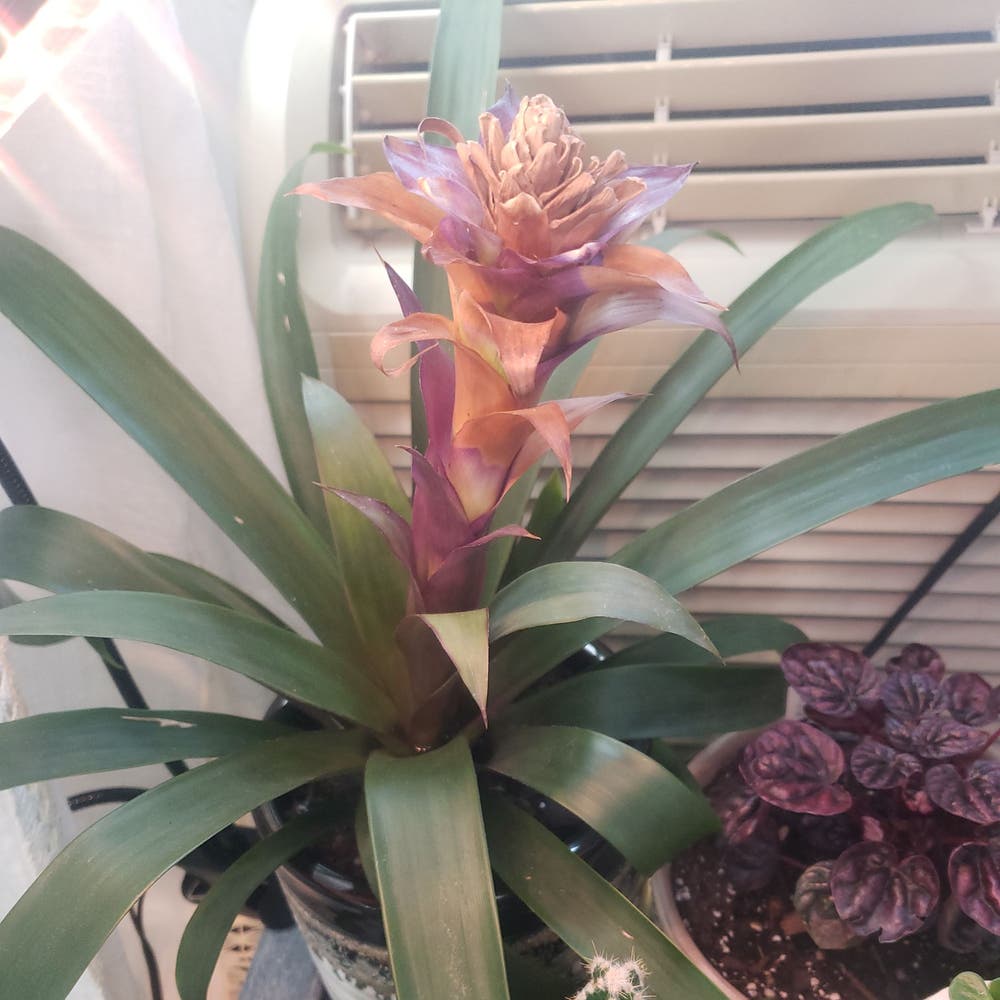
Step-by-Step Guide to Fixing Flower Issues in Bromeliad
Neoregelia 'Shenba'
By the Greg Editorial Team
Jul 26, 2024•2 min read
This article was created with the help of AI so we can cover more plants for you. May contain errors. See one? Report it here.
- 🌸 Bright, indirect light and warmth are key for Bromeliad blooming.
- 💦🌡️ Stable conditions prevent bud drop, ensuring full bloom development.
- ✂️ Pruning and balanced nutrients enhance bloom quality and longevity.
Bloom Cycle Challenges
Failure to Bloom 🌸
Bromeliads not blooming can leave enthusiasts puzzled. Here's how to troubleshoot:
- Look for signs like lack of vibrant color or absence of a flower stalk.
- Address light and temperature—Bromeliads prefer bright, indirect light and warm temperatures to initiate blooming.
- Check plant maturity; most Bromeliads won't bloom until they're fully grown, which can take a few years.
Bud Drop Dilemma 🥀
When buds fall before blooming, it's often a cry for help:
- Sudden temperature changes and inconsistent watering are common culprits.
- Keep conditions stable, especially during the budding phase, to prevent stress-induced drop.
- Investigate other factors like air circulation and humidity, ensuring they're in the ideal range for Bromeliads.
Flower Development Concerns
Abnormal Blooms
🌺 Bromeliads with unusual blooms might be signaling distress. Here's how to address it:
- Inspect for signs of abnormal development, such as discoloration, misshapen petals, or stunted growth.
- Assess nutrient levels; a balance between nitrogen, phosphorus, and potassium is crucial for healthy blooms.
Genetic and Environmental Factors
🧬 Flower integrity can be a complex interplay of genetics and environment:
- Recognize that genetic traits dictate the potential for flower shape and size.
- Protect your Bromeliads from environmental stress by monitoring temperature and light, ensuring they mimic the plant's native habitat as closely as possible.
Cultivation Practices
🌞 Light and Flowering
Bromeliads thrive when their light conditions mimic their native habitat. Here's how to get it right:
- Aim for bright, indirect light to simulate the dappled sunlight of a tropical canopy.
- Monitor light intensity and duration; too much direct sunlight can scorch leaves, while insufficient light may hinder blooming.
🍽️ Nutritional Support
Nutrients are the secret sauce for vibrant Bromeliad blooms. Here's the scoop:
- Phosphorus is your go-to for flower development; it's like a bloom-boosting superfood.
- Potassium ensures the plant's overall health, fortifying it to support those stunning flowers.
- Ease off nitrogen as the bloom cycle approaches to prevent lush foliage at the expense of blooms.
🌸 Pruning for Bloom Promotion
Pruning isn't just about aesthetics; it's a strategic move to encourage Bromeliad flowering:
- Snip away old or dead foliage to redirect energy to the bloom.
- Prune after the growth period but before the bloom cycle for optimal results, enhancing both flower longevity and appearance.
⚠️ Safety First
This content is for general information and may contain errors, omissions, or outdated details. It is not medical, veterinary advice, or an endorsement of therapeutic claims.
Always consult a qualified healthcare professional before using any plant as food, medicine, or supplement.
Never eat any plant (or feed one to pets) without confirming its identity with at least two trusted sources.
If you suspect poisoning, call Poison Control (800) 222-1222, the Pet Poison Helpline (800) 213-6680, or your local emergency service immediately.
Spotted an error? Please report it here.
Ensure your Bromeliads flourish 🌺 with Greg's personalized care plans that track light, temperature, and nutrient needs for show-stopping blooms!