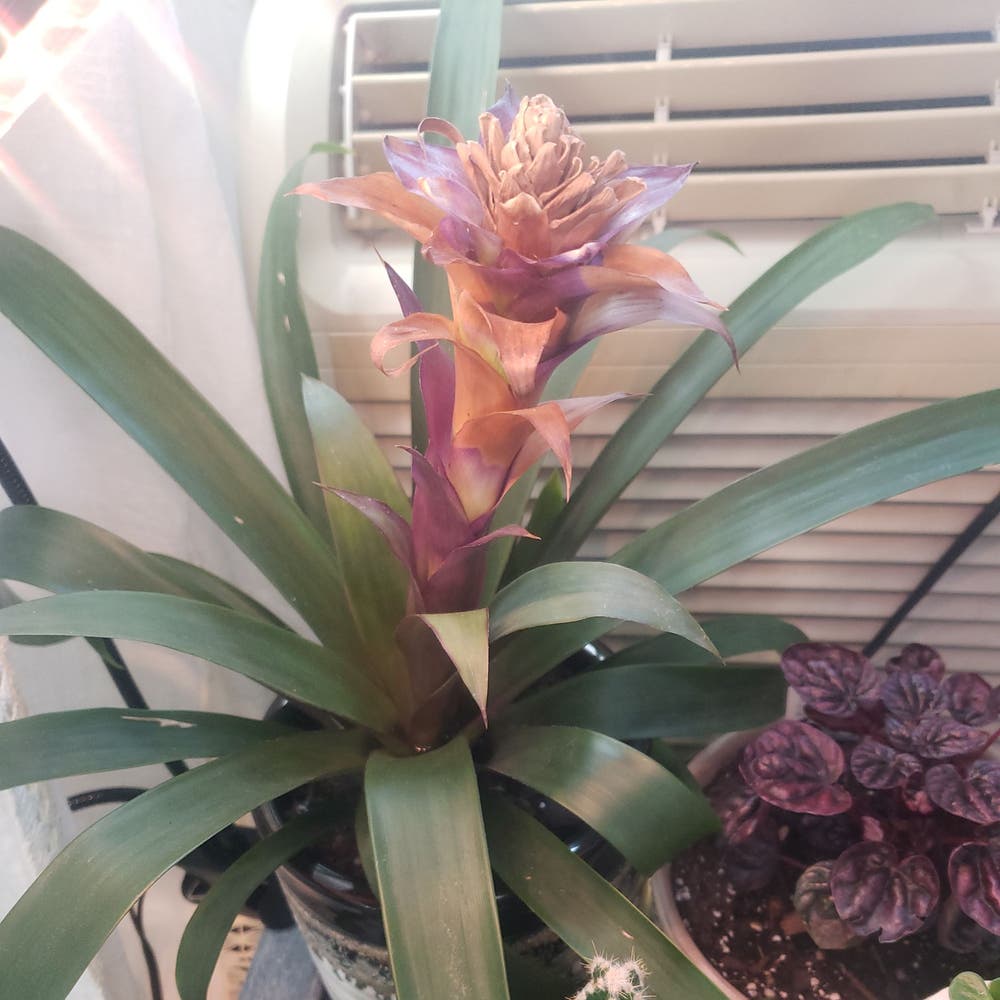
Your Bromeliad's Sunlight Needs
Neoregelia 'Shenba'
By the Greg Editorial Team
Jun 18, 2024•3 min read
This article was created with the help of AI so we can cover more plants for you. May contain errors. See one? Report it here.
- 🌤️ Bright, indirect light indoors keeps Bromeliads healthy.
- 🌱 Dappled sunlight outdoors is ideal; protect from midday sun.
- 🍎 Encourage blooming with red light wavelengths and an apple trick.
Soaking Up the Right Rays Indoors
🌿 Finding the Sweet Spot for Indoor Bromeliads
Bright, indirect light is the mantra for indoor Bromeliads. Scout for a spot near a window, but not one where the sun plays laser tag with the leaves. Leaf burn is a tell-tale sign of too much love from the sun, while a lackluster, stretching plant screams for more photons.
🛡️ Shielding from the Sun's Kiss
Direct sunlight is a no-go. Think of curtains and shades as your Bromeliad's personal bodyguards, keeping those harsh rays at bay. Adjust the light like you're tuning a guitar, aiming for that perfect note where your plant neither fries nor pines for the sun.
💡 Boosting Light with Technology
Grow lights are the indoor gardener's best friend, especially when the sun plays hard to get. LED or fluorescent – it's your call, but remember, we're not running a tanning salon here. Distance is key; too close and you might as well be microwaving your plant. Use them wisely to mimic the gentle embrace of natural light.

Basking in the Outdoor Glow
💡 Crafting the Perfect Outdoor Light Environment
Bromeliads, the show-offs of the plant world, love a good light show but don't want to fry in the spotlight. Positioning them in your garden or on the patio requires a bit of finesse. They crave bright light but wilt under the harsh gaze of direct sunlight.
Dappled sunlight is their jam, especially during the morning hours. It's like a gentle wake-up call rather than an alarm blaring in their leaves. The best outdoor exposure times? Think breakfast to brunch; post-noon, the sun's intensity can turn a bit diva-ish for their taste.
⛅️ Weathering the Elements
Midday sun is the drama queen of weather elements, and Bromeliads aren't fans of drama. Strategies for keeping your green friends from starring in a midday melodrama include strategic placement and creating artificial shade.
Consider using shading techniques like pergolas, shade cloths, or even the natural canopy of larger plants to cast a protective umbrella over your Bromeliads. It's like giving them a pair of stylish sunglasses to ward off the glare. And remember, the weather can be as unpredictable as a plot twist in a telenovela, so be ready to shuffle your plants to safer spots when the sun gets too intense.

The Little Light that Leads to Blooms
💡 Quick Tips for Optimal Light
Bright, indirect light is your Bromeliad's best friend when it comes to encouraging those coveted blooms. A spot that basks in some gentle morning sun can work wonders without risking leaf burn.
💐 Recognizing Bloom-Ready Signs
Stay vigilant for the subtle cues of budding. When you notice these signs, it's showtime—adjust your care to support the flowering process.
🕰 Forcing Blooms: A Patience Game
Sometimes, nature needs a nudge. Placing an apple near your plant can speed up blooming, but remember, each species has its own tempo.
🌈 Light Quality Matters
Consider the color spectrum of your light source. Red wavelengths can be the secret sauce to get your Bromeliad to hit its flowering groove.
🌱 After the Bloom
Once the show's over, don't fret. Shift your Bromeliad to a brighter spot and watch for the arrival of pups—a promise of new life and future blooms.

⚠️ Safety First
This content is for general information and may contain errors, omissions, or outdated details. It is not medical, veterinary advice, or an endorsement of therapeutic claims.
Always consult a qualified healthcare professional before using any plant as food, medicine, or supplement.
Never eat any plant (or feed one to pets) without confirming its identity with at least two trusted sources.
If you suspect poisoning, call Poison Control (800) 222-1222, the Pet Poison Helpline (800) 213-6680, or your local emergency service immediately.
Spotted an error? Please report it here.
Ensure your Bromeliads thrive 🌿 with Greg's PlantVision, which helps you find that sweet spot of bright, indirect light for perfect growth and blooms.