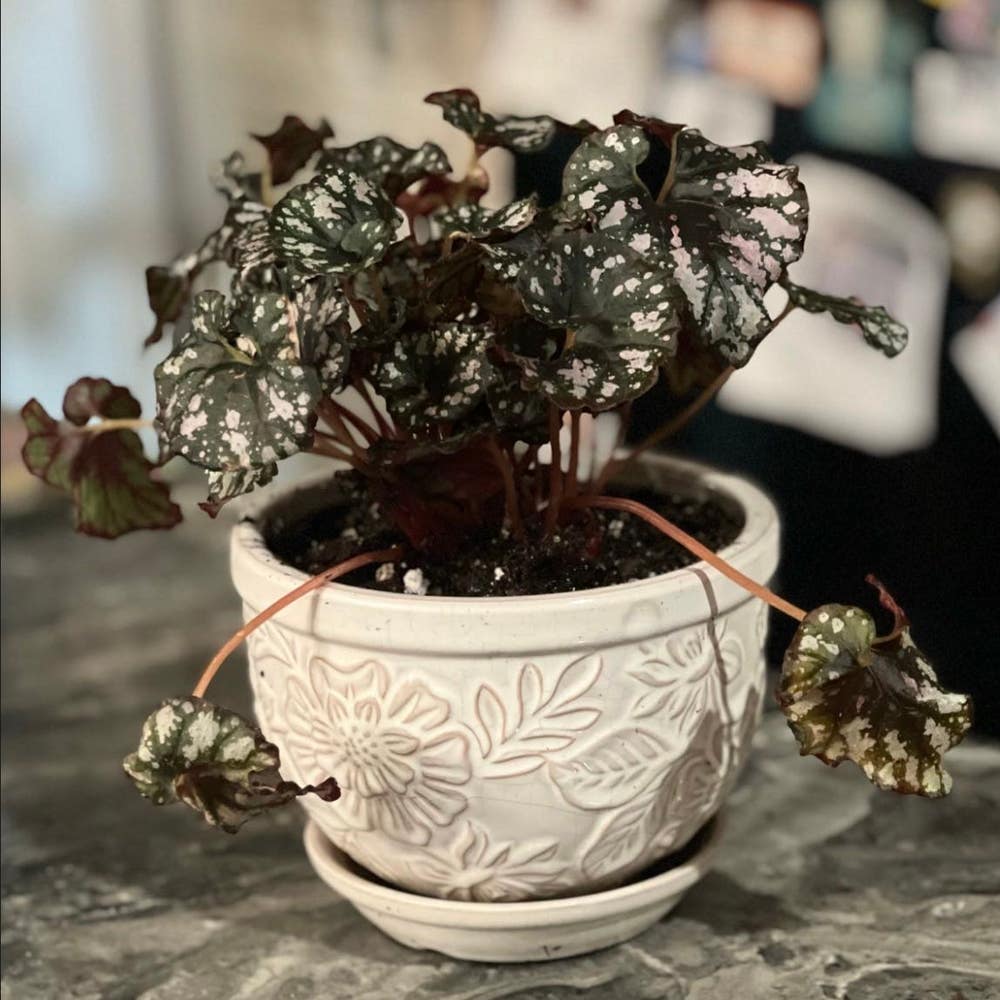
How Can You Tell If A Painted-leaf Begonia Is Dying?
Begonia rex
By the Greg Editorial Team
Jun 18, 2024•5 min read
This article was created with the help of AI so we can cover more plants for you. May contain errors. See one? Report it here.
- Yellow leaves and mushy stems signal over-watering; let soil dry out.
- Brown patches or faded leaves? Adjust light levels for your Begonia's health.
- Pests and root rot are threats; use insecticidal soap and ensure good drainage.
Water Woes: Too Much or Too Little
💦 Over-watering
Yellowing leaves and mushy stems are the begonia's cry for help—it's drowning in your kindness. To rescue your waterlogged friend, first, cease all watering. Let the soil dry out, feeling just beneath the surface for moisture. If it's soggy, consider repotting with fresh, well-draining soil. Trim any rotted roots or leaves to prevent spread. Going forward, water only when the top inch of soil feels dry.
🏜️ Under-watering
Wilting and dry leaves are your begonia's way of saying it's parched. Don't just flood it; water deeply but infrequently, allowing the topsoil to dry between drinks. Ensure the pot has adequate drainage to avoid soggy soil scenarios. If the leaves are crispy, it's a sign to up your watering game, but always check the soil first—overcompensation can lead to root rot.

Light and Leaf Scorching: Finding the Sweet Spot
🌞 Too Much Light
When your Painted-leaf Begonia's leaves sport brown, crispy patches, it's waving a red flag for too much sun. It's like the plant's version of a sunburn, and it's begging for a break.
Burn notice: Identifying leaf scorch from too much sun
Scorched leaves are the plant's SOS. They'll show up as brown spots or a bleached appearance, signaling that it's time to dial down the sunlight exposure.
Shade and shelter: Protecting your Begonia from harsh rays
To protect your Begonia, think of creating a sunbathing spot with ample shade. This means finding a spot with bright, indirect light where it won't get fried during the sun's peak hours.
🌑 Too Little Light
Conversely, if your Begonia starts to resemble a lanky, stretching figure, it's a clear sign of light starvation. Faded leaves and leggy stems are the plant's way of reaching for more light.
Growth gone wrong: Leggy stems and faded leaves
Leggy growth and lackluster leaves mean your Begonia isn't getting its light fix. It's stretching out, trying to grab every photon it can, but it's just not enough.
Light it up: Ensuring your Begonia gets its light fix
To hit the lighting jackpot, place your Begonia where it can soak up bright, indirect sunlight without the risk of turning into a crispy critter. Keep an eye out for new growth or a rare flower spike as signs that you've found the sweet spot.

Pests and Pathogens: Unwanted Guests
🐜 Pests
Bug off: Spotting and evicting common Begonia pests
Pests are the uninvited guests that never RSVP. Mealybugs, aphids, and spider mites top the list of freeloaders on your Painted-leaf Begonia. A magnifying glass might reveal these tiny crashers, feasting on your plant's sap and leaving behind a sticky residue called honeydew. To evict them, dab with alcohol-soaked cotton swabs or spray with insecticidal soap. For a more natural approach, introduce predatory insects like ladybugs into the mix.
Clean sweep: Preventative measures and treatments
Prevention beats cure every time. Keep your Begonia's leaves clean and dust-free to prevent pest parties. Regularly inspect new plants for stowaways before they join your collection. If pests persist, consider neem oil or a systemic insecticide for a more thorough clean-up. Remember, a stressed plant is an invitation for pests, so keep your Begonia happy and they'll be less likely to visit.
Mold and Fungus
Fuzzy foes: Identifying mold and fungal issues
Mold and fungus bring the fuzz without the warm and cozy feelings. Powdery mildew and Botrytis cinerea, aka gray mold, are the usual suspects. They show up as white powder or brown spots on leaves, especially when the air is as still as a stagnant pond. Increase airflow and reduce humidity to make conditions less hospitable for these uninvited guests.
Clear the air: Strategies to eradicate mold and fungus
When mold and fungus crash your Begonia's party, it's time to clear the air—literally. Improve ventilation around your plant and consider a fungicide if the situation is dire. Remove affected leaves with sterilized scissors and avoid overhead watering to keep the leaves dry. Consistent care and a watchful eye are your best defenses against these pesky party poopers.

Root Rot: The Silent Killer
🚱 Soggy Bottom Blues: Early Signs of Root Rot
Root rot is the ninja of plant ailments, often undetected until it's too late. Yellowing leaves or a plant that looks like it's given up on life could be your first hint. Get your hands dirty and check the roots; if they're as brown and mushy as overcooked noodles, you've got a problem. Healthy roots should be firm and white, like fresh mozzarella.
🕵️♂️ Root Examination: The Telltale Heart
When you suspect root rot, it's time for a root autopsy. Gently remove your Begonia from its pot and inspect the roots. If they crumble like stale cake, it's bad news. Also, trust your nose—if it smells like a forgotten gym locker, that's the stench of root decay.
🍄 Fungus Among Us
Mold or fungus on the soil is a red flag. It's like a welcome mat for root rot. If you spot these uninvited guests, it's intervention time. And remember, bright light is your ally here; it's like vitamin D for your plant, bolstering its defenses against the rot.
🕰 Immediate Actions to Treat Root Rot
Upon discovering root rot, it's a race against the clock. Carefully remove the plant from its pot, and prune away the rotted roots with the precision of a bonsai master. Repot in fresh, well-draining soil and choose a pot that doesn't hold a pool party for the roots every time you water.
🚰 Preventing Future Root Rot
Prevention is all about the watering can. Water your Begonia like you're making a martini—just enough to get the party started, but not so much that it drowns. Ensure the pot has ample drainage and never let your plant sit in a puddle. Vigilance is key; keep an eye on your Begonia like it's a toddler at a pool party.
⚠️ Safety First
This content is for general information and may contain errors, omissions, or outdated details. It is not medical, veterinary advice, or an endorsement of therapeutic claims.
Always consult a qualified healthcare professional before using any plant as food, medicine, or supplement.
Never eat any plant (or feed one to pets) without confirming its identity with at least two trusted sources.
If you suspect poisoning, call Poison Control (800) 222-1222, the Pet Poison Helpline (800) 213-6680, or your local emergency service immediately.
Spotted an error? Please report it here.
Revive your painted-leaf begonia and prevent future distress with Greg's tailored reminders 🚿, balancing hydration, light, and pest control for your plant's needs.