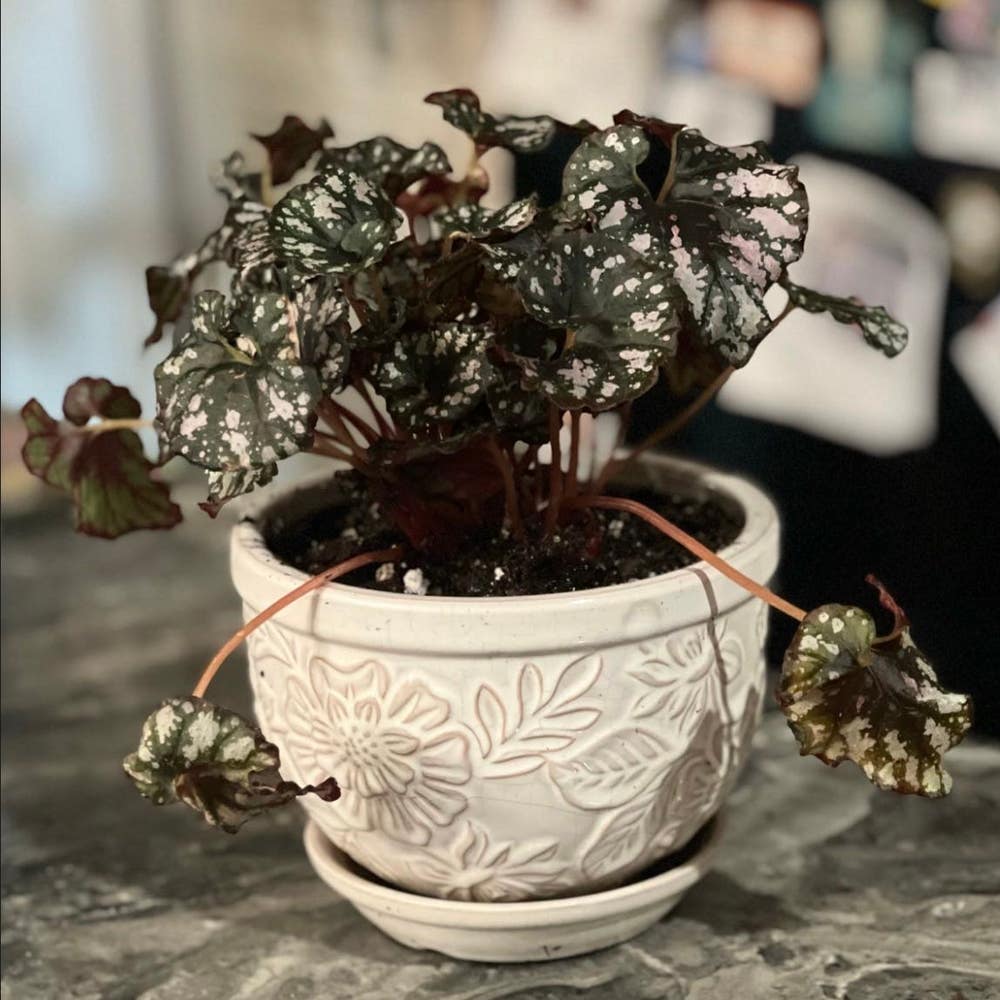
💧 How Much Should I Water My Painted-leaf Begonia?
Begonia rex
By the Greg Editorial Team
Jun 18, 2024•4 min read
This article was created with the help of AI so we can cover more plants for you. May contain errors. See one? Report it here.
- Test soil moisture before watering to prevent over or underwatering.
- Seasons and growth cycles dictate your begonia's watering needs.
- Water quality matters; rainwater or distilled is best for begonias.
When to Water Your Painted-Leaf Begonia
💧 Checking Soil Moisture
Test soil moisture before you even think about watering your painted-leaf begonia. Stick your finger into the soil up to the first knuckle; if it's dry, your green buddy is thirsty. Remember, the soil type matters—a chunky, well-draining mix dries out faster than dense, clay-heavy soil.
🌱 Seasonal Considerations
As the seasons shift, so does your begonia's need for water. Summer means upping the hydration game, but come winter, it's time to ease up on the watering can. Pay special attention to the plant's growth and dormancy periods; when it's in full growth mode, it'll drink up more than when it's taking a seasonal snooze.

How to Water Your Painted-Leaf Begonia
💧 Best Watering Techniques
Bottom watering is the MVP for your painted-leaf begonia. It's like giving your plant a VIP pass to hydration heaven, allowing it to drink at its own pace. Just plop your pot in a sink filled with water and let it chill there for about 45 minutes. After the soak, let it drain like it's shedding excess baggage—about 30 minutes should do the trick.
Top watering isn't off the table, though. If you're more of a hands-on plant parent, go ahead and give your soil a gentle shower, making sure you're not drenching the leaves. Remember, begonias aren't into wet foliage—it's the root rave they're after.
💦 Water Quality Matters
Water quality isn't just a buzzword; it's a lifeline for your begonia. Tap water can be a mixed bag—sometimes it's fine, other times it's like serving fast food to a gourmet. If you're in doubt, let it sit out. Letting tap water stand for a day can help some of the nasties evaporate.
Rainwater is like the craft beer of plant hydration—often better, always appreciated. If you can collect it, your begonia will thank you with a flourish. Distilled water is the high-end bottled water in the plant world; it's pure, it's clean, and it's begging to be used if you want to spoil your green buddy.
Remember, your painted-leaf begonia doesn't need a flood. It's all about that moist-but-not-soggy life. Keep the soil feeling like a wrung-out sponge—damp to the touch, but not dripping. And never let your plant's feet soak in a saucer of leftover water; that's just asking for trouble.

Recognizing Watering Issues
💧 Overwatering Woes
Brown spots on your painted-leaf begonia's leaves are like red flags waving at you, signaling that it's time to ease up on the watering. If the soil feels more like a swamp than a fertile bed, you've gone overboard. Root rot is the plant equivalent of a code red; if the roots are soft and mushy, it's time for an intervention.
Mold on the soil surface is not a trendy home decor feature—it's a cry for help from your begonia, begging you to let the soil breathe. Leaves that are more limp than a day-old salad are also telling you to back off with the H2O.
🏜️ Underwatering Signs
When your begonia's leaves droop like they've just heard the world's saddest song, it's a sign they're thirsty. A soil check is in order—if it's drier than a stand-up comedian's punchline, your plant is parched. Stunted growth is another telltale sign; if your begonia is growing slower than a tortoise on a lazy day, it's time to up the hydration.
Crispy leaves are the plant's way of saying, "I could really use a drink." If you notice the air is as dry as a desert, consider increasing the humidity. Sometimes, it's not just about watering more—it's about creating an environment where the water doesn't vanish like a magician's trick.

Tailoring Watering to Your Environment
💧 Humidity and Your Begonia
Humidity is the silent player in your begonia's well-being. Indoor humidity levels can make or break your watering game. In a dry room, your plant's soil will parch faster, nudging you to water more often. Conversely, a humid nook might mean your begonia sips less frequently.
To keep the air moisture just right, consider a humidifier or a DIY pebble tray. Remember, begonias aren't fans of wet feet or leaves; aim for humid, not damp. Overdoing it invites unwanted fungal gatecrashers.
🌞 Light and Temperature Effects
Light and temperature aren't just backdrop elements; they're the directors of your watering schedule. A begonia basking in bright light with a side of warmth will guzzle water like it's going out of fashion. Cooler, dimmer conditions slow down the drinking pace.
Adjust your watering to the rhythm of your home's climate. Keep your begonia away from drafty windows or heat sources that could throw it into a watering whodunit. And always, always check the soil before reaching for the watering can—your begonia will thank you with a flourish of healthy leaves.
⚠️ Safety First
This content is for general information and may contain errors, omissions, or outdated details. It is not medical, veterinary advice, or an endorsement of therapeutic claims.
Always consult a qualified healthcare professional before using any plant as food, medicine, or supplement.
Never eat any plant (or feed one to pets) without confirming its identity with at least two trusted sources.
If you suspect poisoning, call Poison Control (800) 222-1222, the Pet Poison Helpline (800) 213-6680, or your local emergency service immediately.
Spotted an error? Please report it here.
Keep your painted-leaf begonia thriving 🌿 with Greg's personalized reminders, ensuring perfect moisture every time without the guesswork.