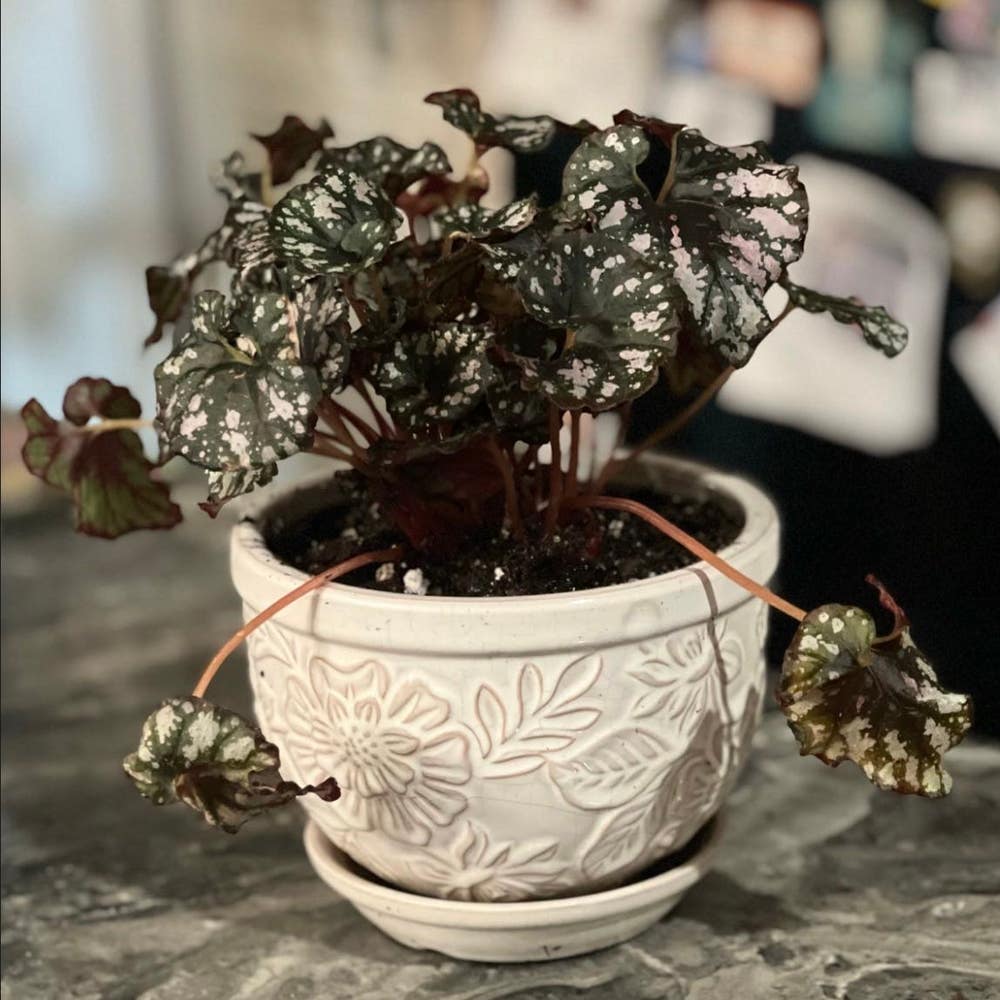
🎨 4 Tips for Healing Brown Spots on Your Painted-Leaf Begonia
Begonia rex
By the Greg Editorial Team
Sep 29, 2024•4 min read
This article was created with the help of AI so we can cover more plants for you. May contain errors. See one? Report it here.
- 💧 Overwatering and underwatering cause brown spots; adjust your watering routine accordingly.
- 🌱 Fungal and bacterial infections lead to leaf damage; treat with organic fungicides promptly.
- 🐛 Inspect for pests regularly to prevent damage and maintain your begonia's health.
Diagnosing the Problem
💧 Overwatering and Its Effects
Overwatering can wreak havoc on your Painted-Leaf Begonia. Look for symptoms like yellowing leaves, mushy stems, and root rot.
To diagnose overwatering, test the soil moisture using a moisture meter or your finger. Additionally, check the drainage holes for any blockages that could be trapping excess water.
🌵 Underwatering and Its Effects
Underwatering presents its own set of challenges. Symptoms include crispy leaf edges, drooping leaves, and stunted growth.
Assess soil dryness by checking the depth for moisture. Observe how your plant responds after watering to gauge its needs.
🍄 Fungal Infections and Bacterial Diseases
Fungal infections are common in begonias, with leaf spot diseases like powdery mildew being prevalent. Look for fuzzy white spots and yellowing leaves as key indicators.
Bacterial diseases can also affect your plant. Signs of bacterial leaf spot include dark, water-soaked spots. It's crucial to differentiate between fungal and bacterial issues for effective treatment.
🐛 Pest Infestations
Pests can be a significant threat to your Painted-Leaf Begonia. Common culprits include spider mites, which leave webbing and stippled leaves, and aphids, known for their sticky residue and curled leaves.
To diagnose pest infestations, conduct a visual inspection of the leaf undersides and stems. A magnifying glass can help you spot even the tiniest pests that might be hiding.
Understanding these issues is the first step toward restoring your plant's health. Next, let’s explore effective treatment options to tackle these problems head-on.
Treatment Options
Immediate Actions to Take for Brown Spots 🌿
When you notice brown spots on your Painted-Leaf Begonia, quick action is essential. Start by removing any affected leaves to prevent the spread of disease.
Next, adjust your watering schedule based on your diagnosis. If overwatering is the culprit, cut back; if underwatering is the issue, increase your watering frequency.
Recommended Fungicides and Treatments 🧪
For fungal infections, selecting the right fungicide is crucial. Organic options like neem oil and sulfur-based fungicides are effective and environmentally friendly.
If you prefer chemical solutions, chlorothalonil is a strong contender. Apply these treatments using proper spraying techniques, ensuring even coverage while following the recommended frequency for best results.
Adjusting Watering Practices 💧
Proper watering is vital for your begonia's health. Water your plant when the top inch of soil feels dry to the touch.
Make sure to water thoroughly until you see drainage from the bottom of the pot. This ensures that the roots receive adequate moisture without becoming waterlogged.
Improving Humidity Levels 🌫️
Humidity plays a significant role in the well-being of your Painted-Leaf Begonia. Consider using a humidifier to maintain optimal moisture levels in the air.
Alternatively, pebble trays filled with water can help increase humidity around your plant. Grouping your begonias together can also create a microclimate that promotes healthier growth.
Nutrient Supplementation 🌱
To support recovery, consider nutrient supplementation. Balanced liquid fertilizers with appropriate NPK ratios are ideal for begonias.
Apply these fertilizers during the growing season, following the recommended timing and frequency. Watch for signs of nutrient recovery, such as vibrant, healthy leaves, to gauge your plant's progress.
With these treatment options, your Painted-Leaf Begonia can bounce back from brown spots and thrive once more. Next, let’s explore preventive measures to keep your plant healthy in the long run.
Preventive Measures
🌊 Best Practices for Watering Painted-Leaf Begonia
Establishing a consistent watering routine is crucial for the health of your Painted-Leaf Begonia. Adjust your watering schedule seasonally, as these plants have different needs during their growth cycles.
Regularly monitor environmental conditions, such as humidity and temperature, to ensure your plant thrives. This proactive approach helps prevent issues before they arise.
🔍 Regular Inspection for Pests and Diseases
Conduct weekly inspections to catch any early signs of pests or diseases. This simple habit can save your plant from significant damage.
Utilize natural predators and insecticidal soaps as effective pest control techniques. Staying vigilant will keep your begonia healthy and vibrant.
🌱 Proper Fertilization Techniques
Follow a monthly fertilization schedule during the growing season to support your plant's growth. This consistency helps maintain nutrient levels in the soil.
Choose between slow-release granules and liquid feeds based on your preference and plant needs. Both options can effectively nourish your begonia, promoting lush foliage and vibrant colors.
By implementing these preventive measures, you can enjoy a thriving Painted-Leaf Begonia. Next, let's explore how to treat any issues that may arise.
⚠️ Safety First
This content is for general information and may contain errors, omissions, or outdated details. It is not medical, veterinary advice, or an endorsement of therapeutic claims.
Always consult a qualified healthcare professional before using any plant as food, medicine, or supplement.
Never eat any plant (or feed one to pets) without confirming its identity with at least two trusted sources.
If you suspect poisoning, call Poison Control (800) 222-1222, the Pet Poison Helpline (800) 213-6680, or your local emergency service immediately.
Spotted an error? Please report it here.
Transform your Painted-Leaf Begonia's health by tackling those brown spots with Greg's tailored watering reminders and pest alerts for thriving growth! 🌿