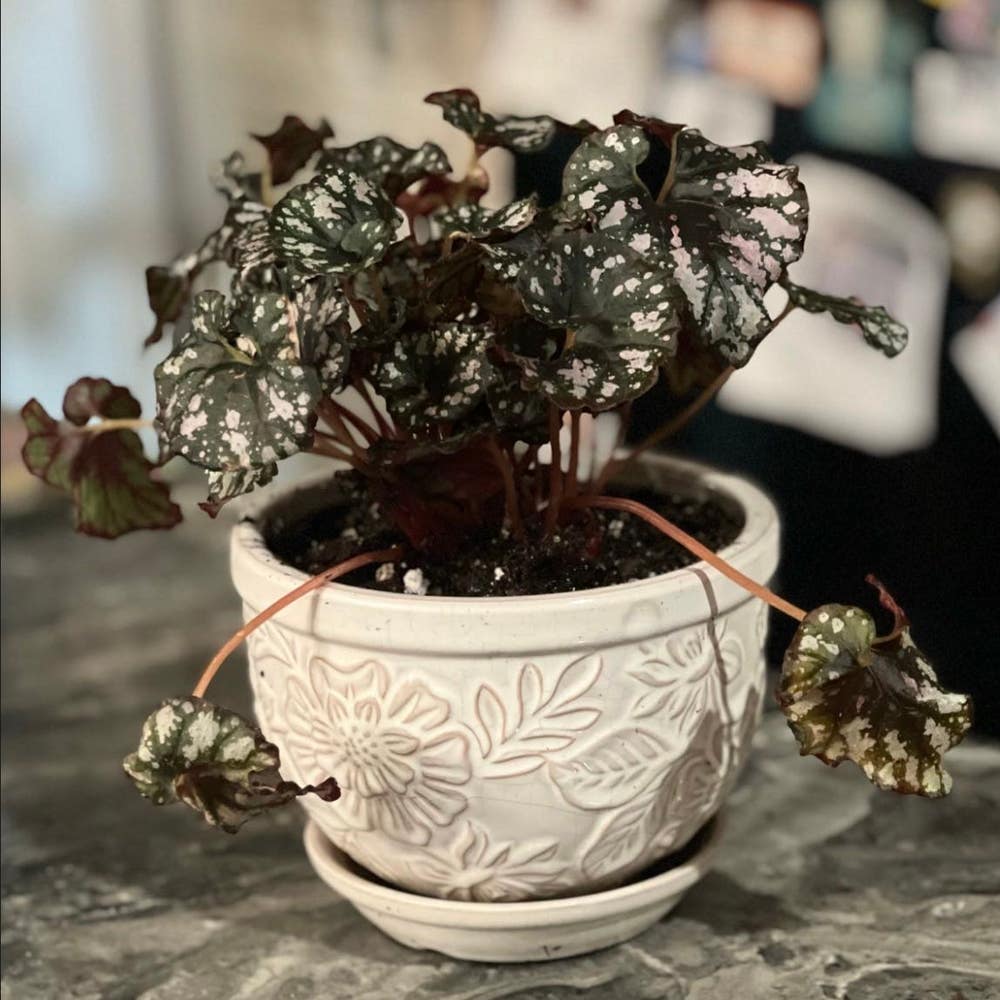
🎨 How to Fix Leaves Falling Over on Your Painted-Leaf Begonia
Begonia rex
By the Greg Editorial Team
Sep 29, 2024•3 min read
This article was created with the help of AI so we can cover more plants for you. May contain errors. See one? Report it here.
- 💧 Overwatering and underwatering cause droopy leaves; balance moisture for health.
- 🌡️ Environmental stress from light and temperature changes affects your begonia's vitality.
- 🐛 Pests like aphids and spider mites can lead to droopiness; manage them promptly.
Causes of Leaf Droop
💧 Overwatering and Underwatering
Overwatering is a common issue for painted-leaf begonias. Symptoms include yellowing leaves and soggy soil, which can lead to serious health problems for your plant.
On the flip side, underwatering can also cause droopiness. Look for dry, crispy edges and wilting leaves as telltale signs that your plant needs a drink.
🌪️ Environmental Stress and Root Rot
Environmental stress can sneak up on your begonias. Sudden changes in light, temperature, or humidity can leave your plant feeling out of sorts.
Root rot is another culprit that can cause droopy leaves. This condition arises from poor drainage and overwatering, leading to mushy roots and an unhappy plant.
Understanding these causes is crucial for keeping your painted-leaf begonia thriving. By addressing these issues promptly, you can help your plant regain its vigor and beauty.
Symptoms of Unhealthy Leaves
Identifying Symptoms 🌿
Recognizing the signs of unhealthy leaves is crucial for the well-being of your painted-leaf begonia. One of the first indicators is leaf discoloration. You might notice yellowing or browning at the edges, which can signal underlying issues.
Another common symptom is wilting. If the leaves appear limp and lack firmness, it’s a clear sign that your plant needs attention.
Lastly, leaf drop can occur, where you suddenly find leaves falling off, often accompanied by droopiness. This is a distress signal from your plant that shouldn't be ignored.
Understanding these symptoms helps you take proactive steps to restore your plant's health. By addressing these issues early, you can ensure your begonia thrives and remains vibrant.
Next, let’s explore how to manage pests and diseases that could further threaten your plant’s health.
Pest and Disease Management
Common Pests and Control Methods 🐞
Pests can wreak havoc on your painted-leaf begonia, leading to droopy leaves and other issues.
Aphids are a common culprit. You might notice sticky residue on the leaves and curled edges, signaling their presence.
Spider mites are another threat. Look for fine webbing and stippled leaves, which indicate these tiny pests are at work.
To combat these nuisances, consider using insecticidal soap or neem oil. Both are effective and can help restore your plant's health without harsh chemicals.
Identifying and Treating Diseases 🦠
Diseases can also contribute to leaf droop.
Root rot is particularly concerning. Symptoms include mushy roots and wilting leaves, often caused by overwatering and poor drainage.
Fungal infections can manifest as leaf spots and mold. If you spot these signs, treating with fungicides is essential to prevent further damage.
By staying vigilant and addressing pests and diseases promptly, you can keep your painted-leaf begonia thriving.
Next, let’s explore preventive measures and best practices to ensure your plant remains healthy and vibrant.
Preventive Measures and Best Practices
🌱 Routine Care Tips
Regularly checking soil moisture is crucial for your painted-leaf begonia. A moisture meter can provide accurate readings, helping you avoid both overwatering and underwatering.
Maintaining a consistent watering schedule is equally important. Aim to keep the soil evenly moist, but never let it dry out completely to ensure your plant thrives.
🍂 Seasonal Adjustments
As winter approaches, adjusting humidity levels becomes essential. Using a humidifier or misting your plant can help maintain the moisture it craves.
Additionally, monitoring temperature changes is vital. Keep your begonia away from heating vents or cold drafts to protect it from environmental stress.
By implementing these preventive measures, you can foster a healthy environment for your painted-leaf begonia, reducing the risk of droopy leaves and other issues. Next, let’s explore the symptoms of unhealthy leaves to better understand what to look out for.
⚠️ Safety First
This content is for general information and may contain errors, omissions, or outdated details. It is not medical, veterinary advice, or an endorsement of therapeutic claims.
Always consult a qualified healthcare professional before using any plant as food, medicine, or supplement.
Never eat any plant (or feed one to pets) without confirming its identity with at least two trusted sources.
If you suspect poisoning, call Poison Control (800) 222-1222, the Pet Poison Helpline (800) 213-6680, or your local emergency service immediately.
Spotted an error? Please report it here.
Revive your painted-leaf begonia's vibrancy 🌿 by using Greg's tailored watering reminders and pest control tips to keep those droopy leaves at bay!