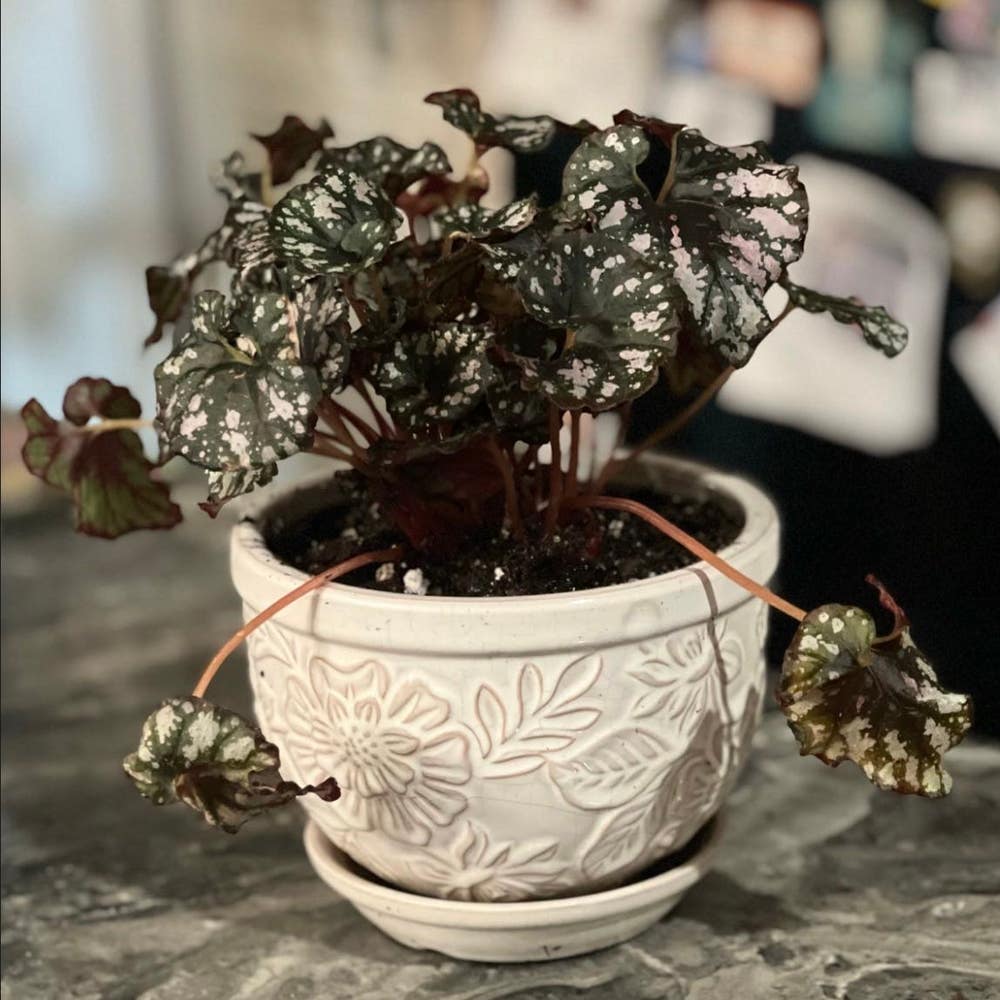
Painted-leaf Begonia - Ultimate Guide to Fertilizing
Begonia rex
By the Greg Editorial Team
Jun 18, 2024•4 min read
This article was created with the help of AI so we can cover more plants for you. May contain errors. See one? Report it here.
- 🌱 Organic vs. Synthetic: Organic for long-term health, synthetic for quick fixes.
- 📅 Fertilize monthly in growth phase, reduce before dormancy, avoid in winter.
- ⚠️ Spot over-fertilization: Yellow leaves, brown tips, white soil crust.
Choosing the Right Fertilizer for Your Painted-leaf Begonia
💡 Organic vs. Synthetic: Pros and Cons
Organic fertilizers are the tortoises in the race: slow and steady. They enrich the soil ecosystem, leading to long-term health benefits for your Painted-leaf Begonia. But, they can be a bit unpredictable with their nutrient ratios. On the other hand, synthetic fertilizers are the hares, offering a quick nutrient fix with precise N-P-K ratios. However, they can be harsh and may lead to over-fertilization if not used carefully.
💡 N-P-K Ratios: Decoding the Numbers
The N-P-K ratio is like your Begonia's dietary label, indicating the balance of nitrogen, phosphorus, and potassium. Nitrogen fuels leafy growth, phosphorus strengthens roots and blooms, and potassium overall plant health. A balanced, all-purpose ratio like 10-10-10 is often recommended, but during the blooming phase, a formula with higher phosphorus might be your Begonia's best friend.
💡 Liquid Gold: Water-Soluble Fertilizers
Water-soluble fertilizers are the superheroes of the Begonia world, delivering nutrients directly to the roots and ensuring no food goes to waste. They're easy to apply during your regular watering routine, making them a convenient choice. Just remember, moderation is key—overdoing it can lead to nutrient burn faster than you can say "Oops!"

Timing is Everything: Fertilizing Schedule
🌱 Growing Season Guidelines
Spring marks the starting line for your Painted-leaf Begonia's growth marathon. Fertilize monthly during this period of vigorous growth. The plant is stretching its legs, eager to show off its vibrant foliage and blooms.
As summer heats up, so does your Begonia's appetite. Stick to the monthly routine, ensuring it gets a balanced meal of nutrients. This is the plant's prime time, and it's hungry for that fertilizer boost.
❄️ Winter Blues: Fertilizing During Dormancy
Come fall, it's time to ease off the gas. About 8 weeks before the first frost, start reducing the fertilizer frequency. Your Begonia is preparing to hunker down for winter, and overfeeding now is like offering a heavy dinner right before bedtime.
Winter is the Begonia's snooze season. Hold off on fertilizing entirely during these chilly months. Your plant's metabolism has slowed down, and it won't thank you for extra nutrients it can't use. It's a well-deserved rest before the next growing season kicks off.

Fertilizer Application: Doing it Right
🌱 The Root of the Matter: Soil Application
Applying fertilizer to the soil is the main event in feeding your Painted-leaf Begonia. Stick to the script on the product label to avoid root burn. If you're using slow-release sticks, bury them near the plant base. They'll decompose gradually, releasing nutrients each time you water. Remember, the goal is to nourish, not overwhelm.
🍃 Foliar Feeding: A Leafy Approach
Foliar feeding is like a nutrient injection for leaves. It's a swift solution for deficiencies, but precision is key. Aim for the undersides of leaves where absorption is top-notch. Mix your potion as directed, and mist lightly—overdoing it can lead to a sticky mess or worse, fungal issues. Keep it light and even, and your Begonia's foliage will thank you.

Recognizing and Rescuing from Over-Fertilization
🚨 Spotting Trouble: Symptoms of Excess Fertilizer
If your Painted-leaf Begonia is looking more drama queen than queen of the garden, you might be dealing with over-fertilization. Yellowing leaves, especially the lower ones, are your first clue. Brown tips or edges? That's your Begonia crying out for help. And if the soil's sporting a white crust, it's not a trendy new topping; it's a buildup of minerals. These are your Begonia's way of saying, "I'm stuffed, thanks!"
🏥 The Recovery Room: Fixing Over-Fertilization
Caught in the act of overfeeding? Time to switch to damage control. First, remove any visible fertilizer from the soil to stop the nutrient assault. Next, it's time for a soil leach—run water through the soil to flush out those excess salts. Think of it as a Begonia detox. You may need to repeat this every few days, like a serial apology until your plant forgives you. If the damage is severe, consider repotting with fresh soil. And remember, when you resume fertilizing, go easy—half-strength is your new mantra.
⚠️ Safety First
This content is for general information and may contain errors, omissions, or outdated details. It is not medical, veterinary advice, or an endorsement of therapeutic claims.
Always consult a qualified healthcare professional before using any plant as food, medicine, or supplement.
Never eat any plant (or feed one to pets) without confirming its identity with at least two trusted sources.
If you suspect poisoning, call Poison Control (800) 222-1222, the Pet Poison Helpline (800) 213-6680, or your local emergency service immediately.
Spotted an error? Please report it here.
Achieve optimal growth 🌱 for your Painted-leaf Begonia with Greg's precise fertilizing schedule tailored to your plant's needs.