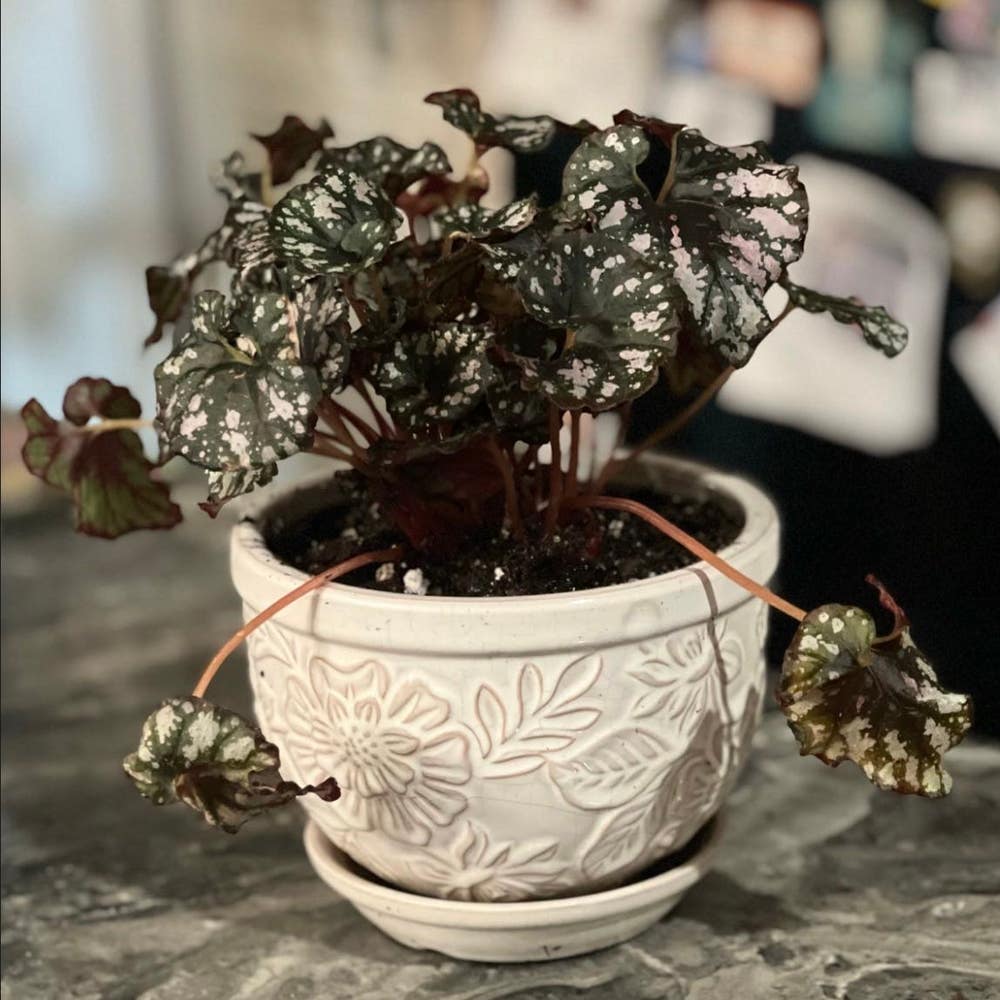
Why Are There Brown Spots on My Painted-leaf Begonia Leaves?
Begonia rex
By the Greg Editorial Team
Jun 18, 2024•4 min read
This article was created with the help of AI so we can cover more plants for you. May contain errors. See one? Report it here.
- Fungal vs. bacterial spots: Look for halos or water-soaked edges.
- Use fungicides and bactericides wisely to treat infections.
- Prevent with proper care: Avoid overhead watering, balance humidity and heat.
Spotting the Culprits: What's Causing the Brown Spots?
🍄 Fungal Foes
Fungal infections are the stealthy saboteurs of Painted-leaf Begonia leaves, leaving brown spots as their calling card. These spots often come with a colorful halo, a tell-tale sign of the fungal festivities. High humidity and stagnant air are their best pals, and they thrive in environments where plants are overwatered and drainage is poor.
To spot a fungus among us, look for patterns and repetitions in the spots. A fungal infection might show up as a cluster of small spots, whereas natural variations in leaf pigmentation are typically more random. Consistency in the appearance of spots across the foliage often indicates a fungal invasion.
🦠 Bacterial Baddies
Bacterial infections are the undercover agents in the plant world, causing brown spots with distinctive edges. These spots may appear water-soaked, with a red or yellow rim, signaling bacterial blight. Overwatering and poor drainage are like rolling out the red carpet for these microscopic invaders.
To unmask bacterial infections, observe the texture of the spots. Bacterial spots are often softer and may seem wet, unlike the dry and brittle texture of spots caused by environmental factors like sunburn. If you notice these symptoms, it's time to consider bactericides and pruning as part of your plant's defense strategy.

Battling Brown Spots: Treatment Tactics
🍄 Combating Fungi
Protectant vs. Systemic Fungicides
Protectant fungicides act as a barrier, preventing fungal spores from taking hold. They must be applied before the fungus arrives. Systemic fungicides are absorbed by the plant and can stop the spread of the fungus even after infection.
Choosing the Right Fungicide
When picking a fungicide, consider tebuconazole or triticonazole for their effectiveness. Rotate fungicides to prevent resistance.
Home Remedies
For a gentler approach, a spray made of hydrogen peroxide or a dusting of cinnamon can tackle minor fungal issues. A baking soda mixture can also curb the spread of fungi.
💥 Waging War on Bacteria
Pruning: The Snip Strategy
Prune affected areas to remove bacteria's foothold. Ensure clean cuts and sterilize your tools to prevent further spread.
Bactericides: The Chemical Cavalry
Copper compounds and targeted bactericides like streptomycin are potent allies. Use them judiciously to avoid resistance.
Application Mastery
Apply treatments thoroughly, covering every leaf surface. Consistency is key—miss a spot, and you give the enemy a chance to regroup.
Cultural Practices
Keep plants spaced to reduce disease spread. Monitor your watering to avoid creating a breeding ground for pathogens.
Remember, the best offense is a good defense. Regular checks and proper cultural practices can save you a lot of trouble down the line.

Environmental Equilibrium: Keeping Your Begonia Blissful
💧 Water Wisdom
Monitor moisture like a detective on a stakeout. Your begonia's thirst varies with the weather, so keep your watering can and judgment flexible. Trust your touch; the soil's dampness under your fingertips is more telling than any gadget.
Quality counts. Bad water is a begonia's bane, so consider a water analysis not as overkill, but as essential care. Mulch is your undercover ally, locking in moisture and keeping the soil's secrets safe.
🌡️ Humidity and Heat Harmony
Balance is key when it comes to humidity and heat. Begonias don't bask in the Sahara nor thrive in the Amazon; aim for a comfortable middle ground. Steady temperatures between 65 to 75°F and a humidity level around 60% create a cozy climate without drama.
Bright, indirect light is the sweet spot—too much sun is a no-go, too little is a no-grow. Think of it as the perfect Instagram filter for your plant's life. Gradual changes to the environment are like a slow dance for your begonia's well-being, preventing leaf drop shock.
Remember, Sherlock, avoid overhead sprinklers; they're practically an invite for fungal gatecrashers. Misting? Aim low, protect the blooms, and keep powdery mildew out of the picture.
Keep your begonia's environment as consistent as a favorite coffee shop—comfortable, predictable, and always welcoming.

⚠️ Safety First
This content is for general information and may contain errors, omissions, or outdated details. It is not medical, veterinary advice, or an endorsement of therapeutic claims.
Always consult a qualified healthcare professional before using any plant as food, medicine, or supplement.
Never eat any plant (or feed one to pets) without confirming its identity with at least two trusted sources.
If you suspect poisoning, call Poison Control (800) 222-1222, the Pet Poison Helpline (800) 213-6680, or your local emergency service immediately.
Spotted an error? Please report it here.
Banish brown spots on your Painted-leaf Begonia with Greg's moisture monitoring 🌧 and tailored treatment reminders, ensuring your plant stays healthy and spot-free.