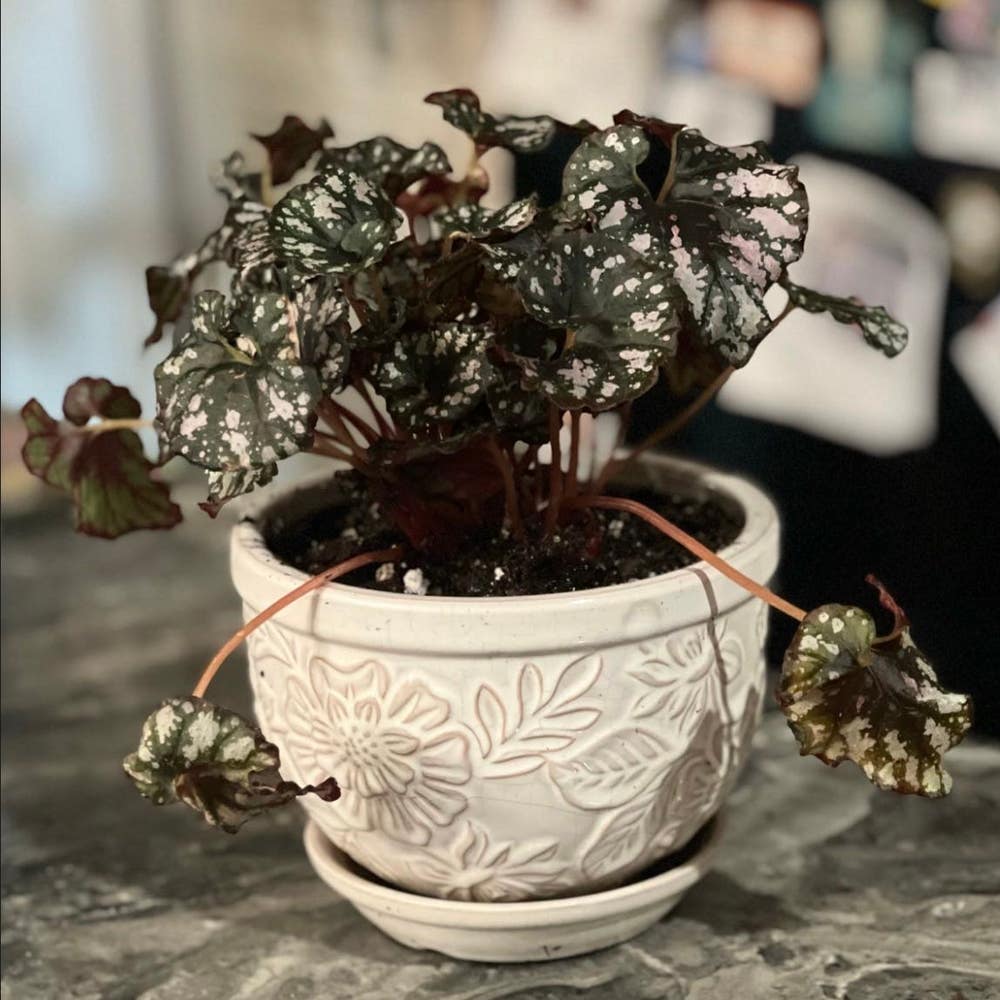
Painted-Leaf Begonia Root Rot Solutions
Begonia rex
By the Greg Editorial Team
Jun 18, 2024•4 min read
This article was created with the help of AI so we can cover more plants for you. May contain errors. See one? Report it here.
- 🍂 Yellow leaves and soft roots signal Begonia root rot.
- 🚱 Adjust watering and soil for root health—less water, more drainage.
- 🌡️ Balance temperature and humidity to prevent rot; aim for 65-75°F.
Spotting the Red Flags: Recognizing Root Rot in Your Begonia
🚩 Visual Distress Signals
Yellowing leaves are the plant's white flag; they're not going for a new aesthetic, they're in distress. If your Begonia's leaves droop like they've lost all hope, it's time to suspect a root issue.
Soft, discolored roots are the hidden culprits. Gently unearth your Begonia and check the roots. Healthy roots are the gym buffs of the plant world—firm and white. If they're brown and soggy, like over-steeped tea, you've got a case of root rot.
👃 The Smell Test
A foul odor is your Begonia's silent scream for help. If your plant smells like it's hosting a decaying matter convention, it's time to take action. This isn't just a bad day for your Begonia; it's a cry for rescue.

First Response: Immediate Actions to Combat Root Rot
💧 Watering Rethink
Adjusting your watering habits is crucial. Overwatering is the fast track to root rot city. Dial it back. Water only when the top inch of soil feels like a dry handshake—firm and not clammy.
🌱 Soil and Root TLC
🌬️ Aeration and Well-Draining Mix
Compacted soil is a no-go. Aerate to let those roots breathe and mix in some perlite or sand for that well-draining magic carpet ride.
✂️ Pruning the Damage
When roots turn to mush, it's time for a trim. Snip the rot, but be gentle—think of it as surgery, not a backyard hack job. And sterilize those tools; cleanliness is next to root healthiness.

Root Rot Rehab: Long-Term Recovery and Care
🌱 Soil and Pot Harmony
Choosing the right pot for your Painted-Leaf Begonia isn't just about aesthetics; it's about survival. Drainage holes are non-negotiable—they're like lifeguards for your plant's roots, keeping them from drowning in excess water.
When selecting a pot, think Goldilocks: not too big, not too small, but just right. A snug fit means no excess soil to stay wet and encourage rot, but enough room to grow.
The perfect soil mix is like a bespoke suit for your Begonia—tailored to its needs. Aim for a mix that's light, airy, and drains faster than a sink with new piping. A blend of peat, perlite, and vermiculite is your go-to trio, ensuring your Begonia's roots can breathe easy and stay dry.
🦠 Fungicide to the Rescue
Fungicides are the plant equivalent of antibiotics—use them wisely. They're not always necessary, but when root rot has taken hold, they can be a lifesaver.
Apply fungicides with precision, following the label to the letter. Overuse can do more harm than good, so treat them like a secret weapon—only to be used when the battle with rot is on.
Remember, recovery is a marathon, not a sprint. With these steps, you're not just nursing your Begonia back to health; you're setting the stage for a comeback story worthy of a standing ovation.

Keeping Root Rot at Bay: Proactive Measures for a Healthy Begonia
💡 Environmental Mastery
Creating a root rot-resistant environment for your Painted-Leaf Begonia starts with a delicate balance of temperature and humidity. Keep your Begonia in a sweet spot, ideally between 65 to 75°F (18 to 24°C). Too cold, and you're practically inviting root rot to dinner. Too hot, and you're brewing a botanical trouble stew.
🛡️ Encouraging Air Flow
Good air circulation is like a secret weapon against root rot. Place your Begonia in an area where air can move freely. This could mean cracking a window or setting up a small fan to keep the air fresh. Remember, stagnant air is a playground for pathogens, so let's not give them a place to party.
⛅️ Humidity and Heat Harmony
Your Begonia isn't asking for a tropical getaway, but it does crave consistent warmth and humidity. Aim for a humidity level that keeps the leaves from feeling like they've wandered into a desert. If your home's air is as dry as yesterday's toast, consider using a humidifier or a pebble tray to up the ante on humidity.
🚰 Cleanliness is Key
Keep your Begonia's living space as clean as a whistle. Regularly remove dead leaves and avoid letting water stand around like an awkward guest at a party. Clean pots and tools are a must; think of it as hygiene for plant health. Old leaves and debris are like welcome signs for root rot, so let's not roll out the red carpet for them.
🌱 Slow and Steady Wins the Race
When adjusting your Begonia's environment, think of it as a gentle waltz, not a wild jig. Gradual changes help your plant acclimate without going into shock, holding onto its leaves like a koala clutching a tree in a breeze.
⚠️ Safety First
This content is for general information and may contain errors, omissions, or outdated details. It is not medical, veterinary advice, or an endorsement of therapeutic claims.
Always consult a qualified healthcare professional before using any plant as food, medicine, or supplement.
Never eat any plant (or feed one to pets) without confirming its identity with at least two trusted sources.
If you suspect poisoning, call Poison Control (800) 222-1222, the Pet Poison Helpline (800) 213-6680, or your local emergency service immediately.
Spotted an error? Please report it here.
Prevent root rot 🛡️ in your Begonias with Greg's custom care reminders and environment monitoring for a thriving, healthy plant.