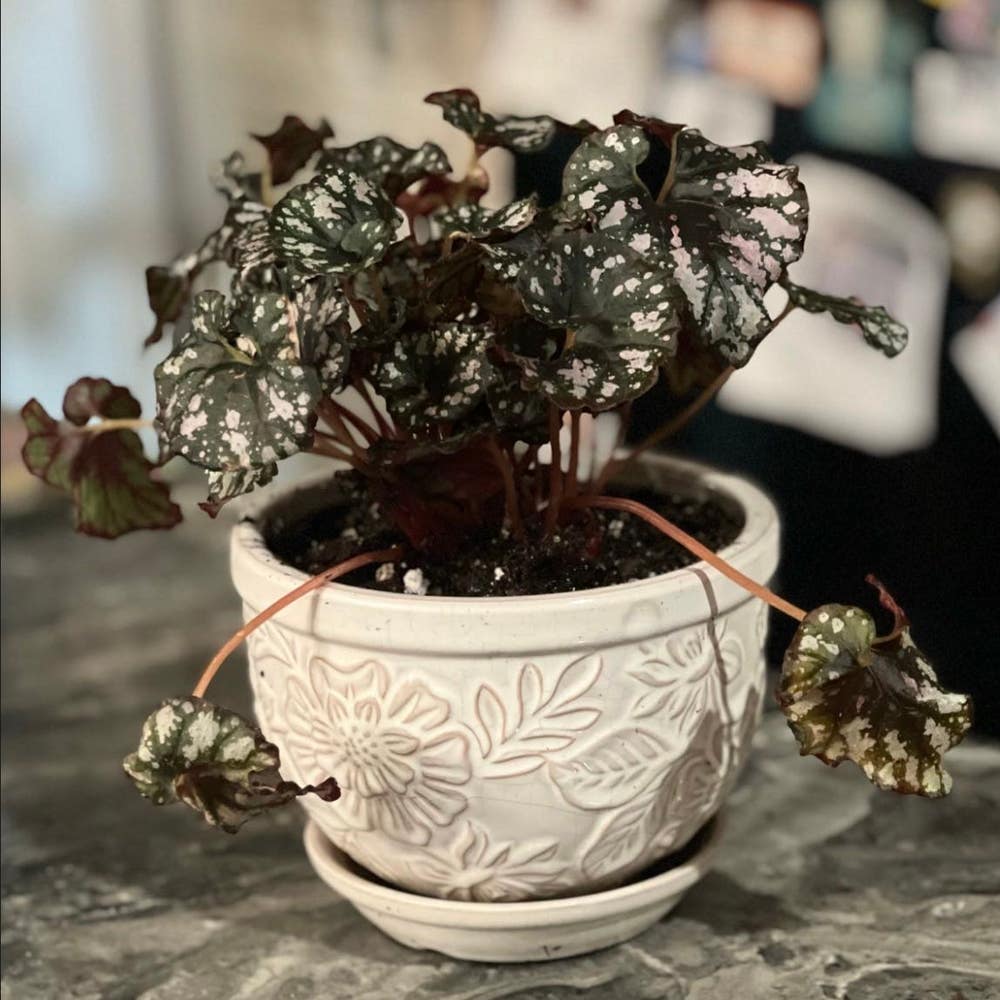
💧 Why Are My Painted-leaf Begonia Leaves Mushy?
Begonia rex
By the Greg Editorial Team
Jun 18, 2024•4 min read
This article was created with the help of AI so we can cover more plants for you. May contain errors. See one? Report it here.
- Overwatering and root rot are main causes of mushy Begonia leaves.
- Stop watering and trim damaged roots to address immediate issues.
- Monitor soil moisture; use well-draining soil for long-term health.
Spotting the Trouble: Signs Your Begonia's Leaves Are at Risk
🌧️ Overwatering Symptoms
Dark, circular spots on your Begonia's leaves are like unwelcome tattoos, signaling too much water. If the leaves feel more like a soggy sponge than a crisp leaf, you've entered the overwatering danger zone. Yellowing leaves? That's your Begonia crying out for a nutrient intervention, as waterlogged soil is hogging all the air space.
🚨 Root Rot Red Flags
Root rot is the plant equivalent of a horror movie monster—it's often hidden until it's too late. Wilting stems can betray a soggy secret below the soil, where roots are supposed to be sturdy, not mushy. If the base of your plant feels like a rotten apple, it's time for a root rescue mission. Mold on the soil is like throwing a party for fungi, and trust me, you don't want to host that shindig.

First Aid for Your Begonia: Immediate Steps to Take
🚱 Halting Overwatering
Cease watering immediately. Your Begonia's life depends on it. Overwatering is like an open invitation to fungal fiestas and root rot raves. If your plant's leaves are more mush than muscle, it's time to put the watering can down.
🩹 Addressing Root Rot
Gently unpot your Begonia, being as tender as if you're handling a newborn kitten. Inspect the roots. Healthy roots should look like they're ready for a photoshoot—firm and white. If they're brown or black and have the consistency of overcooked noodles, it's time for surgery. Snip the damaged roots with sterilized scissors. It's like giving your plant a haircut, but with higher stakes.
Repot with fresh, well-draining soil in a clean pot that's the botanical equivalent of a comfy bed—just the right size and with plenty of drainage holes. It's your plant's best shot at a comeback tour.
Hold off on watering until the top inch of soil feels like a dry martini—crisp and not waterlogged. When you do water, think of it as a trust fall; your Begonia is counting on you to get it just right.

Long-Term Care Strategies: Keeping Your Begonia Happy and Healthy
💧 Perfecting Your Watering Technique
Watering your Painted-leaf Begonia is more than just a chore; it's a critical ritual. To prevent future mushiness, monitor the soil's moisture like a hawk. Use your finger or a moisture meter to check; the top inch should feel dry before you water again. Climate matters—more water in the heat, less when it's cool. And always, always water in the morning to reduce evaporation loss.
🏡 The Right Home: Soil and Pot Considerations
Soil is your Begonia's bed, and it should be as comfortable as one. A humus-rich mix that drains well will make your plant's roots feel like they're at a five-star resort. Pots must have drainage holes, no exceptions. It's the difference between a cozy home and a swamp. And remember, size matters—a pot too big invites moisture to overstay its welcome.

Pruning and Recovery: Helping Your Begonia Bounce Back
✂️ Trimming Tactics
Snip decisively. When your Painted-leaf Begonia's leaves turn to mush, it's time for tough love. Identify leaves that have gone past the point of no return—those are the ones you'll want to remove. Healthy leaves stay, while anything discolored, droopy, or downright soggy gets the chop. Make your cuts clean and close to the stem to avoid leaving stubs that could rot.
🌱 Encouraging Regrowth
Patience is key. After pruning, don't expect overnight miracles. Focus on providing consistent care and watch for signs of new foliage—these are your victory flags. Ensure your Begonia has adequate light and the right humidity levels to stimulate growth. Remember, it's not just about survival; it's about setting the stage for a lush, vibrant comeback. Keep an eye out for new leaves—they're the true indicators that your Begonia is on the mend.
⚠️ Safety First
This content is for general information and may contain errors, omissions, or outdated details. It is not medical, veterinary advice, or an endorsement of therapeutic claims.
Always consult a qualified healthcare professional before using any plant as food, medicine, or supplement.
Never eat any plant (or feed one to pets) without confirming its identity with at least two trusted sources.
If you suspect poisoning, call Poison Control (800) 222-1222, the Pet Poison Helpline (800) 213-6680, or your local emergency service immediately.
Spotted an error? Please report it here.
Revive your Begonia from mushy despair to lush flair 🌿 with Greg's personalized watering reminders tailored to your plant's unique needs.