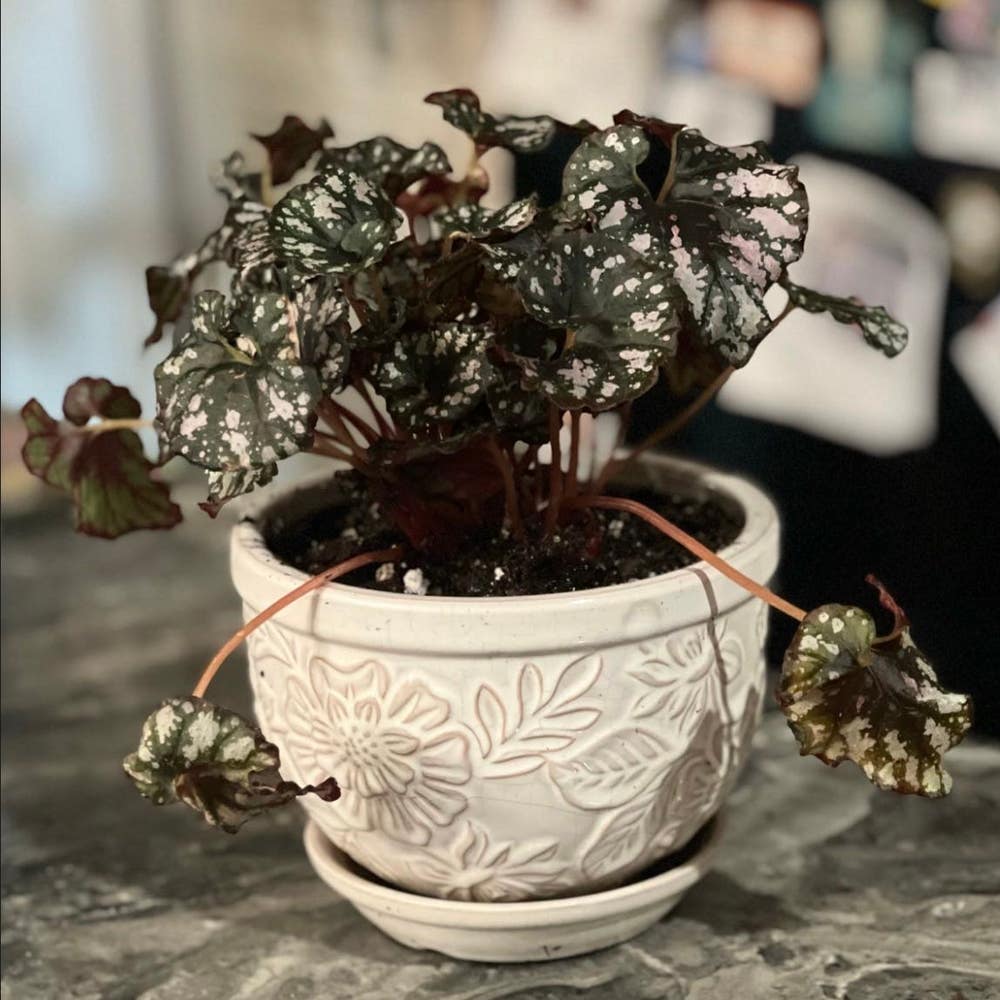
Why Are My Painted-leaf Begonia Leaves Falling Over?
Begonia rex
By the Greg Editorial Team
Jun 18, 2024•3 min read
This article was created with the help of AI so we can cover more plants for you. May contain errors. See one? Report it here.
- Overwatering and underwatering both lead to droopy Begonia leaves.
- Repot with care—cramped roots cause leaves to sag.
- Bright, indirect light and 15-23ºC keep Begonias perky.
When Watering Goes Wrong: Droopy Leaves Alert!
💦 Overwatering Woes
Soggy soil and limp leaves are classic tattletales of overwatering your Painted-leaf Begonia. Brown spots with a yellow halo? That's your plant waving a distress flag. If the leaves are drooping like they've given up on life, it's time to take action.
Immediate fix: Halt all watering and let the soil dry out. If the pot's a swamp, consider a soil swap. Ensure the pot has drainage holes to prevent future waterlogging.
The Thirsty Begonia
Conversely, leaves that droop like they're too tired to stand up are begging for a drink. Dry, crispy leaves? That's your Begonia's version of a parched throat.
Proper hydration: Check the soil moisture before watering—stick a finger in; if it's dry an inch down, it's time to water. Remember, your Begonia's thirst varies, so don't rely on a rigid schedule. Keep the soil moist, not drenched, and let the top layer dry out between waterings.

The Right Pot Makes a Difference
🌱 Cramped Roots, Droopy Leaves
Cramped roots lead to droopy leaves, signaling it's time to repot your Painted-leaf Begonia. Like a teenager outgrowing their shoes, a root-bound Begonia can't stand tall and flourish. Look for roots peeking out of drainage holes or circling the soil surface as clear distress calls for more space.
🏡 Choosing the Perfect Home
Selecting the ideal pot is like finding a new apartment for your plant—size and features matter. Aim for a pot that's one size larger than the current one, ensuring it has ample drainage to prevent waterlogged misery. Remember, a happy root system translates to perky leaves, so give your Begonia the room it needs to thrive.

Light and Temperature: The Balancing Act
⛅️ Too Much or Too Little: Finding the Sweet Spot
Begonias are picky when it comes to their sunbathing habits. They demand bright, indirect light—too direct, and they'll wilt like an ice cream in the sun. Temperature swings are just as troublesome; keep it steady between 15-23ºC (59-73ºF) to avoid a botanical meltdown.
Seasonal Adjustments
As seasons change, so should your Begonia care routine. Rotate your plant to ensure even exposure without overdoing it. In winter, shield it from chilly drafts; come summer, avoid the leaf-wilting heat by keeping it away from scorching windows. It's about adapting to keep those leaves perky all year round.

The Recovery Plan: Bringing Leaves Back to Life
🚑 Immediate Actions
When your Painted-leaf Begonia's leaves start to flop, it's crunch time. First, check the soil; if it's soggy, you've likely overwatered. Move the plant to a well-ventilated area to speed up drying. If the soil is bone-dry, give it a thorough but gentle watering.
Next, prune any damaged leaves. Use sterilized scissors and snip with precision—think of it as a tactical strike rather than a full-blown assault. This helps the plant focus its energy on recovery.
🌱 Long-Term Care
For the long haul, it's all about consistency. Water only when the top inch of soil is dry, and ensure the pot provides adequate drainage. Consider the lighting—indirect sunlight is your Begonia's best friend.
Regularly monitor root health by peeking beneath the soil's surface. If roots are crowded, it's time to repot. Remember, a happy root system equals happy leaves.
Lastly, keep an eye on the temperature. Begonias aren't fans of the cold shoulder or the hot seat. Maintain a steady, Begonia-friendly climate to prevent future droop episodes.
⚠️ Safety First
This content is for general information and may contain errors, omissions, or outdated details. It is not medical, veterinary advice, or an endorsement of therapeutic claims.
Always consult a qualified healthcare professional before using any plant as food, medicine, or supplement.
Never eat any plant (or feed one to pets) without confirming its identity with at least two trusted sources.
If you suspect poisoning, call Poison Control (800) 222-1222, the Pet Poison Helpline (800) 213-6680, or your local emergency service immediately.
Spotted an error? Please report it here.
Revive your drooping Painted-leaf Begonia and keep it thriving 🌿 with Greg's tailored watering schedule and seasonal care tips, ensuring your green friend never misses a beat.