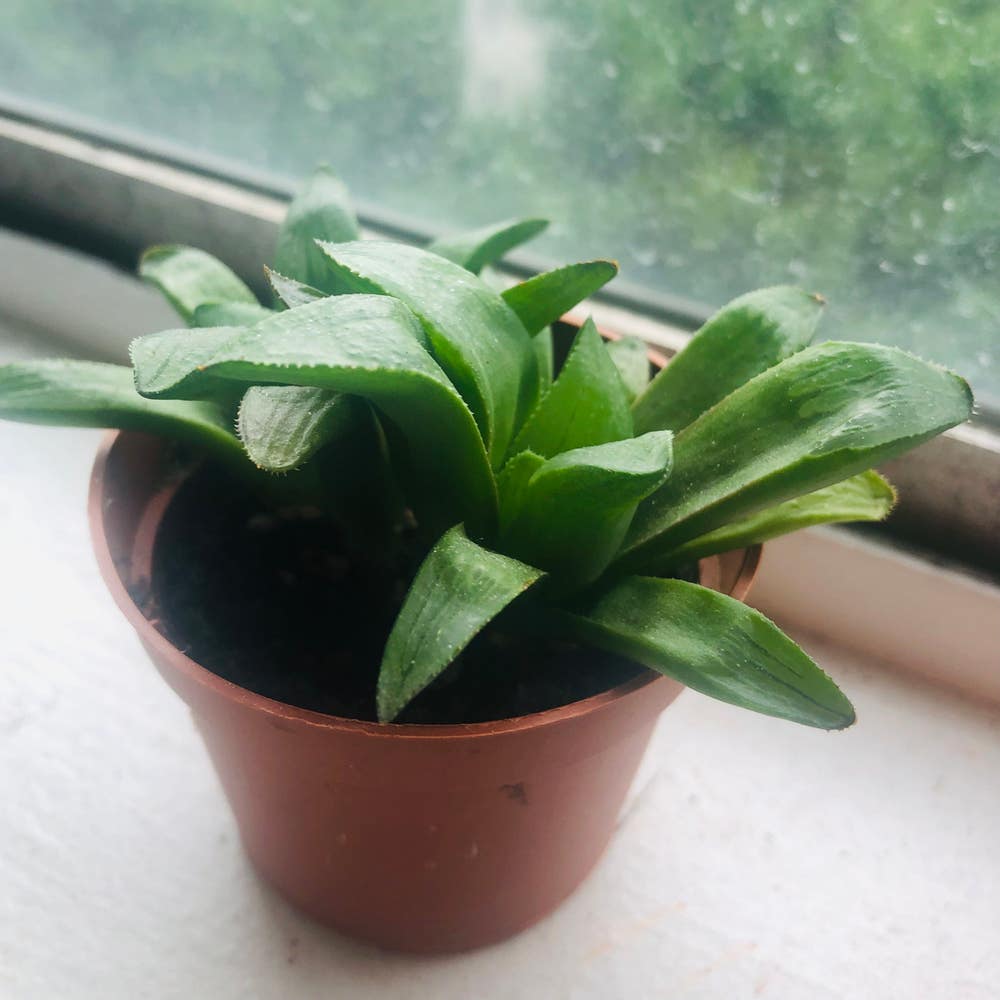
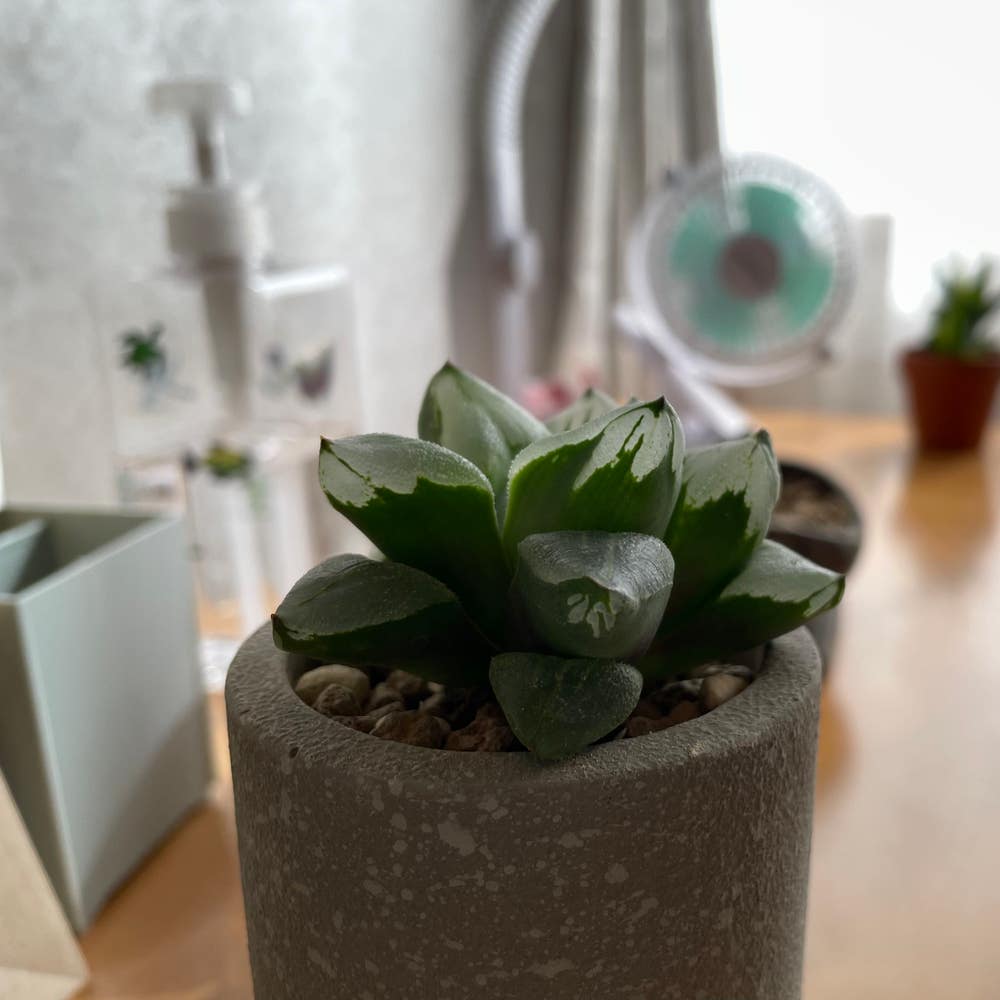
🌡 What Temperature Does My Haworthia pygmaea Need?
Haworthia pygmaea
By the Greg Editorial Team
Feb 13, 2024•4 min read
This article was created with the help of AI so we can cover more plants for you. May contain errors. See one? Report it here.
Discover how to shield your Haworthia pygmaea 🌵 from temperature woes and secure its lush growth! 🌡️
- Ideal range 22-35°C (71.6-95°F) for Haworthia pygmaea's health and growth.
- 🌡️ Consistent temperature prevents yellowing, browning, and mushy leaves.
- Indoor and outdoor tips protect from temperature extremes and stress.
Keeping It Just Right: The Ideal Temperature Range
🌡️ What's the Sweet Spot?
Haworthia pygmaea thrives between 22 to 35 degrees Celsius. This succulent's sweet spot is not just a random range; it's the temperature at which it hits its growth stride. Too cold, and it slows down; too hot, and it's on a fast track to plant purgatory.
Consistency is Key
Consistency isn't just a buzzword; it's a lifeline for your Haworthia pygmaea. Fluctuating temperatures can send your plant into a tailspin of stress, stunting growth and dimming its vibrant green luster. Keep the temperature steady, and you'll sidestep a world of issues. Think of it as the plant version of avoiding mood swings—no one likes those.
When Things Heat Up: Recognizing Temperature Stress
🌡️ Telltale Signs of Discomfort
Haworthia pygmaea, with its plump leaves and stoic presence, isn't one to complain loudly. Yellow leaves might be the first whisper of "I'm too hot!" while brown tips could be muttering "I'm too cold." If your plant's leaves are dry or mushy, it's a clear sign of temperature drama. And when growth stunting occurs, it's like your plant is hitting the pause button on life because it's just not comfortable.
📉 Long-Term Consequences
Repeated temperature stress can throw your Haworthia pygmaea into a loop of stunted growth, making it look like it's stuck in a botanical time warp. In the worst cases, it might enter a premature dormancy, like it's trying to ghost you for the season. Or even worse, it could succumb to root rot, as cold soil doesn't let water evaporate as it should. Keep the temperature steady, or your plant's health could spiral like a poorly planned road trip.
Common Mistakes Leading to Temperature Stress
🌬️ Too Hot to Handle
Drafts are the stealthy disruptors of your Haworthia pygmaea's comfort. Avoid placing your plant near doors or windows that are opened frequently. These areas can ambush your plant with unexpected temperature changes. Similarly, steer clear of radiators or air conditioning units; they're notorious for creating microclimates that are about as stable as a house of cards.
☀️ Direct sunlight can turn your plant's cozy spot into an oven. If your Haworthia is basking in too much sun, especially during peak hours, it's time to move it to a place with gentle, indirect light. Think of it as a shady retreat from the harsh sun.
❄️ Chilly Reception
Cold stress is just as menacing. Dark, mushy spots on your plant's leaves are the equivalent of a plant crying out for a warm blanket. To fend off the cold, insulate your plant with protective coverings or relocate it to a warmer spot. It's like giving your green friend a cup of hot cocoa.
💧 Humidity is the sidekick to temperature. Too low, and your plant's leaves will curl up tighter than a rolled yoga mat. Too high, and you're basically inviting pests and diseases to a buffet. Aim for a balanced humidity level that doesn't turn your plant's habitat into a desert or a jungle.
Remember, your Haworthia pygmaea isn't asking for much—just a stable, cozy environment. Keep the temperature between 60°F and 70°F (15°C - 21°C), and you'll have a happy plant on your hands. It's all about avoiding the extremes; think of it as keeping your plant in a comfortable pair of pajamas, suitable for lounging all day.
Navigating Temperature Extremes: Practical Tips
🌡️ Indoor Care Strategies
Maintaining ideal temperatures indoors for your Haworthia pygmaea can be a bit like playing climate control Tetris. Here's how to win the game:
- Avoid drafts and vents. These spots can turn your plant's cozy corner into a wind tunnel or a desert.
- Embrace gadgets. A reliable thermometer is your secret weapon, helping you keep tabs on the microclimate.
- Insulate. Windows can be icy backstabbers in winter. Move your plant away or use bubble wrap as a shield.
- Quick fixes. When the weather throws a tantrum, be ready to shuffle your plant to a safer room or deploy a space heater with restraint.
🌞 Outdoor Plant Parenting
Outdoor care for Haworthia pygmaea is not for the faint-hearted. Here's how to brave the elements:
- Seasonal savvy. As temperatures swing, so must your tactics. Think shade cloth in summer and frost blankets when winter bites.
- Location, location. Not all spots in your garden are created equal. Find a sweet spot that offers moderate conditions year-round.
- Watch the forecast. Be the overprotective parent and move your plant to safety when extreme weather looms.
- Group therapy. Cluster your plants to create a microclimate that can buffer against mild temperature spikes.
Remember, your Haworthia pygmaea doesn't need a sauna or an igloo; it craves stability. Keep that in mind, and you'll both be just fine.
⚠️ Safety First
This content is for general information and may contain errors, omissions, or outdated details. It is not medical, veterinary advice, or an endorsement of therapeutic claims.
Always consult a qualified healthcare professional before using any plant as food, medicine, or supplement.
Never eat any plant (or feed one to pets) without confirming its identity with at least two trusted sources.
If you suspect poisoning, call Poison Control (800) 222-1222, the Pet Poison Helpline (800) 213-6680, or your local emergency service immediately.
Spotted an error? Please report it here.
Ensure your Haworthia pygmaea avoids temperature stress and flourishes 🌡 with Greg's environmental tracking for that perfect cozy range.