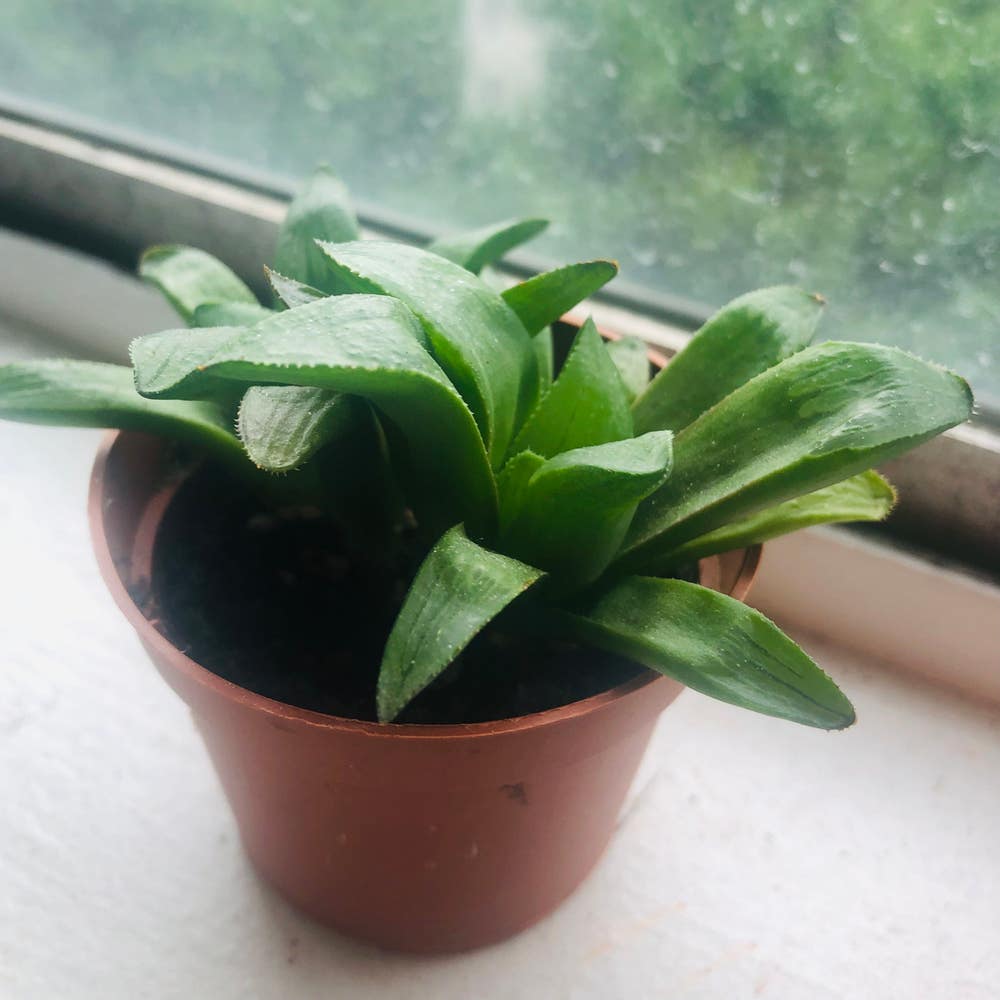
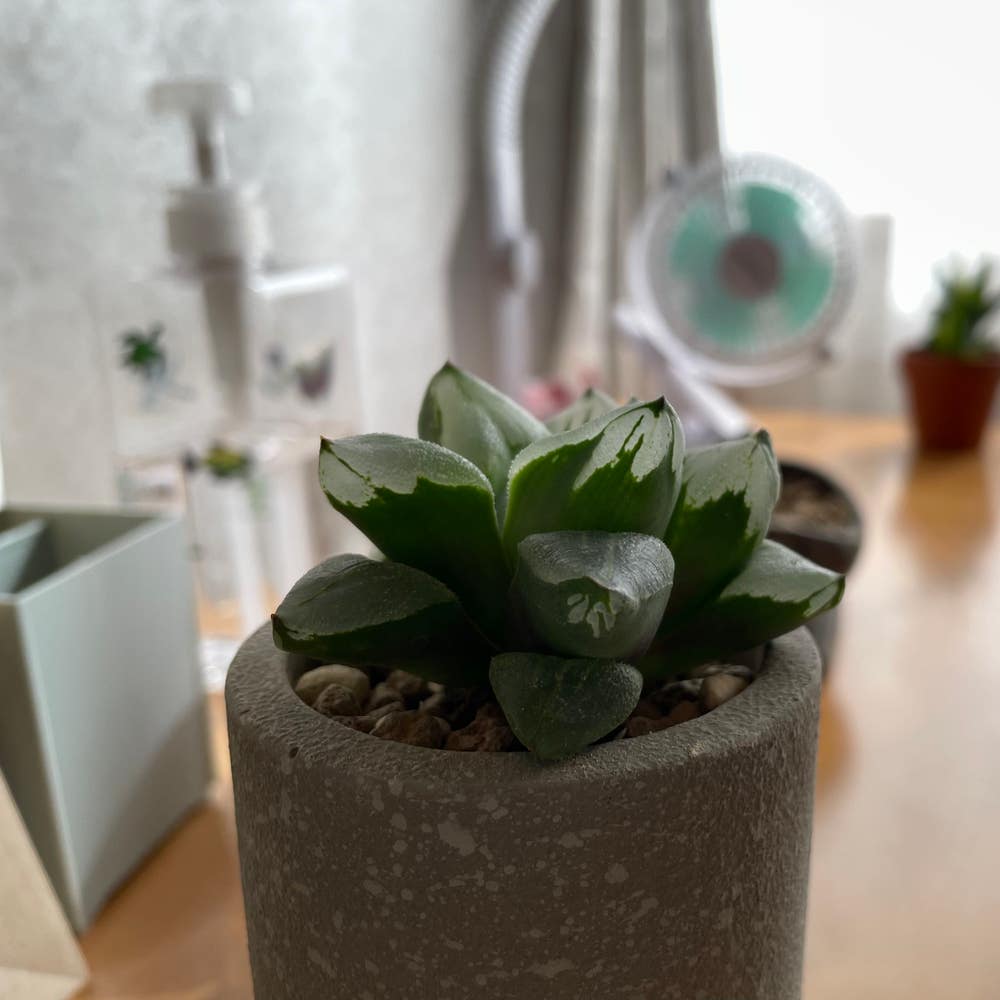
Why Are My Haworthia pygmaea Leaves Dropping?
Haworthia pygmaea
By the Greg Editorial Team
Feb 13, 2024•3 min read
This article was created with the help of AI so we can cover more plants for you. May contain errors. See one? Report it here.
Stop your Haworthia pygmaea's leaf drop 🍂 with the right care balance—find out how!
- Overwatering and underwatering both lead to leaf drop; balance is crucial.
- Proper drainage, light, and temperature prevent leaf loss in Haworthia pygmaea.
- Consistent care and monitoring adapt to seasons, keeping your succulent healthy.
Spot the Signs: Identifying Why Your Haworthia pygmaea Is Unhappy
💦 Overwatering Woes
Overwatering can make your Haworthia pygmaea's leaves drop like flies. If the leaves look more like water balloons than succulent foliage, it's a red flag. Root rot might be lurking beneath the surface, so check for a squishy base.
🏜️ Thirsty Roots: The Underwatering Problem
When your Haworthia's leaves shrivel up tighter than a raisin, it's parched. Underwatering is the culprit if the soil feels like a dry martini. Look for leaves that have more wrinkles than a linen shirt on laundry day.
🚰 Drainage Drama
Poor drainage is a silent plant assassin. If your pot's as watertight as a duck's back, you've got a problem. Check for waterlogged soil; it should never feel like a swamp.
🌞 Light Levels and Leaf Loss
Finding the Goldilocks zone for light is key—too much or too little, and your Haworthia will protest by dropping leaves. Watch for leaves that fade faster than a cheap T-shirt in the sun or stretch out like they're trying to escape the dark.
🌡️ Temperature Tantrums
Extreme temperatures can send your Haworthia into a leaf-dropping frenzy. If your plant looks like it's trying to jump out of its pot, it might be too hot or cold. Temperature stress shows up as leaves that drop off with a dramatic flair.
Turn the Tide: Rescuing Your Dropping Leaves
💧 Fine-Tuning Watering Habits
Adjusting your watering routine is crucial for a Haworthia pygmaea on the brink. These succulents demand a dry spell between drinks. Before watering, ensure the soil is dry—an inch down should feel like a desert. Overwatering is a no-go; it's the fast track to root rot and leaf loss.
🚰 Drainage Solutions
Drainage holes are your plant's lifeline. Terracotta pots are the MVP here, letting soil breathe and preventing waterlogged roots. If you're into double potting for style points, just make sure the inner pot has drainage for days. Upgrade your potting mix too—think gritty, airy, and anything but clingy.
🌞 Light and Temperature Harmony
Finding the perfect spot for your Haworthia is like scoring the best seat at a concert—view (light) and comfort (temperature) are everything. Aim for bright, indirect light and steer clear of temperature swings. Seasonal adjustments? They're not just for your wardrobe. Keep your Haworthia away from drafts and heat sources, and you'll avoid those temperature tantrums.
Proactive Plant Parenting: Preventing Future Leaf Drop
📆 Consistency is Key
Crafting a care schedule that aligns with your Haworthia's preferences is like setting a dinner table for a guest with a finicky appetite—you want everything just right. Watering, light, and temperature need to be in harmony to avoid the silent tantrums that lead to leaf drop.
👀 Vigilant Monitoring
Keep your eyes peeled for the subtle signs of plant distress. It's like being a plant detective, always on the lookout for the slightest wilt or discoloration. As seasons change, so should your care—adapt to keep your Haworthia from throwing a leaf-dropping fit.
⚠️ Safety First
This content is for general information and may contain errors, omissions, or outdated details. It is not medical, veterinary advice, or an endorsement of therapeutic claims.
Always consult a qualified healthcare professional before using any plant as food, medicine, or supplement.
Never eat any plant (or feed one to pets) without confirming its identity with at least two trusted sources.
If you suspect poisoning, call Poison Control (800) 222-1222, the Pet Poison Helpline (800) 213-6680, or your local emergency service immediately.
Spotted an error? Please report it here.
Prevent your Haworthia pygmaea's leaves from dropping by letting Greg tailor your care routine for perfect balance 🌿, ensuring your plant thrives in any season.