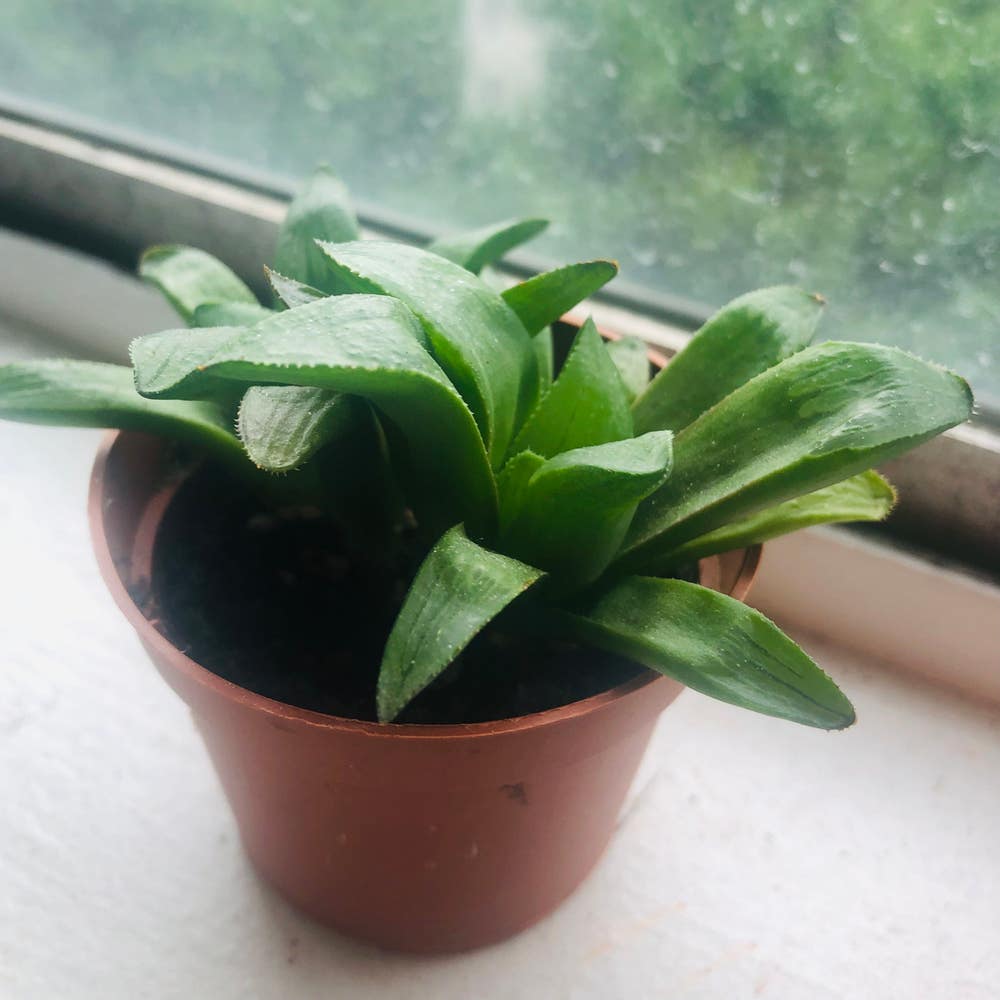
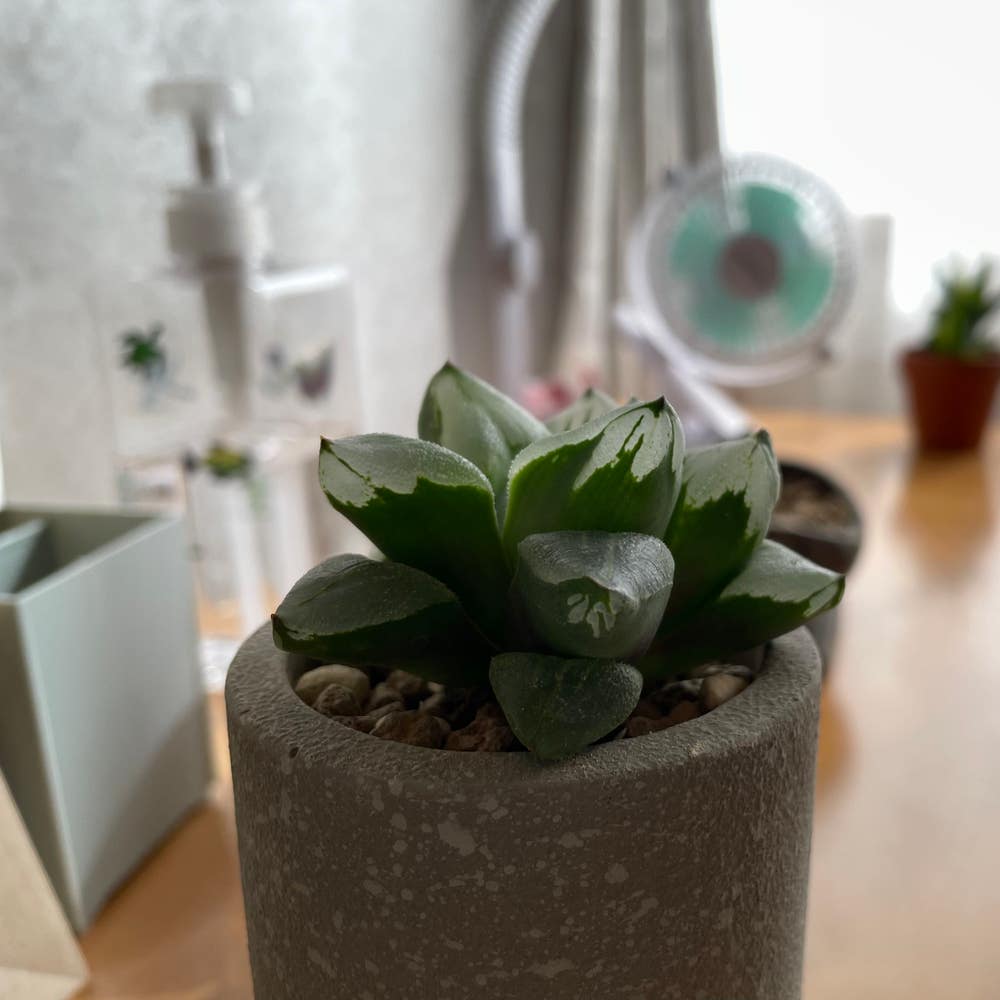
Why Are My Haworthia pygmaea Leaves Falling Over?
Haworthia pygmaea
By the Greg Editorial Team
Feb 13, 2024•4 min read
This article was created with the help of AI so we can cover more plants for you. May contain errors. See one? Report it here.
Prevent your Haworthia's droop 🌿 with these essential care tips to keep it perky and thriving!
- 🌊 Overwatering leads to root rot; touch-test soil before watering.
- ☀️ Bright, indirect sunlight is key; avoid harsh midday rays.
- 🌱 Repot when root-bound; spring or early summer is ideal.
When Water Does More Harm Than Good
💧 Overwatering Woes
Yellow leaves and swollen textures are red flags for overwatering. Soggy soil should be a signal to hold back on hydration.
Root rot is a silent killer; it creeps in when excess moisture suffocates roots. A plant with root rot needs urgent intervention—think of it as an emergency trip to the plant ER.
The Right Way to Water
Touch-test the soil before watering—dry is the green light, damp means stop.
Watering should mimic a careful dance, not a rainstorm. Adjust your routine with the seasons—less in the cool, more when it's hot.
Ensure your pot has drainage holes; they're your safety net against waterlogging.
If you've overdone it, let the soil dry out. Consider a soil switch to a mix that's more about drainage, less about retaining a flood.
Remember, watering is about precision. Your plant doesn't need a bath, just a sip.
A Light Issue or a Heavy Problem?
🌞 Seeking the Sun
Low light levels can turn your Haworthia pygmaea into a droopy mess. Bright, indirect light is the sweet spot for these succulents, mimicking their natural habitat under the shade of rocks and shrubs. Too little light, and they'll stretch out, losing their compact form and becoming leggy in a desperate reach for the sun.
To prevent this, place your plant in a location where it receives ample indirect sunlight. Morning light is gentle and can be direct, but avoid the harsh midday rays that can scorch the leaves. Gradually acclimate your Haworthia to new lighting conditions to prevent shock – think of it as easing into a hot bath rather than jumping into a boiling pot.
💪 The Weight of the World
Heavy, water-retentive soil is a no-go for Haworthia pygmaea. These plants thrive in well-draining soil that mimics their native, gritty terrain. If the soil holds too much moisture, it can lead to root rot, which not only makes the leaves fall over but can also be fatal.
Ensure your potting mix is light and airy. A combination of potting soil with added perlite or pumice increases drainage and aeration. Check the pot's drainage holes to confirm water can escape freely – it's like making sure there's a clear path to the emergency exit. Regularly feeling the soil before watering can prevent over-saturation – trust the touch test over a watering schedule.
Tight Quarters: The Root-Bound Reality
🌱 Spotting a Squeeze
If your Haworthia pygmaea's watering sessions resemble a high-speed chase—water in, water out—it's time to check for cramped quarters. Roots should spread, not spiral like a contortionist. Peep through the drainage holes; if roots are peeking back, they're screaming for space.
🏡 The Great Escape
Repotting is like moving to a bigger apartment for your plant's roots. Timing is crucial: spring or early summer offers a growth spurt that eases the transition. Gently unpot your Haworthia, and give the roots a spa treatment—trimming any dead ends. Choose a new pot that's a size up and has drainage for days. Rehome with fresh, well-draining soil and watch your plant breathe a sigh of relief.
Unseen Troublemakers: Pests and Damage
🐛 Bug Battles
Pests are the ninjas of the plant world, often invisible until their damage is glaringly obvious. Mealybugs look like tiny cotton swabs but are vampiric in their effects, draining the life out of your Haworthia pygmaea. Spider mites leave behind their calling card of fine webbing and yellowing leaves. Scale insects cleverly disguise themselves as innocuous bumps, secreting a sticky honeydew as they feast. Aphids, thrips, and whiteflies are the social networkers of the pest world, spreading fast and furiously, leaving a path of destruction in their wake.
Regular inspections are your best defense. If you spot sticky residue, webbing, or the actual bugs, it's time for an eviction. Use safe pest control measures to show these freeloaders the door. Remember, a proactive approach is the key to keeping your succulent standing tall.
Physical Damage
Accidents happen, and sometimes they lead to limp leaves. Physical damage can occur from a variety of sources: a careless bump, a pet's playful paw, or even an overzealous pruning session. When damage is done, it's crucial to assess and act swiftly. Remove any damaged leaves to prevent further stress on the plant and to stop the spread of potential disease. Keep an eye on the wounded area for signs of recovery or further decline. Quick action can make the difference between a temporary setback and a permanent flop.
⚠️ Safety First
This content is for general information and may contain errors, omissions, or outdated details. It is not medical, veterinary advice, or an endorsement of therapeutic claims.
Always consult a qualified healthcare professional before using any plant as food, medicine, or supplement.
Never eat any plant (or feed one to pets) without confirming its identity with at least two trusted sources.
If you suspect poisoning, call Poison Control (800) 222-1222, the Pet Poison Helpline (800) 213-6680, or your local emergency service immediately.
Spotted an error? Please report it here.
Keep your Haworthia pygmaea 🌵 standing proud with Greg's tailored watering reminders and expert care tips, ensuring it never falls victim to overwatering or pests.