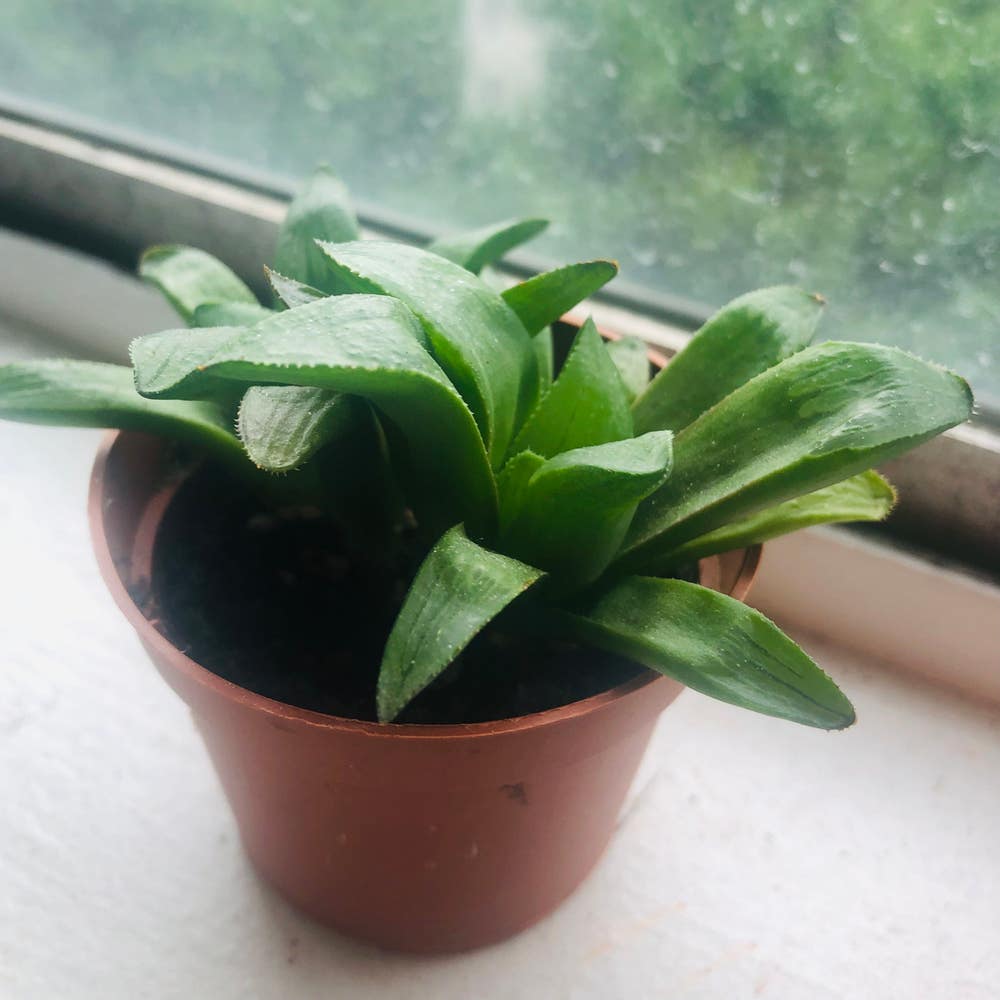
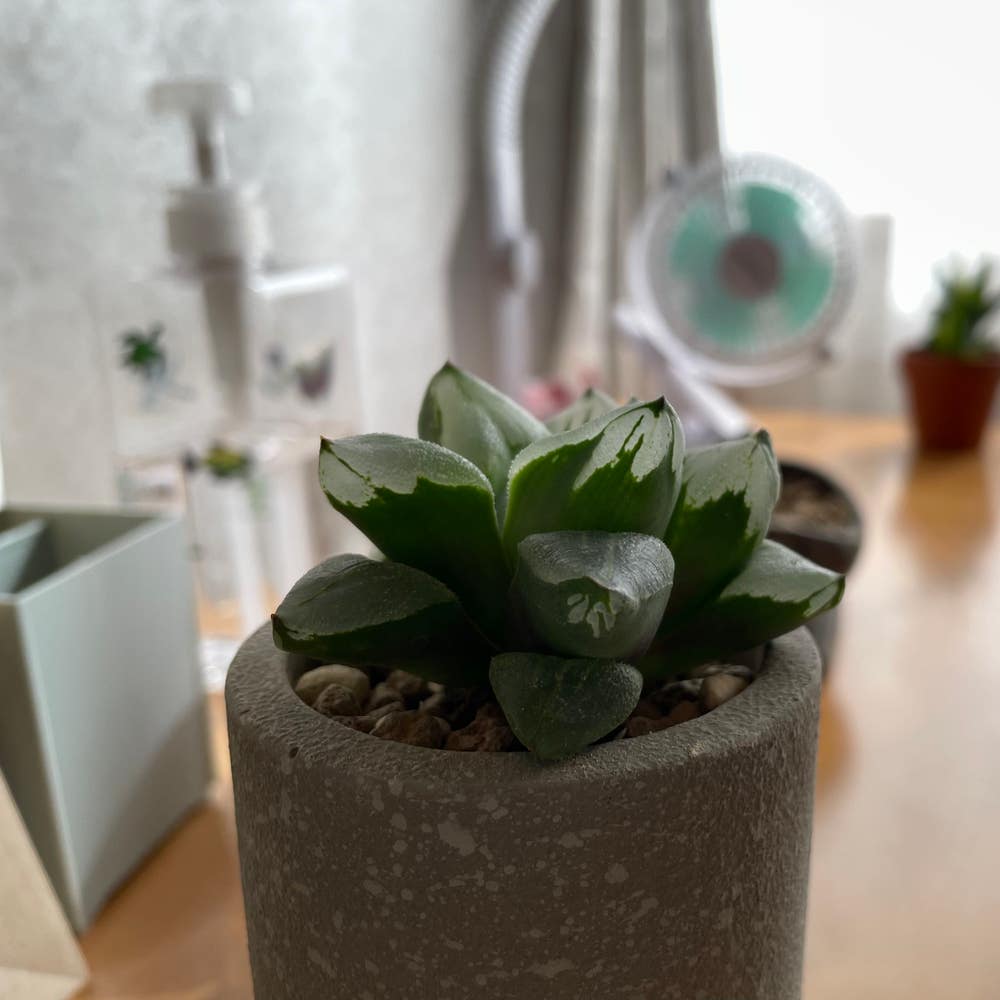
Why Are There Brown Spots on My Haworthia pygmaea Leaves?
Haworthia pygmaea
By the Greg Editorial Team
Feb 13, 2024•3 min read
This article was created with the help of AI so we can cover more plants for you. May contain errors. See one? Report it here.
Solve the mystery of your Haworthia's brown spots 🍂 and revive your plant's lush green vitality!
- Overwatering, sunburn, or fungi cause brown spots on Haworthia pygmaea.
- Adjust watering and sunlight to prevent crispy brown spots.
- Prune and treat fungal infections with sterilized tools and fungicide.
Spotting the Trouble: Identifying Brown Spots on Your Haworthia
🍂 What Do Brown Spots Look Like?
Brown spots on Haworthia pygmaea leaves can alarm any plant enthusiast. These blemishes vary from tiny speckles to larger patches that can signify different issues. A soft, mushy texture often points to overwatering, while a dry, crispy feel may indicate sunburn. Bumpy spots could be a telltale sign of a fungal invasion.
🤔 Common Misconceptions
It's crucial to differentiate between natural markings and problematic brown spots. Not all discolorations spell disaster—some could be harmless scars or part of the plant's unique patterning. Regular patterns may be natural, but if you notice spots that are spreading or changing, it's time for a closer inspection. Look for spots with a halo or those that change the leaf's texture, as these can be signs of more serious issues like fungal or bacterial infections.
Too Much Love: Overwatering and Brown Spots
🌊 The Perils of Overwatering
Overwatering can be the unintended villain in the tale of your Haworthia pygmaea. It turns roots into a soggy mess, leading to brown spots that signal distress. Older leaves near the base are often the first to succumb, developing soft, dark areas. A quick soil check—if it feels like a wet sponge, it's time to rethink your watering strategy.
Fine-Tuning Your Watering Routine
Adjusting your watering routine is key to your plant's health. Moderation is the mantra; aim for soil that's damp, not drenched. Ensure pots have adequate drainage to avoid waterlogging. During cooler months, reduce watering frequency as evaporation slows. Remember, a larger pot retains moisture longer, so adjust accordingly. Before reaching for the watering can, check if the soil is dry two inches down—that's your green light to hydrate.
When the Sun Doesn't Shine: Sunburn and Leaf Damage
🌞 Recognizing Sunburn on Leaves
Sunburn on Haworthia pygmaea leaves presents as brown spots that are crispy and dry. These spots often appear on the parts of the leaves that receive the most direct sunlight. If the green of the leaves is fading to a pale color, it's likely they've had too much sun.
🌅 Shifting to the Perfect Light
Finding the right light for your Haworthia pygmaea is key to preventing sunburn. Indirect sunlight is ideal. If you can't avoid direct rays, use a sheer curtain as a buffer or reposition the plant to avoid intense midday sun. Remember to rotate your plant regularly for even light distribution.
Battling the Invisible Enemy: Fungal Infections
🍄 Spotting Signs of Fungal Issues
Fungal infections are stealthy invaders in the plant world, often leaving brown spots as their mark on your Haworthia pygmaea. These spots may have concentric rings or a halo, signaling it's time for action. Raised or spreading spots are classic signs, while bacterial issues look more like water-soaked lesions.
🌿 Fungus Among Us: Treatment and Prevention
Isolate the infected plant to prevent spore spread. Prune affected areas with sterilized tools to stop the fungal advance. Improving air flow and avoiding overwatering are key to keeping the fungus at bay. For treatment, consider a fungicide; apply it as directed, sparingly and with precision. Remember, fungicides are a shield, not a cure. Use them to protect, not just to remedy an outbreak.
⚠️ Safety First
This content is for general information and may contain errors, omissions, or outdated details. It is not medical, veterinary advice, or an endorsement of therapeutic claims.
Always consult a qualified healthcare professional before using any plant as food, medicine, or supplement.
Never eat any plant (or feed one to pets) without confirming its identity with at least two trusted sources.
If you suspect poisoning, call Poison Control (800) 222-1222, the Pet Poison Helpline (800) 213-6680, or your local emergency service immediately.
Spotted an error? Please report it here.
Keep your Haworthia pygmaea spot-free 💧 with Greg's custom care reminders, helping you adjust watering and sun exposure to prevent those brown spots from ever taking hold!