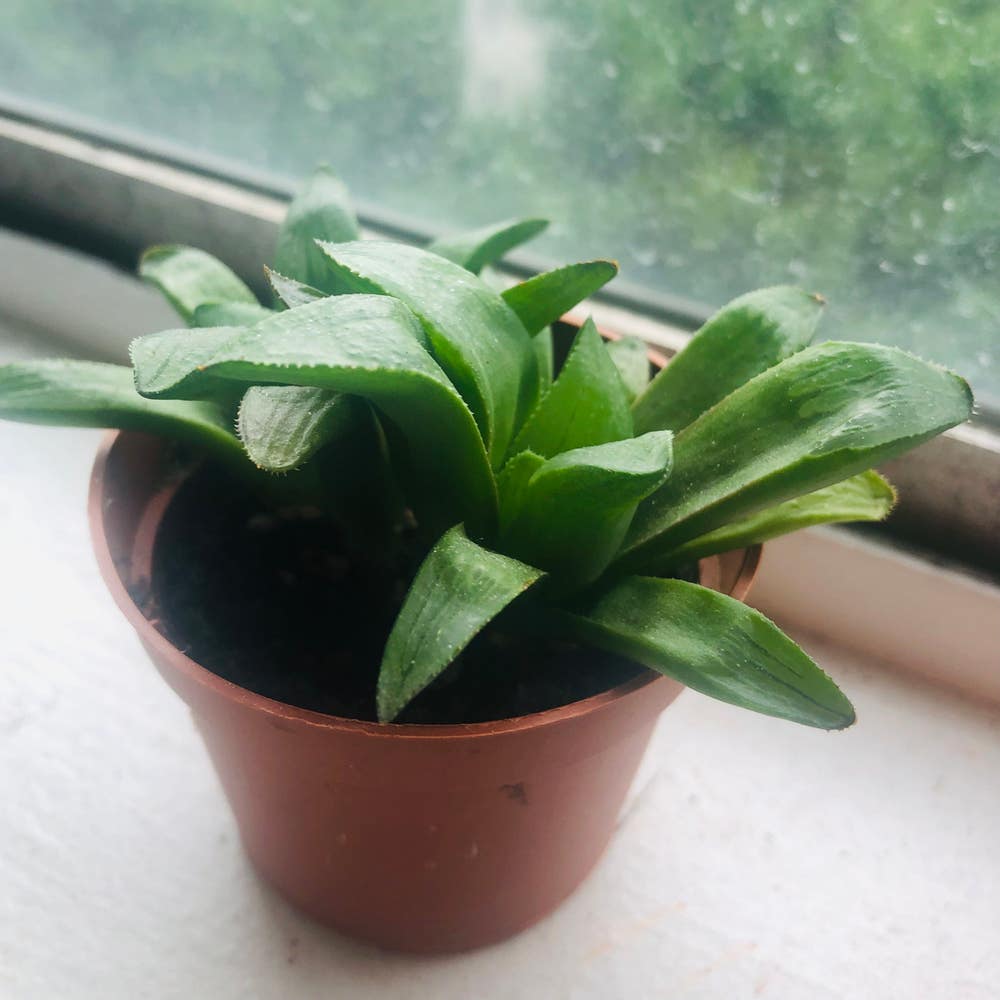
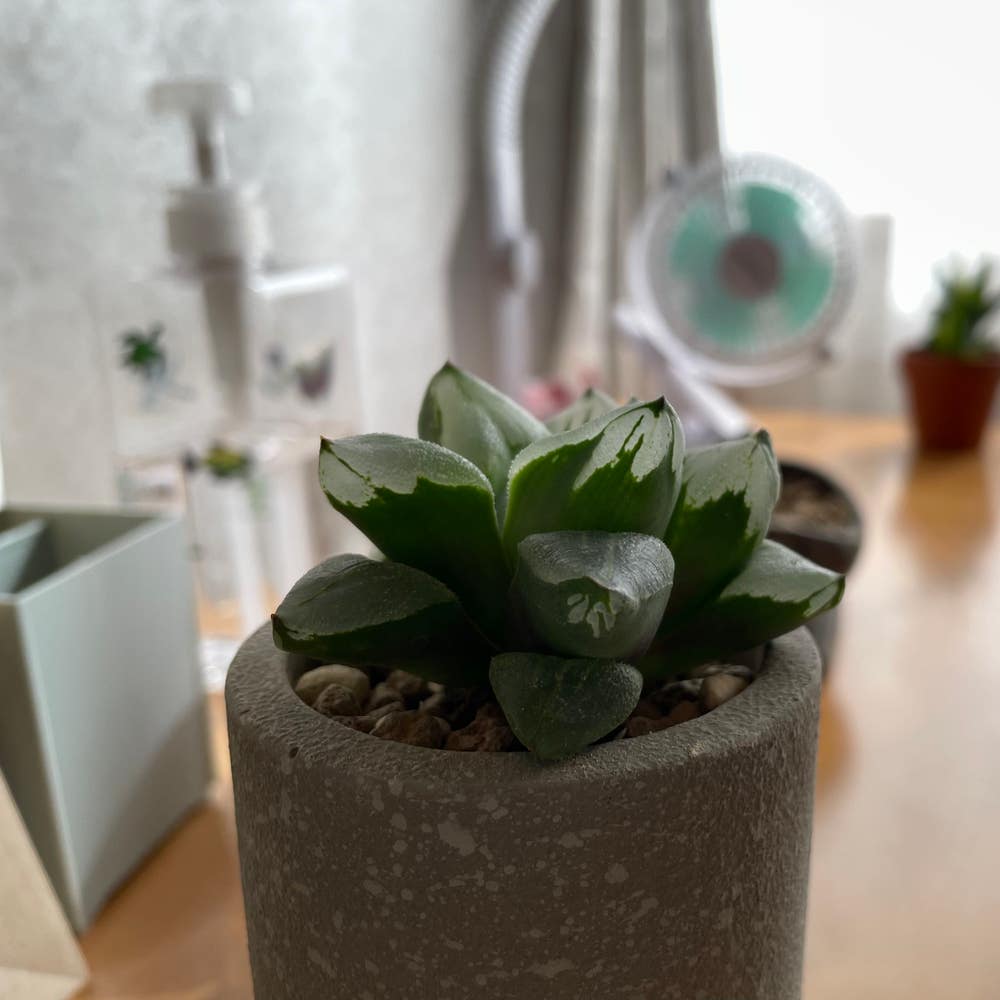
Why Is My Haworthia pygmaea Not Doing Well?
Haworthia pygmaea
By the Greg Editorial Team
Feb 13, 2024•5 min read
This article was created with the help of AI so we can cover more plants for you. May contain errors. See one? Report it here.
Revive your Haworthia pygmaea by mastering the art of perfect plant care! 🌿✨
- Over-watering? Yellow leaves. Halt watering, improve drainage.
- Under-watering? Wrinkled leaves. Water when top soil's dry.
- Balance light exposure to prevent scorching and etiolation.
When Watering Goes Wrong
🌧️ Over-watering Havoc
Yellowing leaves and a foul soil odor are distress signals from an over-watered Haworthia pygmaea. The plant's leaves may become limp, resembling an overcooked noodle rather than a robust succulent.
To rescue your Haworthia, first halt all watering. Allow the soil to dry out, checking it regularly. If the soil clings to your finger, it's still too wet. Ensure the pot has adequate drainage and consider repotting with fresh, dry soil if necessary. Prune any damaged roots or leaves to prevent further decay.
🏜️ The Perils of Under-watering
Wrinkled leaves and dry soil are the tell-tale signs of an under-watered Haworthia. The plant might look more dehydrated than a raisin in the sun, signaling it's time for a drink.
To properly hydrate your plant, introduce a consistent watering schedule. Water thoroughly when the top inch of soil feels dry to the touch, ensuring the water reaches the roots. Remember, Haworthia prefers to experience a drought between waterings, so don't overdo it. Adjust your watering frequency with the changing seasons to meet your plant's needs.
Light and Shade: Finding the Balance
🌞 Too Much Sun
Burn Notice: Identifying Leaf Scorching
Exposure to direct sunlight can leave your Haworthia pygmaea with telltale signs of distress. Look for brown or white spots on the leaves, a clear indication that your plant has had more than its fair share of rays. Leaves may become overly dry and crispy, resembling a plant that's been left in the oven too long.
Shady Solutions: Adjusting Light Exposure to Prevent Damage
To prevent sun damage, it's crucial to shield your Haworthia from intense direct light. Employ sheer curtains or blinds to diffuse the harsh sunlight. Consider rotating your plant to ensure even exposure and avoid the creation of burn patterns. Remember, your plant's leaves are not equipped to handle a full day at the beach without some shade.
🌥️ Not Enough Light
Growth Pains: Recognizing Etiolation and Faded Leaves
Insufficient light can cause your Haworthia to stretch out awkwardly, resulting in elongated growth and leaves spaced too far apart. This condition, known as etiolation, is the plant's attempt to reach for more light. Leaves may appear pale or dull, signaling a deficiency in the light department.
Light It Right: Ensuring Your Haworthia Gets Its Light Needs Met
To ensure your Haworthia pygmaea receives the right amount of light, find a spot that offers bright, indirect sunlight. If you notice signs of etiolation, gradually move your plant closer to the light source, but avoid going from zero to hero in a day. It's about finding that sweet spot where your plant can soak up the light without the risk of sunburn or shade-induced stretching.
Temperature Swings and Plant Health
🌡️ Heat Stress and Cold Shock
Haworthia pygmaea thrives in stable temperatures. When the mercury dips below 50°F or soars above 95°F, your plant might throw a fit.
Recognizing the Signs
Wilting leaves during hot spells can signal heat stress, while cold shock may manifest as blackened or mushy leaves. If your Haworthia starts looking like it's had better days, temperature could be the culprit.
Stabilizing the Climate
Keep a thermometer nearby to monitor the environment. If your plant's leaves droop like they're too tired to stand up, it's time to move it away from that drafty window or the overzealous heater. Aim for a consistent temperature, because your Haworthia doesn't appreciate surprises any more than you do.
The Unseen Enemy: Pests and Diseases
🐛 Bug Battles
Spotting invaders is crucial for the health of your Haworthia pygmaea. Look for aphids, tiny green or black insects that cluster on new growth and undersides of leaves, sapping the plant's strength. Mealybugs resemble small cottony tufts, hiding in crevices and feeding on plant juices. Spider mites, almost microscopic, can be betrayed by fine webs and a dusty appearance on leaves.
To fight back, start with a thorough rinse of your plant to dislodge pests. Introduce beneficial insects like ladybugs or predatory mites if you're into biological warfare. For chemical interventions, insecticidal soaps or neem oil can be effective while still being relatively gentle on the plant. Always treat the entire plant, including those sneaky undersides of leaves.
🍄 Fungal Foes and Root Rot
Fungus among us—mold and root rot are silent killers. They start with brown spots on leaves or a general decline in plant vigor. Overwatering and poor air circulation are the usual suspects. If the soil smells foul or the base of the plant is mushy, you're likely dealing with root rot.
The recovery roadmap involves removing affected parts with sterilized tools. Let the soil dry out before watering again, and consider repotting with fresh, well-draining soil. For fungal issues, reduce humidity around your plant and improve air circulation. In some cases, a fungicide may be necessary, but it's a last resort—like calling in the hazmat team. Remember, prevention is easier than cure, so keep conditions optimal to avoid these issues in the first place.
⚠️ Safety First
This content is for general information and may contain errors, omissions, or outdated details. It is not medical, veterinary advice, or an endorsement of therapeutic claims.
Always consult a qualified healthcare professional before using any plant as food, medicine, or supplement.
Never eat any plant (or feed one to pets) without confirming its identity with at least two trusted sources.
If you suspect poisoning, call Poison Control (800) 222-1222, the Pet Poison Helpline (800) 213-6680, or your local emergency service immediately.
Spotted an error? Please report it here.
Keep your Haworthia pygmaea perky 🌿 by letting Greg customize care reminders, steering clear of the watering and lighting missteps detailed in this guide.