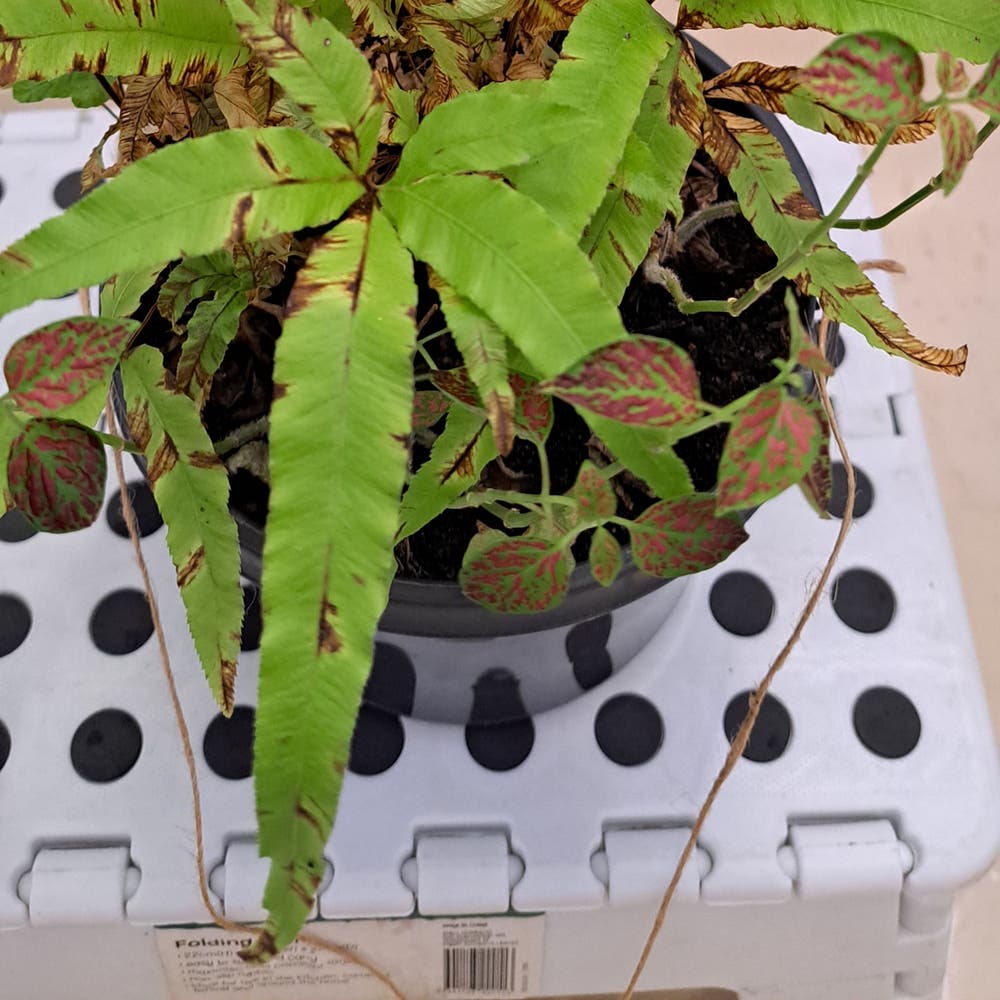
Why Are My Cretan Brake Leaves Falling Over?
Pteris cretica
By the Greg Editorial Team
Jun 14, 2024•7 min read
This article was created with the help of AI so we can cover more plants for you. May contain errors. See one? Report it here.
Prevent your Cretan Brake from wilting away 🍂 with expert tips for robust, perky leaves.
- Prune wisely: Remove damaged leaves, never over 20% at once, for plant health.
- Nutrients and watering: Balance fertilization and moisture for strong, upright leaves.
- Optimal conditions: Ensure indirect light and proper temperature to prevent drooping.
Proper Pruning to Prevent Drooping
Pruning is crucial for the Cretan Brake's vitality. It's not just a haircut; it's a strategic play to boost the plant's health and aesthetics.
🍂 Identifying Leaves for Pruning
Observe your plant. Look for leaves that are yellowed, wilted, or damaged. These are energy drainers and are better off gone. Remember, you're looking for the weak links in the foliage chain.
✂️ Pruning Techniques
Sharp scissors or pruning shears are your best friends here. Make clean cuts close to the stem to avoid leaving stubs that could invite disease. It's like giving your plant a clean shave; no one likes razor bumps.
⏰ When to Prune
Timing is everything. Prune when the plant is dormant, typically in spring or fall, to minimize stress. It's like avoiding a breakup on Valentine's Day.
🌱 How Much to Prune
Less is more. Never remove more than 20% of the plant at once. It's a trim, not a buzz cut.
🌿 Pruning for Growth
Cut above the leaf nodes where new growth occurs. It's like training your plant to bulk up in the right places.
⚖️ Balance and Structure
Prune for balance and structure. A lopsided plant is like a wonky chair, it just doesn't stand up right. Keep your plant even to prevent a tumble.
🌧️ Aftercare
Post-pruning, your plant will need some TLC. Ensure it has consistent moisture and isn't exposed to extreme conditions while it recovers. It's like giving it a comfy bed and chicken soup.
Remember, pruning is an art and a science. It's about making thoughtful snips for the greater good of your green buddy.

Nutrient Balance for Strong Leaves
🕵️ Identifying Nutrient Deficiencies
Nutrients are the backbone of leaf health. Spotting deficiencies early can prevent the dreaded droop. Look for signs like yellowing leaves or stunted growth, which scream "Feed me!" If you're a detective at heart, soil and leaf tests can unveil the mystery of missing nutrients.
⚖️ Choosing the Right Fertilizer
Balance is the name of the game. A fertilizer with a harmonious N-P-K ratio is like a well-rounded diet for your plant. High nitrogen can lead to lush leaves, but don't get carried away—too much might just tip the scales towards weakness.
📅 Fertilization Schedule
Timing is everything. Consistency with fertilization can be as comforting to your plant as your morning coffee routine is to you. A slow-release fertilizer can be a set-it-and-forget-it solution, or you can opt for liquid love every 2-3 weeks during growth spurts.
🕵️ Monitoring and Adjustments
Keep an eye on your green buddy's response post-meal. If it's not perking up, it might be time to tweak the menu. Remember, overfeeding can lead to a nutrient hangover, complete with wilt and unsightly spots.
🎚️ The Role of pH
pH levels can lock out nutrients like a bouncer at a club. Ensure your soil's pH is in the sweet spot to avoid the dreaded "lock-out" and keep the nutrient party going strong.
🌱 Micronutrients Matter
Don't forget the supporting cast of micronutrients. They may not be headliners like N-P-K, but they're essential for a show-stopping performance. A balanced fertilizer includes these unsung heroes to keep your plant's leaves standing ovation-worthy.

Watering Practices to Maintain Leaf Turgidity
💧 Balancing Soil Moisture
Moisture management is no joke when it comes to keeping your Cretan Brake perky. Overwatering invites a slew of soggy troubles, while underwatering turns your plant into a sad, droopy mess. Get tactile with the soil; if it's dry an inch down, it's time to water. But if it feels like a damp sponge, hold off on the H2O.
🔄 Consistent Watering Routine
Establishing a watering routine is like setting a coffee date with your plant—it thrives on regularity. Avoid the extremes; no plant wants a flood or a drought. Your goal is a Goldilocks zone of hydration, where the soil is just right. And remember, the frequency of these dates may change with the seasons.
🌱 Mulching: A Moisture Master
Mulch is your undercover ally in the fight against erratic soil moisture. A layer of this stuff acts like a thermostat for the soil, keeping it cool when it's hot and vice versa. Just don't smother your plant's base—it's not a fan of tight collars.
💦 Watering Techniques
When you water, aim for the base like a sniper, not the leaves like a rookie. A long-spout watering can is your weapon of choice, ensuring the roots get the drink, not the foliage. Wet leaves are a party invitation for fungi, and nobody wants that.
🌡️ Humidity and Temperature Adjustments
Plants are like people; they sweat and shiver. In high humidity, cut back on the water; your plant's not sweating it out as much. In dryer conditions, it's thirstier—so give it a bit more to drink. It's all about reading the room—or in this case, the air.
🍃 Recognizing When to Water
Your plant's leaves are like mood rings, changing to tell you what's up. Droopy? Thirsty. Yellow and squishy? Overwatered. Keep an eye out for these signs, and you'll be the plant whisperer in no time.

Optimizing Light and Temperature for Leaf Health
🌞 Adjusting Light Exposure
Bright, indirect light is the sweet spot for Cretan Brake plants. Direct sunlight is a no-go; it's like a one-way ticket to leaf scorch city. To prevent leaf weakness, rotate your plant regularly. It's the equivalent of ensuring every side gets to bask in the glow without getting a sunburn.
🌡️ Maintaining Temperature Levels
Keep your plant in a 65°F to 80°F range. Dramatic temperature swings are the nemesis of leaf health, causing them to droop like overcooked spaghetti. Avoid placing your plant near heaters or chilly windows. Think of maintaining temperature levels like setting a thermostat for a contented cat—warm and cozy, without the extremes.
💡 Light During Dark Times
When the sun plays hide and seek during winter, artificial light can be a game-changer. It's like a caffeine boost for your plant's photosynthesis. Keep the light consistent; your plant craves routine like a morning coffee ritual.
🍂 Adjusting for Seasons
As the seasons turn, so should your approach to light exposure. Winter may mean cozying up to the window, while summer could call for a retreat. It's a seasonal dance, and you're leading—stay attuned to your plant's sun needs as if you're reading its mood ring.
🏜️ Environmental Adjustments
Watch out for heatwaves; they can wilt your plant faster than ice cream in the sun. If it's getting too hot, think of watering like a splash of cold water on your face—refreshing, but not too much. Keep the environment stable, like avoiding those last-minute plan changes we all love to hate.
Soil and Repotting Strategies
🌱 Assessing Soil Condition
Soil quality is the bedrock of plant health—ignore it at your peril. If your Cretan Brake's soil feels more like a brick than a fluffy cloud, it's time for an intervention. Compacted soil can suffocate roots, leading to droopy leaves. To test, poke around with a stick; if it feels like you're chiseling through concrete, you've got your answer.
🚰 Improving Drainage
Drainage isn't just a buzzword—it's a lifeline. Mix in some perlite or coarse sand to transform that soggy soil into a well-draining paradise. It's like giving your plant's roots a snorkel, allowing them to breathe even when water's abundant.
🕰️ The Right Time to Repot
Repotting is like moving to a bigger apartment—it should happen when the roots demand more space. Look for roots peeking out of drainage holes or a plant that's more root than soil. The best times are spring or autumn—your plant's not too sleepy or too hyperactive.
🏠 Choosing the Right Pot
Bigger isn't always better. Choose a pot that's the Goldilocks size—just right for your plant. Too large, and you risk waterlogging; too snug, and your plant might feel choked. And those drainage holes? Non-negotiable.
🌱 Repotting Steps
- Gently remove your plant from its current pot, whispering apologies for the disturbance.
- Trim any rotted roots—they're dead weight.
- Place it in the new pot with a well-draining soil mix, tucking it in like a burrito.
- Water it, but don't drown it. Think of it as a refreshing sip, not a gulp.
🌧️ Post-Repotting Care
After repotting, don't just abandon your plant to fend for itself. Keep an eye on it, ensuring the soil stays moist but not wet. It's a delicate dance, but your plant will thank you with perky leaves.
⚠️ Safety First
This content is for general information and may contain errors, omissions, or outdated details. It is not medical, veterinary advice, or an endorsement of therapeutic claims.
Always consult a qualified healthcare professional before using any plant as food, medicine, or supplement.
Never eat any plant (or feed one to pets) without confirming its identity with at least two trusted sources.
If you suspect poisoning, call Poison Control (800) 222-1222, the Pet Poison Helpline (800) 213-6680, or your local emergency service immediately.
Spotted an error? Please report it here.
Prune with confidence and keep your Cretan Brake perky by following these tips, and count on Greg's custom care reminders 🌿 to keep your green friend in top shape!