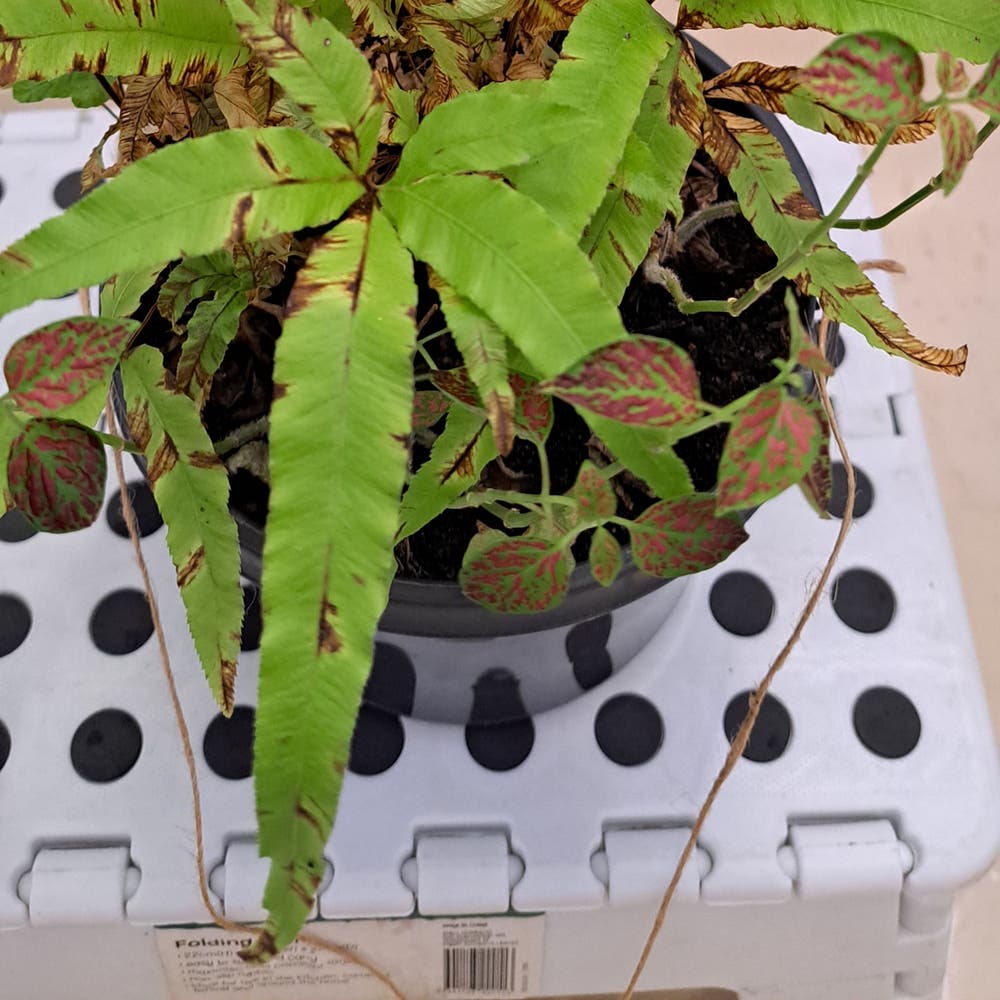
💧 Why Are My Cretan Brake Leaves Droopy?
Pteris cretica
By the Greg Editorial Team
Jun 14, 2024•4 min read
This article was created with the help of AI so we can cover more plants for you. May contain errors. See one? Report it here.
Transform your Cretan Brake from droopy to vibrant with these essential care secrets. 🌿✨
- Over/underwatering and light stress lead to droopy Cretan Brake leaves.
- Stable environment (22-28°C) with indirect light prevents droopiness.
- Proper soil, humidity, and monitoring are key to reviving droopy leaves.
Identifying the Causes of Droopy Leaves
💧 Overwatering and Underwatering
Overwatering turns your Cretan Brake's home into a swampy mess. You'll notice leaves feeling as limp as overcooked spaghetti. If the soil's moisture reminds you of a wet sponge, it's time to dial back the H2O. Conversely, underwatering is like sending your plant on a hike in Death Valley without a water bottle. Leaves become as crispy as autumn leaves, curling in a silent plea for hydration. When the soil feels as dry as a comedian's humor, it's a clear SOS for water.
🌞 Light and Temperature Stress
Light stress makes leaves droop like they've just finished a marathon in the Mojave. Your plant craves bright but indirect light, so direct sun is a no-no. Temperature swings? They're the botanical equivalent of a polar bear plunge followed by a sauna. Keep the environment as steady as a metronome to avoid a leafy letdown. Remember, drafts and temperature fluctuations are as unwelcome as a snowstorm in July. Keep it consistent, and your Cretan Brake will thank you.

Steps to Revive Droopy Cretan Brake Leaves
💧 Correcting Watering Practices
Consistency is your Cretan Brake's best friend when it comes to watering. Check the soil's top inch; if it's dry, it's time for a drink. If it's damp, hold off. Overwatering turns your plant into a soggy mess, while underwatering leaves it as parched as a desert wanderer. Adjust your watering to the plant's needs, not your schedule.
🌞 Optimizing Light and Temperature
Your Cretan Brake isn't a fan of the spotlight or the shade. It prefers the middle ground—bright, indirect light. Too much sun and it wilts; too little, and it weakens. Keep the temperature steady, ideally between 22–28°C. Avoid placing your plant in drafty spots or next to heat sources to prevent temperature stress.
💦 Humidity Hacks
If your home's air is drier than a comedian's humor, it's time to up the humidity. A pebble tray or humidifier can work wonders. Alternatively, a quick lukewarm shower can give your plant the humidity boost it needs. But remember, moderation is key—too much humidity can be just as bad as not enough.

Preventing Future Droopiness in Cretan Brake Leaves
🌱 Soil and Drainage Improvement
The right soil mix is like a tailored suit for your Cretan Brake; it should fit just right. For optimal drainage, mix in some perlite or coarse sand. This isn't just about avoiding wet feet; it's about giving roots the luxury of breathing space.
🏺 Terracotta Pots
Consider terracotta pots for their breathability. They're the unsung heroes that wick away excess moisture, keeping root rot at bay.
🌿 Mulching
Mulch is your garden's moisture moderator. It's like a thermostat for the soil, maintaining consistent moisture levels while doubling as a slow-release fertilizer as it breaks down.
🌍 Environmental Control
🌞 Light and Temperature
Your Cretan Brake isn't a fan of dramatic changes. Aim for stable temperatures and bright, indirect light. Think of it as setting the mood for consistent growth without the stress.
💧 Humidity Management
Humidity can be a tricky dance partner. Use a pebble tray or a humidifier to keep the air around your plant moist but not muggy. It's about finding that sweet spot where your plant feels like it's in a tropical paradise without the overbearing heat.
👁️ Monitoring
Keep a critical eye on your plant. Regular inspections can prevent minor issues from becoming botanical nightmares. Remember, a happy plant is a perky plant.
🍂 Seasonal Adjustments
Watering is not a set-it-and-forget-it deal. Adjust your watering schedule with the seasons, and always check the soil before adding more water. Your plant's thirst varies, and so should your watering can.
🌿 Fertilization
Think of fertilization as a vitamin boost. Use a balanced fertilizer to keep your Cretan Brake in top shape, but don't overdo it. It's about nourishing, not overwhelming.
By implementing these strategies, you're not just preventing droopiness; you're setting the stage for your Cretan Brake to thrive.

⚠️ Safety First
This content is for general information and may contain errors, omissions, or outdated details. It is not medical, veterinary advice, or an endorsement of therapeutic claims.
Always consult a qualified healthcare professional before using any plant as food, medicine, or supplement.
Never eat any plant (or feed one to pets) without confirming its identity with at least two trusted sources.
If you suspect poisoning, call Poison Control (800) 222-1222, the Pet Poison Helpline (800) 213-6680, or your local emergency service immediately.
Spotted an error? Please report it here.
Ensure your Cretan Brake stands tall and perky 🌿 with Greg's precise reminders for watering, light, and temperature, preventing droopiness before it starts.