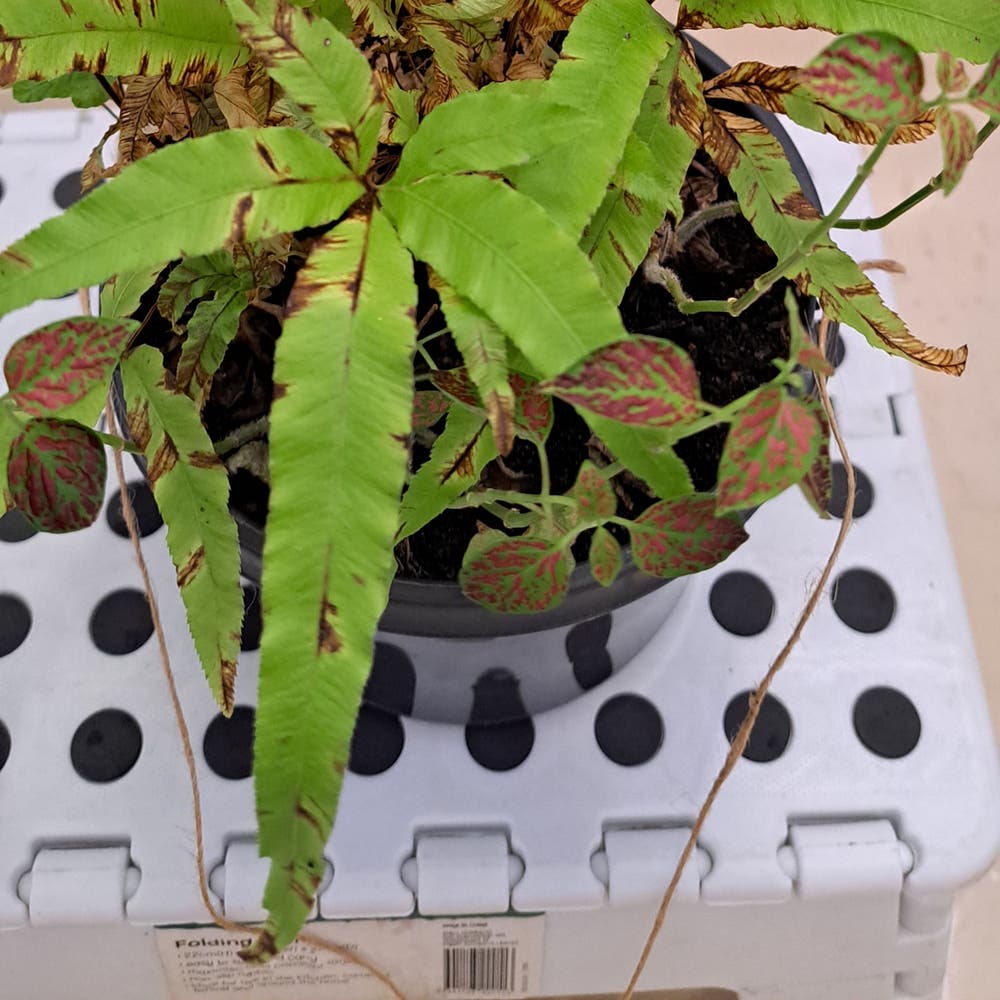
Am I Starving My Cretan Brake? Fertilizing 101
Pteris cretica
By the Greg Editorial Team
Jun 14, 2024•7 min read
This article was created with the help of AI so we can cover more plants for you. May contain errors. See one? Report it here.
Avoid a blooming blunder 🌼—discover the perfect fertilizing balance for your Cretan Brake's vibrant health!
- Phosphorus is key for Cretan Brake blooming; watch for yellow leaves indicating deficiencies.
- 🌱 Organic vs. synthetic fertilizers: choose based on plant's blooming cycle and soil health.
- Over-fertilization harms: test soil, observe plant cues, and adjust fertilization practices accordingly.
Essential Nutrients for Cretan Brake Blooming
💪 Key Nutrients for Flower Power
To coax Cretan Brake into blooming, think beyond green. Phosphorus is your go-to nutrient, the silent cheerleader for those shy flowers. It's the middle number in the N-P-K ratio, remember that. But don't let nitrogen hog the spotlight; too much, and you'll drown in greenery sans blooms.
🚨 Spotting the Signs of Nutrient Deficiencies
Yellow leaves? Slow growth? Your Cretan Brake might be crying out for nutrients. Calcium deficiencies twist leaves into unnatural shapes, while a lack of potassium can leave older leaves looking washed up. Keep an eye out for these SOS signals; they're your cue to act.
⚖️ The Nutrient Balancing Act
It's a tightrope walk between too little and too much. Over-fertilization can leave your plant as overwhelmed as a kid in a candy store. Stick to the script—follow the fertilizer instructions to the letter. Your plant's performance depends on it.
🌿 Macro and Micro: The Dynamic Duo
Your plant needs a well-rounded diet. Macronutrients (N, P, K, Ca, Mg, S) are the main course, while micronutrients (Fe, Zn, Mn, and the gang) are the spice of life. Missing out on these is like skipping the veggies—unwise for growth and blooming.
🌟 The Role of Secondary Macronutrients
Don't overlook the supporting cast. Calcium, magnesium, and sulfur—these secondary macronutrients play pivotal roles. They're like the stage crew that ensures the star, your Cretan Brake's blooms, can shine.

Selecting the Right Fertilizer for Cretan Brake
When it comes to fertilizing your Cretan Brake, think of it as a tailored diet plan for optimal blooming. You've got two main paths: organic or synthetic. Organic fertilizers are the equivalent of a home-cooked meal, slowly releasing nutrients and fostering a rich soil community. They're gentle, reducing the risk of nutrient burn, and they're kind to Mother Earth. But, they can be a bit like a moody chef – sometimes unpredictable in their nutrient delivery.
🌱 Organic vs. Synthetic Fertilizers
On the flip side, synthetic fertilizers are your fast-food option: quick, potent, and precise. They'll give your fern a rapid nutrient hit, but overindulgence can lead to a nasty build-up of salts, which is no party for your plant's roots. Balance is key; you don't want to turn your soil into a salty wasteland.
🌿 Slow-Release vs. Liquid Fertilizers
Now, let's talk delivery methods. Slow-release fertilizers are the set-it-and-forget-it choice, great for a consistent supply of nutrients over time. But they can be a bit of a wildcard in terms of release rates. Liquid fertilizers, however, are like a nutrient IV drip for your plant – immediate and controllable. They're perfect for giving your Cretan Brake a boost during peak growth or blooming phases.
🌸 Tailoring Fertilizer to Blooming Cycles
Your Cretan Brake's blooming cycle should dictate your fertilizer schedule. If it's gearing up to bloom, consider a liquid fertilizer that can be quickly taken up by the plant. During off-peak times, a slow-release option can maintain baseline nutrition without overwhelming your fern.
Real Talk: Fertilizer Use
Let's get real – over-fertilizing is a rookie mistake. It's like ordering everything on the menu only to end up with indigestion. Test your soil, understand your plant's needs, and feed accordingly. And always water before fertilizing to prevent nutrient shock – it's like stretching before a workout.
Remember, the Cretan Brake doesn't need a buffet of nutrients to thrive. Choose wisely, apply thoughtfully, and watch your fern flourish.

Optimizing Fertilizing Schedule for Blooming
Spring is showtime for your Cretan Brake. Kick off the season with a monthly fertilizer routine during spring and summer, when your plant's gearing up for its grand performance.
💡 Best Times to Fertilize
Start early. As the curtain rises in spring, your Cretan Brake is stretching its fronds after a winter snooze. Monthly doses of fertilizer will keep it in the limelight through its active months.
🌱 Matching Fertilization to Growth Stages
As the plot thickens and your plant's growth stages evolve, so should your fertilizing strategy. Younger plants are like hungry teenagers; they'll gobble up more frequent feedings. Older, more established Cretan Brakes might only need a biweekly nudge.
Remember, the key to a standing ovation is to watch your plant's performance closely. If it's thriving, stick to the script. If it's not, it's time for a script rewrite—adjust the strength or frequency of your fertilizer.
Overdoing it? If your Cretan Brake starts looking like it's auditioning for a tragedy with brown tips or yellow leaves, it's time for an intervention. Cut back on the fertilizer, give the soil a thorough flush, and let your fern take a breather.

Best Practices for Fertilizer Application
When it comes to fertilizing your Cretan Brake, think of it as a precision task rather than a haphazard sprinkle.
💧 Proper Fertilizer Techniques
Dilution is your friend. Start with a half-strength solution of the recommended dose to prevent fertilizer burn. It's like watering down a potent drink; you want your fern lively, not limp.
Before you even reach for the fertilizer, ensure the soil is moist. Water your plant first, then follow with the diluted fertilizer. This pre-fertilization hydration helps the soil absorb nutrients more evenly and reduces salt buildup.
🌱 Dilution Ratios and Application Methods
Root zone application is key. Apply the fertilizer close to the base of the plant but not directly on it. This method helps the roots absorb nutrients more effectively and protects the delicate fronds from chemical burns.
For dilution ratios, stick to the half-strength guideline. If the package says one teaspoon per gallon, use half a teaspoon. It's easier to add more later than to fix an over-fertilized plant.
🕰 Timing and Frequency
Timing is crucial. Fertilize during the growing season when your Cretan Brake is actively putting out new growth. In the winter, give it a break. Your fern's metabolism slows down, and it won't be able to process the nutrients as well.
Adjust the frequency according to the plant's life stage. Younger plants with active growth may benefit from monthly feeding, while mature plants might only need a quarterly boost.
🚩 Recognizing the Need for Fertilization
Keep an eye out for signs of nutrient deficiency. If your Cretan Brake's fronds are lackluster or growth seems stunted, it might be time for a nutrient top-up. Conversely, if you notice brown tips or yellowing leaves, ease up on the fertilizer and flush the soil with water.
Remember, your Cretan Brake isn't a glutton. It prefers its meals balanced and regular, not a feast-and-famine routine. Stick to a gentle, consistent fertilization strategy for a lush, green plant that's the envy of any plant enthusiast.
Recognizing and Correcting Over-Fertilization
🚨 Signs of Over-Fertilization
Yellowing leaves or browning at the tips can be your first clue that your Cretan Brake is getting more food than it can stomach. If the soil feels like a salt shaker exploded in it, you've likely gone overboard with the fertilizer. Wilting leaves that scream "I'm full!" despite moist soil, or blooms that look like they've been on a diet of fast food—these are all red flags.
🚿 Immediate Steps to Take
Hit the brakes on the nutrient express. If you spot a fertilizer crust on the soil, it's time for some cleaning. Remove this excess carefully. Then, think of the next step as a detox spa for your plant: flush the soil with water to wash away the nutrient overload. Repeat every few days, and keep an eye out for recovery signs.
🌱 Long-Term Recovery
Trim away the damaged foliage—think of it as a bad haircut that just needs to grow out. If you're dealing with a potted Cretan Brake, consider repotting with fresh, nutrient-free soil to give it a fresh start. Hold off on the fertilizer; give your plant a breather for a few weeks. It's like a post-holiday diet for your overindulged green friend.
🛡️ Prevention for the Future
Before you even think about fertilizing again, test that soil. It's like checking the fridge before you go grocery shopping—you need to know what's already in there. And when you do fertilize, remember that less is more. Think of fertilizer as a potent hot sauce—a little goes a long way. Use organic options if you can; they're like a home-cooked meal compared to fast food. And always, always follow the instructions—this isn't the time for your inner rebel.
⚠️ Safety First
This content is for general information and may contain errors, omissions, or outdated details. It is not medical, veterinary advice, or an endorsement of therapeutic claims.
Always consult a qualified healthcare professional before using any plant as food, medicine, or supplement.
Never eat any plant (or feed one to pets) without confirming its identity with at least two trusted sources.
If you suspect poisoning, call Poison Control (800) 222-1222, the Pet Poison Helpline (800) 213-6680, or your local emergency service immediately.
Spotted an error? Please report it here.
Avoid over or under-fertilizing and achieve optimal blooming 🌸 with Greg's tailored fertilization schedule, ensuring your Cretan Brake gets just the right nutrients at the right time.