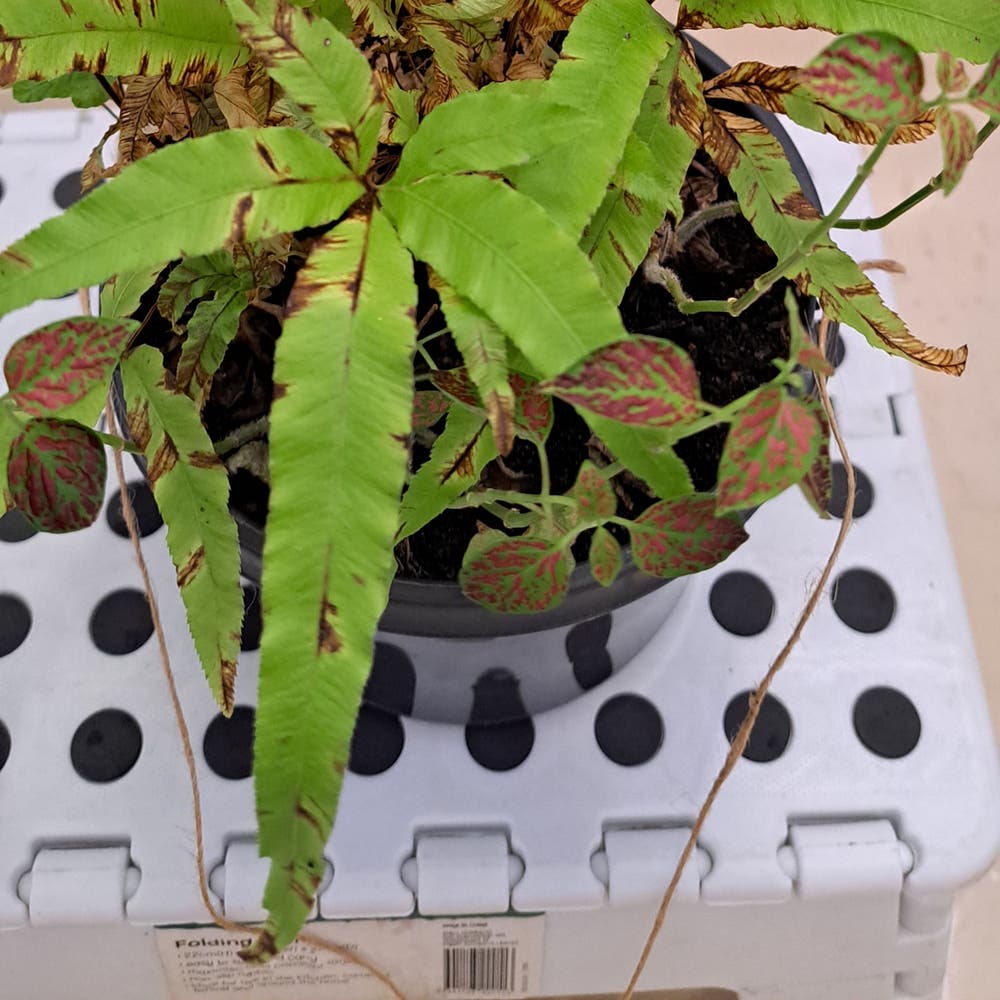
🐛 What To Do About Bugs on My Cretan Brake?
Pteris cretica
By the Greg Editorial Team
Jun 14, 2024•10 min read
This article was created with the help of AI so we can cover more plants for you. May contain errors. See one? Report it here.
Protect your Cretan Brake from damaging pests 🐛 with effective, easy-to-follow control tips.
- Spider mites show as silvery leaves; treat with showers, spicy tea, or predatory mites.
- Scale insects need manual removal or neem oil; severe cases may require systemic treatments.
- Fungus gnats and fruit flies: use sticky traps, dry soil, or beneficial nematodes.
Identifying and Treating Spider Mites on Cretan Brake
🕷 Signs of Infestation
Tiny terrors, spider mites are nearly invisible but their damage isn't. Silvery stippling on leaves and delicate webs signal their presence. Brown spots and holes? That's them feasting. They love your warm, dry home, especially in winter.
🚨 Immediate Actions
Isolate your Cretan Brake pronto. Prune the infested bits, bag them, and say goodbye. Clean the area with a vengeance. Remember, these pests spread faster than a rumor in a small town.
🌶 Homemade Remedies
Mix up a spicy miticide tea—think cinnamon, cloves, and garlic with a dash of dish soap. Spray every three days, focusing on the leaf undersides. It's like a spa treatment, but for death to spider mites.
🚿 Shower Power
Give your plant a gentle shower. Room temperature water washes away the mites and their evil plans. Do it regularly, but don't drown the poor thing.
🦠 Biological Warfare
Unleash predatory mites. They're the good guys, feasting on the bad. No chemicals needed, just nature doing its thing.
🍸 Alcohol Solution
Mix alcohol with water, spray, and wipe. It's a cocktail of death for mites, but a life saver for your plant.
🪓 When All Else Fails
Sometimes you've got to cut your losses. If the mites are throwing a non-stop party, it might be time to toss the plant. Clean up, move on, and start fresh.

Battling Scale Insects on Cretan Brake
Detecting scale insects on your Cretan Brake can be akin to finding tiny, nefarious hitchhikers on your plant's journey to growth. These pests, often resembling small, immobile bumps, can range in color but typically sport a brownish hue. They're masters of disguise, masquerading as part of the plant with their waxy or armored exteriors.
👀 Spotting the Enemy
Clumps of scales may be seen along stems or the undersides of leaves, greedily siphoning your plant's vital sap. Their presence is not just an eyesore; it's a drain on your Cretan Brake's health. You might also notice a sticky residue, known as honeydew, which can lead to sooty mold.
🧤 Manual Removal
For a hands-on approach, don a pair of gloves and physically remove these pests. It's a tedious task, but sometimes you've got to get down and dirty for the sake of your green buddy.
💦 Water Treatment
A strong jet of water can dislodge the more stubborn scales. It's like power-washing your car, but for your plant. Just be careful not to turn your Cretan Brake into a windblown mess.
🌿 Insecticides and Natural Alternatives
When the going gets tough, insecticides can help. But let's not forget about natural alternatives like neem oil. They can be just as effective without the harsh chemicals. Remember, always read the label and follow the instructions to the letter.
🐞 Encouraging Natural Predators
Invite some ladybugs over for dinner. They're not just pretty faces; they're voracious scale-eaters. Parasitic wasps are also welcome guests in this bug-eat-bug world.
🪤 Sticky Traps
Sticky tape can be a scale's worst nightmare. Apply it to the stems in spring to catch the young crawlers. It's like setting a mousetrap, but for insects.
💉 Systemic Treatments
In some cases, systemic insecticides like pyriproxyfen may be necessary. They're the plant equivalent of a flu shot, offering protection from the inside out.
🔄 Persistence Pays Off
Battling scale is not a one-and-done deal. It's a campaign that requires vigilance and repeated efforts. Keep monitoring your Cretan Brake and stay the course; your persistence will pay off.
Remember, monitoring is key. The sooner you spot these freeloaders, the sooner you can reclaim your Cretan Brake's health. And don't let ants play matchmaker; control them to prevent the spread of scales from plant to plant.

Controlling Fungus Gnats and Fruit Flies Around Cretan Brake
Fungus gnats and fruit flies can be the bane of any plant enthusiast's existence, especially when they target your beloved Cretan Brake. Identifying these pests is the first step to reclaiming your green space.
🦟 Fungus Gnat Identification
Look for small black flies with slender bodies and long legs, often hovering around the soil. They're not just loitering; their larvae are munching on organic matter and, unfortunately, sometimes plant roots.
🍎 Fruit Fly Identification
Fruit flies, on the other hand, are more likely to crash your kitchen than your plant party. They're tiny and love to hang out around your unrefrigerated produce or any food scraps left unattended.
🚫 Eradication Strategies
For Fungus Gnats
- Yellow sticky traps are your new best friends. They'll catch the adults and reduce the population.
- Let the soil dry out between waterings. Fungus gnat larvae hate a dry environment.
- Introduce beneficial nematodes or predatory mites to feast on the larvae.
- A hydrogen peroxide solution can be a plant-safe way to annihilate larvae and eggs.
For Fruit Flies
- Insecticides can work, but read the label and follow directions closely. Look for the EPA registration number.
- Fly traps are effective, especially non-toxic options like Aunt Fannie's FlyPunch.
- Prevention is key. Keep your kitchen clean and your produce refrigerated.
🏡 Home Remedies
- Raw potato slices attract gnat larvae. Leave them on the soil and dispose of them after a few days.
- A layer of sand on top of the soil can prevent adult gnats from laying eggs.
- Apple cider vinegar traps can lure and drown adult gnats.
🦠 Biological Controls
- Bacillus thuringiensis (BT) is a natural bacteria that targets larvae. It's a game-changer for breaking the life cycle of gnats.
🛡️ Prevention Tips
- Keep your plant area clean and free of decaying plant material.
- Monitor moisture levels in the soil to avoid creating a gnat-friendly habitat.
By staying vigilant and employing these tactics, you can protect your Cretan Brake from unwanted guests. Remember, the best offense is a good defense—so keep those sticky traps handy and the soil on the drier side.

Eradicating Mealybugs from Cretan Brake
👀 Spotting the Enemy
Mealybugs look like tiny, white fluff balls, playing hide and seek on your Cretan Brake. They're not throwing a cotton party; they're feasting on your plant. Check the undersides of leaves and stem joints; if you spot them, it's battle stations.
🛡️ First Line of Defense
Isolate your plant faster than a sneeze in a silent room. Quarantine is key to stop these pests from spreading their joy to your other green friends. Then, grab a cotton swab, dip it in 70% isopropyl alcohol, and show those mealybugs a not-so-good time.
💦 Wash Away the Woes
Sometimes, a strong jet of water can be the equivalent of a pest power wash. It won't solve all your problems, but it's a start. Think of it as giving your plant a refreshing shower, with the added benefit of bug removal.
🦸 The Natural Brigade
Beneficial insects are like the superheroes of the bug world. Introduce them to your plant, and watch them chow down on mealybugs like it's an all-you-can-eat buffet.
☠️ Chemical Warfare
If the mealybugs are laughing in the face of your other efforts, it might be time for the big guns. Systemic insecticides can be effective, but they're the plant equivalent of a sledgehammer. Use them as a last resort, and follow the instructions like your plant's life depends on it—because it does.
💊 Prevention: The Best Medicine
Keep your Cretan Brake healthy; stress is a bug magnet. Avoid over-fertilizing and overwatering. Clean your tools, inspect new plants, and keep ants in check—they're like the mealybug's Uber service. Regularly wiping down leaves with a Neem Oil solution can also help keep these pests at bay.
Remember, the best offense is a good defense. Stay vigilant, and you'll keep your Cretan Brake as a mealybug-free zone.
Addressing Other Pests Specific to Cretan Brake
🦟 Aphids
Aphids are sap-suckers that can turn your Cretan Brake into a sticky mess. Look for clusters of these tiny pests on the undersides of leaves. Blast them off with water or apply insecticidal soap for a more refined approach. Remember, these critters reproduce faster than a rumor, so act quickly.
🐜 Thrips
Thrips are slender pests that cause silvery streaks and stippling on leaves. They're like miniature vandals with a taste for your plant's vital fluids. Combat them with blue sticky traps or neem oil. Consistency is key; these guys can be as persistent as a bad habit.
🦋 Whiteflies
Whiteflies are tiny, winged insects that congregate on the underside of leaves, causing yellowing and weakness in plants. They're not flies, but they'll sure take off like one when you disturb them. Use yellow sticky traps to monitor and reduce their numbers. Insecticidal soaps or horticultural oils can also send them packing.
Pro Tip:
For all these pests, encouraging beneficial insects like ladybugs or lacewings is like hiring a hit squad for your garden. They'll take care of the dirty work, naturally. Keep your Cretan Brake healthy; a stressed plant is a bug magnet. And if you're reaching for the chemicals, always spot test first to avoid a botanical meltdown.
Proactive Pest Prevention for Cretan Brake
💨 Environmental Controls
Humidity is a fern's best friend, but also a pest's playground. Keep your Cretan Brake moist, but not overly so, to avoid inviting unwanted guests. Air circulation is key; it helps prevent the still, damp conditions that pests adore.
🐞 Beneficial Insects
Let's talk about the good guys – beneficial insects. These tiny heroes, like ladybugs and lacewings, munch on pests for breakfast. Introducing them to your Cretan Brake's environment is like hiring a security team that works for aphid snacks instead of cash.
🌱 Cultural Practices
Overwatering is the root of all evil, or at least the root of most pest problems. Water your Cretan Brake just enough to keep it happy. Well-draining soil ensures that your plant's feet don't get too wet, deterring fungus gnats from throwing a pool party.
🌿 Neem Oil
Neem oil is the Swiss Army knife of plant care. It's a pest repellent, a fungicide, and a bactericide all rolled into one. A regular spritz can keep pests at bay and your Cretan Brake shining.
🏛 Kaolin Clay
Remember the Trojan War? Neither does your fern. But just like the walls of Troy, a kaolin clay barrier can protect your Cretan Brake from invading pests. It's like a mask for your plant, shielding it from pestering pathogens.
🌻 Sentinel Plants
Use "sentinel plants" to keep an eye out for trouble. These plants can attract pests away from your Cretan Brake, acting as a decoy. It's like having a body double for your fern.
👀 Early Detection
Spotting pests early is like catching a typo before it's too late. Regularly inspect your Cretan Brake for signs of trouble. If you see something, do something. Quarantine new plants before introducing them to your collection to prevent an outbreak.
🛡️ Integrated Pest Management (IPM)
IPM is your strategic game plan. It combines all the above tactics into a cohesive defense strategy. It's about being proactive, not reactive. Think of it as the ultimate care package for your Cretan Brake.
⚠️ Safety First
This content is for general information and may contain errors, omissions, or outdated details. It is not medical, veterinary advice, or an endorsement of therapeutic claims.
Always consult a qualified healthcare professional before using any plant as food, medicine, or supplement.
Never eat any plant (or feed one to pets) without confirming its identity with at least two trusted sources.
If you suspect poisoning, call Poison Control (800) 222-1222, the Pet Poison Helpline (800) 213-6680, or your local emergency service immediately.
Spotted an error? Please report it here.
Eradicate pests from your Cretan Brake with proven strategies 🌿 and let Greg's personalized care reminders help you maintain a healthy, bug-free plant paradise.