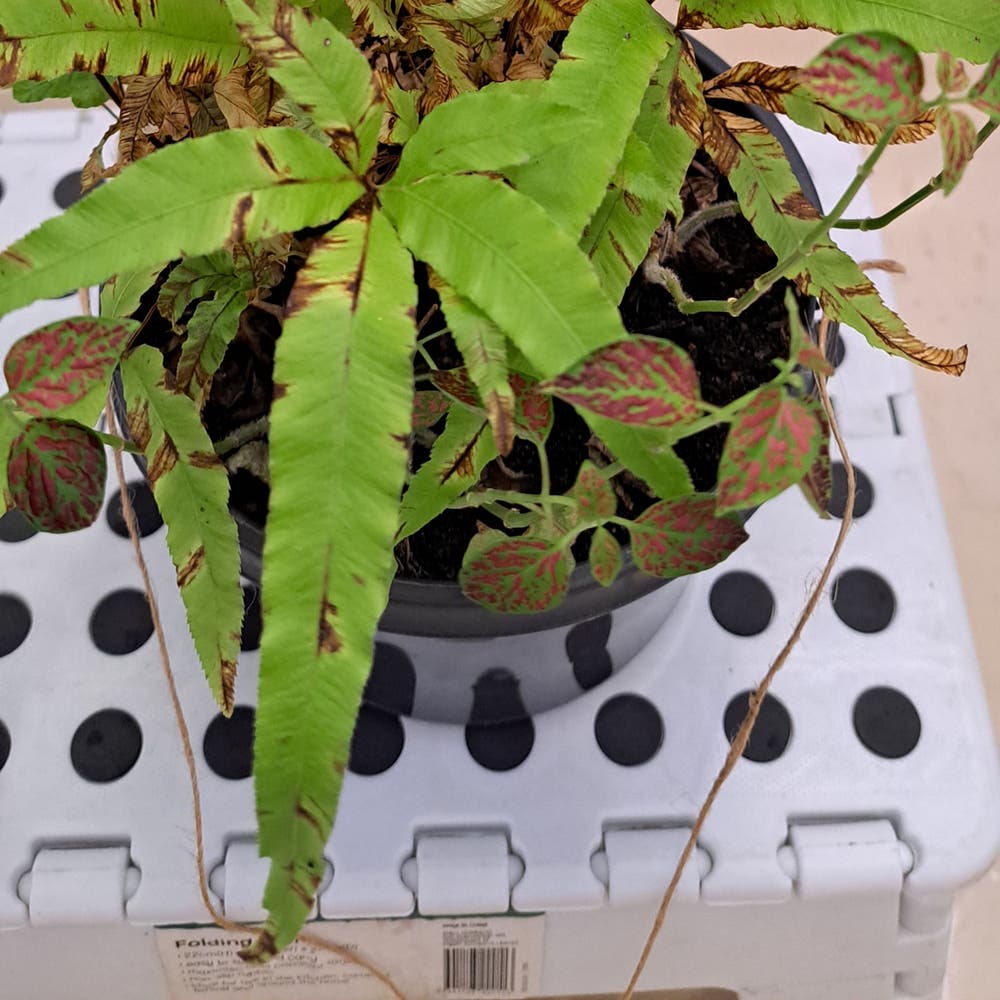
Why Is My Cretan Brake Dropping Leaves?
Pteris cretica
By the Greg Editorial Team
Jun 14, 2024•8 min read
This article was created with the help of AI so we can cover more plants for you. May contain errors. See one? Report it here.
Prevent the dreaded leaf-drop 🍂 in your Cretan Brake with these essential plant care fixes!
- Bright, indirect light and stable humidity prevent leaf drop in Cretan Brake.
- Check soil before watering; adjust routine for plant's needs.
- Use quality soil and balanced fertilizer to combat nutrient deficiencies and leaf loss.
Impact of Environmental Stress on Leaf Dropping
In the world of Cretan Brake, environmental stress is the equivalent of a bad day at work—it can lead to a serious case of the leaf drops.
🌞 Inadequate Light
Too little light and your plant's leaves might start falling off like confetti at a New Year's party. On the flip side, too much direct sunlight and you'll have leaves curling up as if trying to escape a heatwave. The sweet spot? Bright, indirect sunlight. Rotate your plant to ensure all sides get their moment in the limelight.
🌡️ Temperature Extremes
Next up, temperature. Think Goldilocks—not too hot, not too cold. Cretan Brakes despise the drama of temperature swings. Keeping it steady is key. Aim for a comfortable room temperature, avoiding the chills of drafts and the fever of heaters.
💦 Humidity Fluctuations
Humidity is like the plant's personal spa level; it needs to be just right. Too dry, and you'll see leaves withering faster than enthusiasm on a Monday morning. Too moist, and you're inviting a whole host of issues, from diseases to nutrient deficiencies. Aim for a consistent humidity level that mimics the Cretan Brake's natural habitat.
🌿 Strategies for an Ideal Environment
To prevent the dreaded leaf drop, create a stable environment. Use a humidity tray or a humidifier to maintain moisture levels. Keep your plant in a spot that enjoys stable temperatures and indirect light. And remember, good air circulation is crucial—stagnant air is about as welcome as a hiccup during a speech.
By paying attention to these environmental factors, you can keep your Cretan Brake looking as perky as a barista on their first coffee of the day.

Watering Practices and Leaf Retention
Watering your Cretan Brake is like walking a tightrope; balance is key. Overwatering can drown your plant's roots, leading to leaf drop, while underwatering can leave it parched, causing leaves to fall in a desperate bid to conserve water.
💧 The Watering Balancing Act
Check the soil before you water—dry an inch down? It's time to hydrate. But remember, Cretan Brakes aren't fans of wet feet. Ensure drainage holes are present to avoid soggy soil, which is a one-way ticket to root rot town.
💦 Quality and Quantity
Use filtered or rainwater to prevent mineral buildup, which can lead to unsightly leaf blemishes. Water deeply, but let the soil dry out slightly between sessions to encourage strong root growth and prevent the dreaded leaf drop.
📅 Watering Schedule
Stick to a schedule, but be flexible. Your plant's thirst varies with the seasons, so adjust accordingly. In the winter, it might need less; in the summer, more. Keep an eye out for leaves that quickly regain fullness after watering—it's a sign you're on the right track.
⚠️ Signs of Trouble
Yellow, curling leaves are a distress signal for underwatering, while leaves that are too soft or blackened at the base scream overwatering. Adjust your routine before these symptoms lead to a leafless plant.
💡 Pro Tip
When in doubt, underwater rather than overwater. It's easier to revive a thirsty Cretan Brake than one with root rot. Remember, consistent moisture is the secret sauce for leaf retention. Keep it steady, and your plant will thank you with lush, green fronds.

Soil and Root Health in Relation to Leaf Dropping
Soil quality is the unsung hero of plant health, especially for the Cretan Brake. If your plant is shedding leaves, it might be time to examine the dirt it calls home.
🌱 The Importance of Soil Quality
A poor soil mix is like junk food for your plant; it fills the pot but starves the roots. Good drainage and aeration are non-negotiable for healthy roots. Without them, you're inviting root rot to the party, and that's a surefire buzzkill for your plant.
🌿 Soil Amendments and Potting Mix Recommendations
To prevent your Cretan Brake from becoming a leaf-dropping diva, consider a soil intervention. Mix in perlite or peat moss to improve drainage. Your plant's roots crave oxygen as much as they need water and nutrients.
💧 Drainage: The Escape Route for Excess Water
Ensure your potting mix is well-draining to avoid the dreaded soggy soil syndrome. If you're using a pot without drainage holes, get one, or you're basically giving your plant's roots a one-way ticket to an underwater grave.
🌱 The Right Mix: Balancing Act
A balanced potting mix should feel like a well-made bed, not too hard and not too soft. It should be crumbly, with a mix of organic materials like compost, which acts like a multivitamin for your plant.
💦 When the Soil is Too Clingy: Amendments
If your soil is holding onto water like a stage-five clinger, it's time for an amendment. Adding coarse sand or gravel can help create the drainage your plant desperately needs.
💧 The Goldilocks Zone: Soil Moisture
Finding the perfect soil moisture level is like finding the Goldilocks zone; it can't be too wet or too dry. Stick your finger in the soil; if the top inch is dry, it's time to water. If not, let it be.
☔ The Overwatering Culprit: Root Rot
Overwatering is the most common misstep. It's better to underwater than to overdo it. Remember, you can always add water, but you can't take it away once it's there.
🏜️ The Underwatering Fix: A Soak
Underwatering can be just as harmful. If the soil is drier than a stand-up comedian's humor, give your plant a thorough soak. Then, let it drain completely before returning it to its usual spot.
🌿 Nutrient Solutions with Beneficial Bacteria
Consider adding nutrient solutions or compost that includes beneficial bacteria. These little helpers can boost your plant's immune system, making it more resilient to stress and less likely to drop leaves.
💦 Consistent Soil Drainage
Consistency is key. Just like you wouldn't want to sleep on a lumpy mattress, your plant doesn't want to sit in unevenly moist soil. Aim for uniformity to keep those roots happy.
🧼 Equipment Cleanliness
Lastly, keep it clean. Dirty pots and tools can introduce diseases. A clean home is a happy home, both for you and your Cretan Brake.
Remember, the right soil mix is like a good life partner for your plant – supportive, yet freeing. Get this relationship right, and you'll minimize leaf drop, setting the stage for a thriving, leafy companion.

Nutrient Deficiencies Leading to Leaf Loss
Identifying and correcting nutrient deficiencies is crucial for preventing leaf drop in Cretan Brake plants.
🍃 Recognizing the Signs
Yellowing leaves may indicate a nitrogen shortage, vital for foliage growth. If leaves display a reddish tinge or burnt tips, phosphorus could be lacking. Potassium deficiencies often manifest as burnt leaf edges or interveinal chlorosis.
🌱 Tailored Fertilization
Use a balanced fertilizer to address multiple deficiencies. However, be wary of over-fertilization, which can harm as much as neglect. Adjust feeding based on your plant's response, and remember, less is often more.
🌿 Specific Nutrient Corrections
For calcium issues, add gypsum or lime. Copper problems? Look for a fertilizer with a micronutrient blend. If manganese is low, a chelated manganese supplement can help.
🌾 Regular Monitoring
Keep an eye on your plant's growth and color. Changes can signal a deficiency needing immediate attention.
💧 Pro Tip
Always check your water pH; it can affect nutrient uptake. A pH out of balance can lock out essential nutrients, even if they are present in the soil.
Pest Infestation and Leaf Health
🐛 Recognizing the Culprits
Pests are uninvited guests that can wreak havoc on your Cretan Brake's foliage. Scale, mealybugs, and aphids top the list of usual suspects. These tiny terrorists can cause leaves to yellow, wilt, or even drop prematurely. Vigilance is key; a sticky residue or a cluster of odd-looking bugs should ring alarm bells.
🛡️ Effective Defense Strategies
🌱 Cultural Controls
Start with the basics: quarantine new plants to prevent pest introductions. Regularly inspect your Cretan Brake and act fast if you spot freeloaders. Removing affected leaves can cut off an infestation at the pass.
🐞 Biological Warfare
Embrace nature's hitmen. Beneficial insects, like ladybugs, can be your allies in the battle against pests. They're like the bouncers at the leafy nightclub, keeping the riff-raff out.
💣 Chemical Tactics
Sometimes, you've got to bring out the big guns. Insecticides can be necessary, but use them with a surgeon's precision. Neem oil is a good go-to—it's like a pest repellent and a plant spa treatment rolled into one. For tougher cases, systemic insecticides can be effective, but always test a small area first to avoid a botanical meltdown.
🛡️ Integrated Pest Management (IPM)
IPM is your strategic master plan. It combines cultural, biological, and chemical methods for a full-frontal assault on pests. Think of it as the multi-tool in your plant care arsenal—versatile and efficient.
🚫 Prevention: The Best Medicine
Keep your Cretan Brake healthy; a robust plant is less likely to succumb to pest pressures. Ensure optimal growing conditions: just right watering, humidity on point, and no tanning sessions under harsh sunlight. A happy plant is a resilient plant.
Remember, when it comes to pests, an ounce of prevention is worth a pound of cure. Or in plant terms, a well-timed neem oil spray is worth a dozen dropped leaves. Stay alert, act swiftly, and your Cretan Brake will thank you with a lush, verdant display.
⚠️ Safety First
This content is for general information and may contain errors, omissions, or outdated details. It is not medical, veterinary advice, or an endorsement of therapeutic claims.
Always consult a qualified healthcare professional before using any plant as food, medicine, or supplement.
Never eat any plant (or feed one to pets) without confirming its identity with at least two trusted sources.
If you suspect poisoning, call Poison Control (800) 222-1222, the Pet Poison Helpline (800) 213-6680, or your local emergency service immediately.
Spotted an error? Please report it here.
Keep your Cretan Brake thriving 🌿 with Greg's personalized care reminders, ensuring perfect watering and a happy, leafy plant!