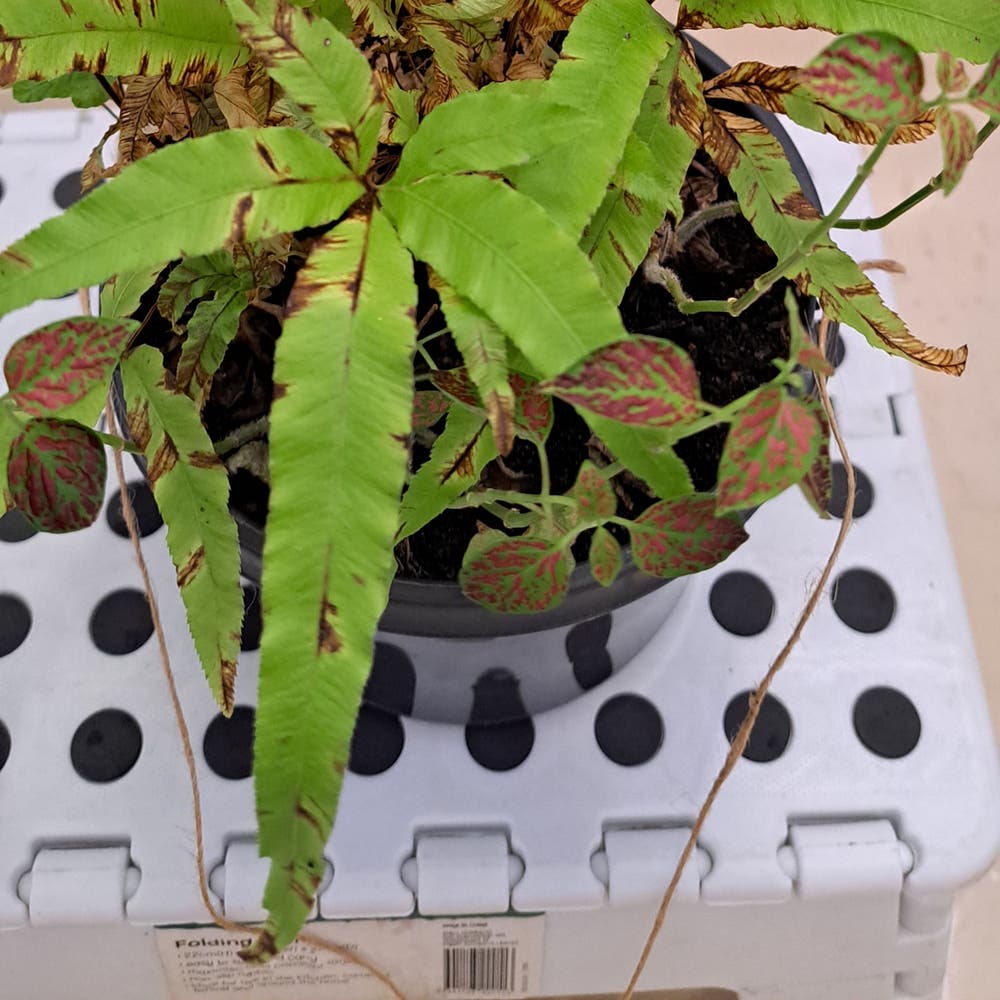
Why Are There Black Spots on My Cretan Brake Leaves?
Pteris cretica
By the Greg Editorial Team
Jun 14, 2024•7 min read
This article was created with the help of AI so we can cover more plants for you. May contain errors. See one? Report it here.
Eradicate black spots on your Cretan Brake 🍃 and ensure its vibrant health with our expert guide!
- Fungal, bacterial, or stress cause black spots on Cretan Brake leaves.
- Prune with sterilized shears to prevent disease spread.
- Consistent care routine helps prevent future black spots.
Identifying the Causes of Black Spots
🍄 Fungal Foes
Fungi are the usual suspects when it comes to black spots. Think of them as the uninvited guests at a party—they thrive in moist conditions. The Cylindrocladium spathiphylli fungus, for instance, throws a bash in the form of circular brown lesions with yellow halos. If your plant's leaves are sporting these, it's time to crash their party.
🦠 Bacterial Bullies
Bacterial infections are no less troublesome. They love a good wet leaf to start their shenanigans. Water-soaked lesions with a purple-brown tinge? That's their signature. And if you've been overzealous with the watering can, you've basically rolled out the red carpet for them.
🌿 Environmental Stress
Let's not ignore environmental stress. Too much sun, and your plant might as well be sunbathing without sunscreen. Too cold, and it's like leaving your plant out in the snow. These conditions can send your Cretan Brake into a frenzy of black spots as distress signals.
🔍 Detective Work
To pinpoint the culprit, play detective. Shape, color, and location of the spots are your clues. A fungal spot might look different from a bacterial one, but both love to exploit overwatering and poor drainage. If you're stumped, remember that environmental factors can mimic these infections, so check your plant's living conditions too.
If You're Still Unsure
When in doubt, eliminate. Review your watering habits, peek at the roots for signs of rot, and consider whether your plant has been basking or baking in the sun. Sometimes, the cause is as simple as a plant's plea for more shade or less water.

Treatment Options for Black Spots
🦠 Combating Pathogens
Fungicides and antibacterial treatments are your go-to allies when dealing with pathogen-related black spots on your Cretan Brake. For those leaning towards natural remedies, neem oil or a baking soda mixture can be effective. Remember, moderation is key; you're aiming for plant health, not chemical warfare.
🌿 Environmental Adjustments
Your plant's environment can be a breeding ground for black spots. Reduce humidity and maintain a cool (but not chilly) temperature. Ensure the lighting is bright yet indirect—think of it as the perfect ambient light for your plant's daily photoshoot.
✂️ Pruning with Precision
When black spots appear, it's time for some tactical pruning. Use sterilized shears to cut away the affected leaves and prevent the disease from spreading. Cleanliness is crucial, so dispose of the infected leaves properly—no compost pile hideouts for these culprits.
💊 The Right Treatment Mix
Employ a mix of organic and chemical treatments as needed. Start with less invasive options like a baking soda and soap spray, and escalate to copper-based fungicides or broad-spectrum fungicides if the situation demands it. Always follow the product instructions to the letter.
🌱 Environmental Fine-Tuning
Lastly, don't let your plant stew in its own juices. Avoid overwatering and ensure good drainage to keep those roots happy and healthy. A pot within a pot system might just be the ticket to better moisture management and, ultimately, a black spot-free existence.

Cultural Practices to Prevent Black Spots
Watering Wisdom: The Cretan Brake Fern craves consistency. Keep the soil barely moist—think of it as the plant's comfort food. Overwatering is a no-no; it's the equivalent of soggy socks for roots. And timing? Water in the early morning, so the leaves can dry out with dignity under the sun's gaze.
🌞 Light and Location
Bright Indirect Light is your fern's best friend. Direct sunlight? That's a frenemy. It's like putting your plant in the spotlight for all the wrong reasons. Find a spot that's just right, where the light is as gentle as a pat on the back.
🚰 Soil and Drainage
Well-draining soil is non-negotiable. Think of it as the plant's breathable workout gear. And the pot? Go for terracotta with drainage holes, because nobody likes wet feet, especially not your fern.
🍽️ Feeding Finesse
When it comes to feeding, less is more. Over-fertilization is like overindulging in junk food—it might feel good at first, but it's trouble in the long run. Stick to a balanced fertilizer and don't overdo it. It's about nourishing, not overwhelming.
💧 Humidity and Temperature
Keep humidity consistent—aim for that sweet spot between a desert and a steam room. Temperature swings are drama your plant can live without. Keep it cool, but not cold, like the other side of the pillow.
👩🌾 Plant Hygiene
Cleanliness is next to plant-godliness. Wipe those leaves, keep the area tidy, and repot when necessary. It's like giving your plant a spa day; it'll thank you with spotless leaves.
🌱 Mulching and Organic Matter
Mulch like it's a fashion statement for the soil. It keeps moisture levels just right and adds a touch of elegance. And organic matter? It's the soil's superfood—mix it in for happy roots.
Remember, prevention is better than cure. By keeping your Cretan Brake Fern in tip-top shape with these cultural practices, you're setting the stage for a black spot-free performance.

Pruning Affected Leaves
🕵️♂️ Inspect and Assess
Examine your Cretan Brake carefully to gauge the extent of the black spot affliction. Are we talking a leaf or two, or is this a full-blown leaf-pocalypse?
🛠️ Get Your Tools Ready
Grab your pruning shears or scissors. Make sure they're as clean as a whistle—disinfect them to prevent spreading any nasties to healthy tissue.
✂️ Pruning 101
Snip off the affected leaves, but don't just hack willy-nilly. Aim to cut just above a leaf node. You're a surgeon, not a lumberjack.
🧹 Post-Pruning Protocol
After the deed is done, clean up any fallen soldiers (read: leaves) from the soil to halt the black spot blitzkrieg.
💧 Keep It Dry
Moisture is the enemy here. Ease up on the misting and consider bottom watering to keep those leaves bone-dry.
👩⚕️ Regular Check-Ups
Stay vigilant. Keep an eye out for any new signs of disease and be ready to go Edward Scissorhands on them if necessary.
🌿 Neem Oil: The Secret Weapon?
If you're feeling adventurous, a neem oil soil soak might just be your ace in the hole. But let's not get ahead of ourselves—focus on the pruning for now.
Preventative Measures for Long-Term Health
👀 Regular Monitoring
Vigilance is your plant's best friend. Make it a habit to inspect your Cretan Brake regularly. Look for the early signs of black spots or any other distress. Catching problems early can save you from a plant catastrophe.
🧼 Plant Hygiene
Keep it clean, folks. Wipe down those leaves with a damp cloth to remove dust and potential spores. It's like giving your plant a spa day, minus the cucumber slices.
🌞 Environmental Control
Plants are picky about their living conditions. Ensure your Cretan Brake is basking in indirect sunlight and living in a stable environment. Dramatic temperature swings are as unwelcome as a snowstorm in July.
💧 Water Wisely
Overwatering is a sin in the plant world. Water your Cretan Brake when the soil feels dry to the touch, and never let it sit in a puddle. Think of water as a fine whiskey—it's all about quality, not quantity.
🧽 Sterile Practices
When repotting, always use sterile potting mix and clean pots. It's like moving into a new apartment that's been deep cleaned and sanitized—no nasty surprises lurking in the corners.
🚫 Quarantine Newcomers
New plants can bring unexpected guests. Quarantine them before introducing them to your plant family. It's the botanical equivalent of checking for a fever before boarding a plane.
✂️ Prune with Precision
If you spot trouble, get your sterilized scissors out and prune away the affected areas. Think of it as a tactical strike on the enemy.
🛡️ Fungicide as a Shield
Consider using a fungicide as a preventative measure, especially if black spots have been a recurring nightmare. It's like sending your plant to bed with an armor suit on.
⏰ Consistent Care Routine
Establish a care routine that's as regular as your morning coffee. Consistency is key to keeping your Cretan Brake in tip-top shape. It's not just a plant; it's a lifestyle.
⚠️ Safety First
This content is for general information and may contain errors, omissions, or outdated details. It is not medical, veterinary advice, or an endorsement of therapeutic claims.
Always consult a qualified healthcare professional before using any plant as food, medicine, or supplement.
Never eat any plant (or feed one to pets) without confirming its identity with at least two trusted sources.
If you suspect poisoning, call Poison Control (800) 222-1222, the Pet Poison Helpline (800) 213-6680, or your local emergency service immediately.
Spotted an error? Please report it here.
Eradicate those pesky black spots 🍃 with Greg's personalized care reminders and environmental monitoring, ensuring your Cretan Brake thrives spot-free!