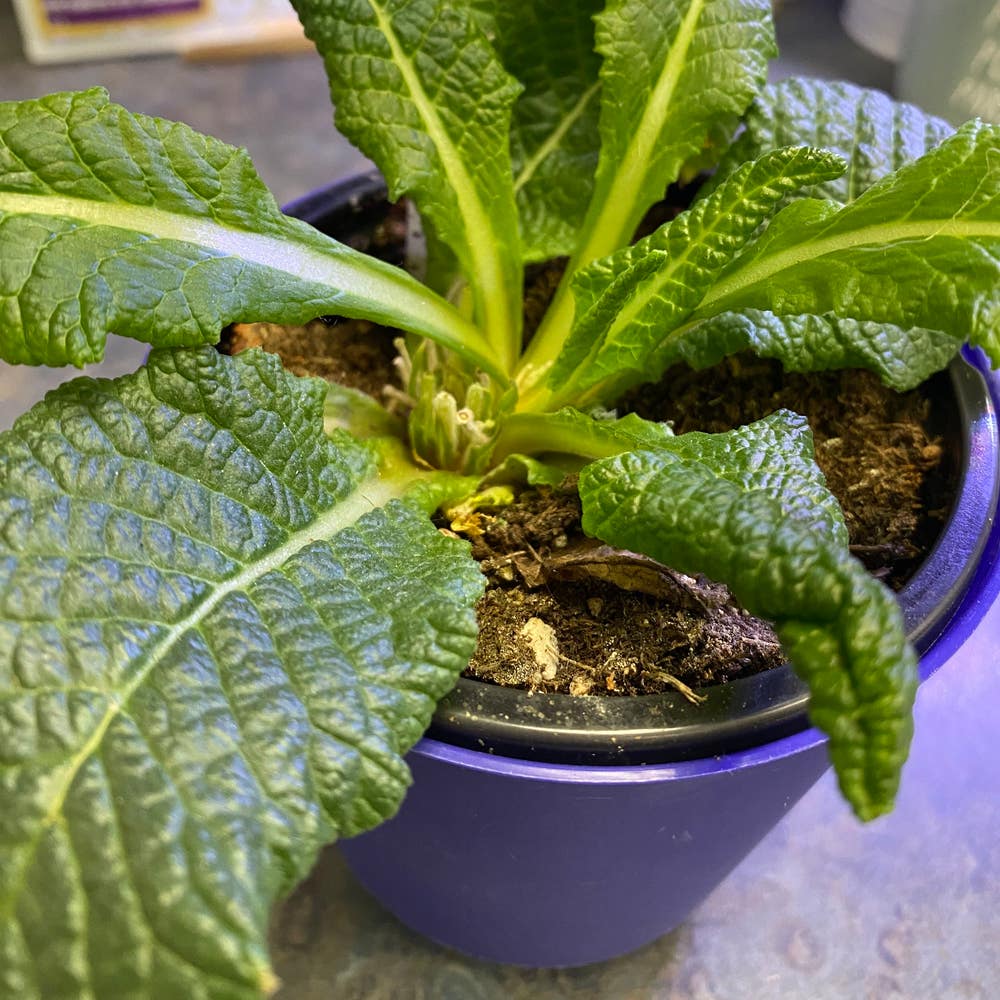
⚠️ What Should I Do When Oxlip Leaves Turn Yellow?
Primula elatior
By the Greg Editorial Team
Feb 14, 2024•5 min read
This article was created with the help of AI so we can cover more plants for you. May contain errors. See one? Report it here.
- 🍂 Yellow Oxlip leaves signal care issues or pests/diseases.
- 💧 Soil moisture and proper drainage are critical for Oxlip health.
- 🌱 Nutrient balance is key; use soil tests and right fertilizer.
Spotting the Yellow Flags
🍋 Identifying Yellow Leaf Patterns
Yellow leaves on your Oxlip can be as subtle as a whisper or as loud as a shout. Uniform yellowing often points to a care routine hiccup, like improper watering or lighting missteps. On the other hand, spotty yellowing suggests uninvited guests—pests or diseases. It's crucial to catch these early; your plant's health depends on it.
🐜 Checking for Pests and Diseases
Pests are like that annoying relative who shows up unannounced and won't leave. Look for sticky residues, webbing, or the actual critters. Diseases, on the other hand, are sneakier, often presenting as yellow leaves with a side of brown spots or halos. Regular inspections are your best defense; they're the equivalent of checking your plant's pulse. If you spot trouble, evict those pests with neem oil or insecticidal soap, and remember, cleanliness is next to pestlessness. Keep your plant's area tidy to prevent future infestations.
Getting to the Root of the Issue
🌱 Assessing Soil and Water Conditions
Evaluating your Oxlip's soil moisture is like checking its pulse; it tells you a lot about its health. Dry soil? Your plant's thirsty. Wet soil? Hold off on the waterworks. Remember, Oxlips aren't fans of wet feet.
🚰 Checking Drainage
Poor drainage is a silent plant killer. Ensure your pot has adequate holes and that water can escape freely. If your Oxlip is swimming after you water, it's time to rethink your setup.
💧 The Role of Watering Habits
Your watering habits can make or break your Oxlip's mood. Consistency is key, but so is flexibility. The top inch of soil should be your guide – dry? Water. Damp? Wait.
🍽️ Nutrient Talk: Is Your Oxlip Hungry?
Yellow leaves might be your Oxlip's cry for help – it could be starving for nutrients. Pale leaves often scream iron deficiency, while older, yellow leaves may indicate a lack of nitrogen.
👩🌾 Feeding and Leaf Health
Connecting the dots between feeding and leaf health isn't rocket science. A soil test can be a game-changer, revealing exactly what's missing from your plant's diet.
🌱 Soil Amendments
Sometimes, your soil needs a boost. Choosing the right fertilizer is crucial, but don't go overboard – it's a fine line between nourishment and nutrient overdose.
The Rescue Plan for Yellow Leaves
💧 Adjusting Watering Practices
Fine-tuning your watering schedule is a game-changer for Oxlips with yellow leaves. Stick your finger into the soil; if it's dry an inch below the surface, it's time for a drink. Water deeply but sparingly, encouraging roots to grow strong and deep. Ensure your pot's drainage is more than just a decorative feature to prevent a soggy disaster.
🌱 Techniques for Proper Soil Moisture Management
Don't just water on autopilot. Seasonal changes mean your plant's thirst varies. Less is more during winter's chill, while summer demands vigilance like a lifeguard at a pool party. A moisture meter can be your tech-savvy ally, or go old-school with the finger test. Either way, consistency is key—your plant craves routine as much as you do your morning coffee.
🌿 Nutrient Boost and Soil Amendments
When your Oxlip's leaves yell "feed me" with a yellow hue, it's time to pick the right fertilizer. Organic matter like compost is like a multivitamin for your soil, while a balanced, water-soluble fertilizer is the quick fix your plant might need. Always water before fertilizing to avoid shocking the roots—think of it as a gentle warm-up before a workout.
🌱 When and How to Amend Your Soil
If your soil is as drained as you are after a long day, it's time to mix things up. Add perlite or sand to improve drainage, making your soil as fluffy as a well-risen cake. Remember, amendments are not a one-time deal; keep an eye on your soil's condition and be ready to tweak it. It's like updating your playlist; what worked last season might not be the hit this time around.
Keeping the Green: Preventive Strategies
💧 Watering Wisdom: Preventing Over and Underwatering
Consistency is key when it comes to watering Oxlip plants. Establish a routine that adapts to the changing needs of your plant with the seasons. During warmer months, your Oxlip might be thirstier, while in cooler times, it will require less frequent watering.
To strike the right balance, tools like moisture meters can be your best friends. They take the guesswork out of the equation, letting you know exactly when your plant's soil is in the Goldilocks zone—neither too wet nor too dry. Alternatively, the finger test—plunging a finger into the soil up to the second knuckle—can serve as a quick and reliable check for soil moisture.
🌱 Nutrient Management: Fertilizing for Future Health
Creating a balanced fertilization plan is crucial for the long-term health of your Oxlip. Over-fertilization can be just as detrimental as under-fertilization, leading to nutrient burn and poor plant health.
To avoid this, opt for a diluted fertilizer solution and apply it consistently with watering. This approach ensures a steady supply of nutrients without overwhelming your plant. Keep an eye on your Oxlip's growth and leaf color; these are good indicators of whether your fertilization strategy is on point. If you notice stunted growth or a lackluster appearance, it might be time to adjust your fertilization regimen.
⚠️ Safety First
This content is for general information and may contain errors, omissions, or outdated details. It is not medical, veterinary advice, or an endorsement of therapeutic claims.
Always consult a qualified healthcare professional before using any plant as food, medicine, or supplement.
Never eat any plant (or feed one to pets) without confirming its identity with at least two trusted sources.
If you suspect poisoning, call Poison Control (800) 222-1222, the Pet Poison Helpline (800) 213-6680, or your local emergency service immediately.
Spotted an error? Please report it here.
Banish yellow leaves and keep your Oxlip thriving with Greg's custom alerts 🚨 for watering and fertilizing, tailored to your plant's unique needs!