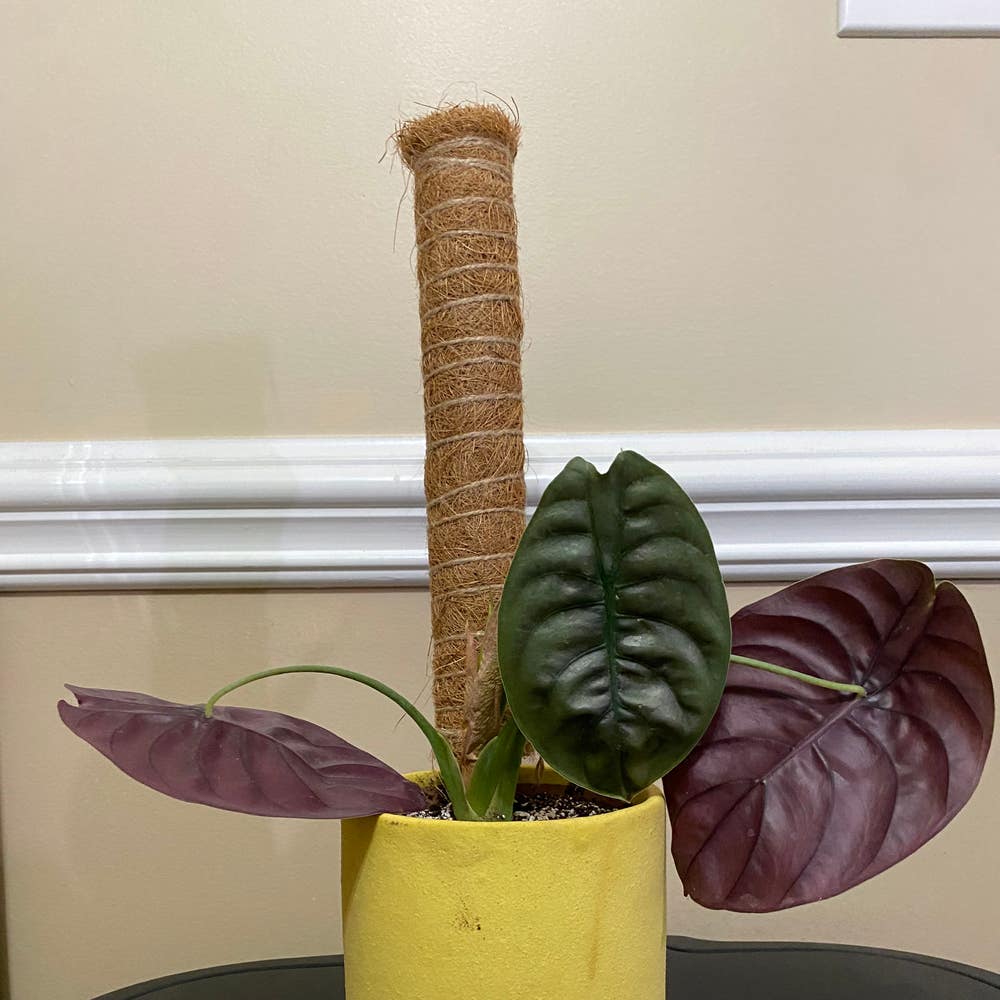
💧 How Often Do I Need to Water My Jewel Alocasia?
Alocasia cuprea
By the Greg Editorial Team
Jun 15, 2024•5 min read
This article was created with the help of AI so we can cover more plants for you. May contain errors. See one? Report it here.
Ensure your Jewel Alocasia flourishes 🌿 by nailing the ideal watering rhythm for its delicate needs.
- Water when top inch of soil is dry, typically once or twice a week.
- 🍂 Reduce frequency in fall/winter to every 7-10 days.
- 🌱 Adjust for pot size, climate, and growth stage to prevent over/underwatering.
Optimal Watering Frequency for Jewel Alocasia
Determining when to water your Jewel Alocasia can be more art than science. Soil moisture is your guiding star here. Wait until the top inch of soil feels dry to the touch before reaching for the watering can. This usually translates to watering once every 7 to 10 days, but your plant's thirst may vary.
💧 When to Water
Check the soil before you water—not too wet, not too dry. It's like Goldilocks' porridge; it needs to be just right. Use the finger test or a moisture meter to avoid guessing games. Remember, overwatering is a no-go; it's the fast track to root rot city.
💦 Soil Moisture's Role
Soil that's well-draining yet moisture-retentive is your best bet. Think of it as your plant's safety net, ensuring water is available without drowning the roots. Adjust your watering frequency based on how quickly the soil dries out, which can be influenced by factors like pot size, indoor climate, and the plant's growth stage.

Seasonal Adjustments to Watering Jewel Alocasia
Adjusting your watering routine with the seasons is crucial for keeping your Jewel Alocasia thriving.
🌸 Spring and Summer: The Thirsty Seasons
During the warmer months, your Jewel Alocasia's thirst increases. It's growing more vigorously and will likely need water once the top inch of soil feels dry. Expect to water once or twice a week, but always check the soil first.
❄️ Fall and Winter: The Cool Down
As temperatures drop, so does your plant's water consumption. Watering frequency should be reduced to every 7 to 10 days, depending on the dryness of the soil. Keep an eye out for dormancy signs, as your Alocasia may take a winter nap and need even less.
🏠 Indoor Heating and Cooling: The Sneaky Variables
Indoor climates can play tricks on your watering schedule. Cranked-up heaters in winter can dry out the air and soil faster, while air conditioning in summer does the opposite. Adjust accordingly and remember, your Alocasia doesn't care about your utility bill; it just wants the right amount of water.
💦 Humidity: The Invisible Thirst Quencher
Jewel Alocasia prefers a moderate humidity level of 60-80%. Too much can invite fungi to the party, while too little can leave your plant parched. Use a humidifier or a pebble tray to maintain the balance, and don't forget to mist occasionally—but not too much.
🌞 Light: The Watering Whisperer
Bright, indirect light helps your Alocasia drink properly. Too much direct sun and it'll get thirsty; too little and it won't drink enough. If your lighting conditions change with the seasons, so should your watering routine. Consider grow lights if the sun is playing hide and seek.
Remember, your Jewel Alocasia doesn't have a calendar. It relies on you to read the signs and adjust your care to its seasonal moods.

Overcoming Watering Challenges
💧 Identifying Signs of Watering Issues
Overwatering can turn your Jewel Alocasia into a soggy mess. Look for yellowing leaves starting from the lower foliage and potentially moving upward. Soggy soil that doesn't dry out, blisters on leaves, and a rotting smell are all distress flares your plant is sending up. Underwatering, on the other hand, will have your Alocasia's leaves doing an unenthusiastic flop, signaling a thirst that needs quenching.
🚱 Strategies to Correct Watering Mistakes
To combat overwatering, let the soil dry out between waterings. It's about finding that sweet spot where the soil is as moist as a well-wrung sponge, not a drenched towel. If you've gone overboard, consider repotting with fresh soil and ensure your pot has drainage holes.
For underwatered plants, avoid the temptation to flood them in one go. Instead, opt for a slow and steady approach, allowing the water to reach the roots without overwhelming them. Think of it as a gentle rain, not a monsoon.
Remember, your Jewel Alocasia isn't auditioning for a role as a water lily or a cactus; it's somewhere in the middle. Adjust your watering routine to your home's humidity levels and the plant's growth cycle, and you'll be on your way to a happy, hydrated Alocasia.

The Impact of Potting Mix and Containers on Watering
Choosing the right potting mix for your Jewel Alocasia is like picking a pair of shoes for a marathon; it's got to be the perfect fit. Well-draining yet moisture-retentive mediums are the holy grail here. Think of a blend with coco coir or sphagnum moss for that cushy moisture balance, and perlite or pumice for the 'airy' step.
🌱 Potting Mix Ingredients
- Coco Coir: Moisture maestro.
- Perlite/Pumice: Drainage daredevils.
- Sphagnum Moss: Holds water like a sponge.
When it comes to containers, think of them as the plant's personal real estate. Drainage holes are non-negotiable; they're the escape route for excess water. Material-wise, terracotta or unglazed clay are your allies, wicking away moisture and bringing down the risk of waterlogged roots. Plastic can play it too safe, holding in more moisture than you bargained for.
🏡 Container Considerations
- Drainage Holes: Absolutely essential.
- Material: Terracotta for moisture control, plastic for retention.
Remember, your Jewel Alocasia doesn't have a 'one-size-fits-all' approach. It's a bit of a diva, demanding a customized living space that caters to its unique hydration needs. Keep an eye on the potting mix's dryness and be ready to adjust your watering game accordingly. And hey, don't forget to let your plant flaunt its stuff in a container that complements its exotic vibes.
⚠️ Safety First
This content is for general information and may contain errors, omissions, or outdated details. It is not medical, veterinary advice, or an endorsement of therapeutic claims.
Always consult a qualified healthcare professional before using any plant as food, medicine, or supplement.
Never eat any plant (or feed one to pets) without confirming its identity with at least two trusted sources.
If you suspect poisoning, call Poison Control (800) 222-1222, the Pet Poison Helpline (800) 213-6680, or your local emergency service immediately.
Spotted an error? Please report it here.
Ensure your Jewel Alocasia flourishes 🌱 with Greg's personalized reminders to water only when the soil is perfectly parched, tailored to your home's unique conditions.