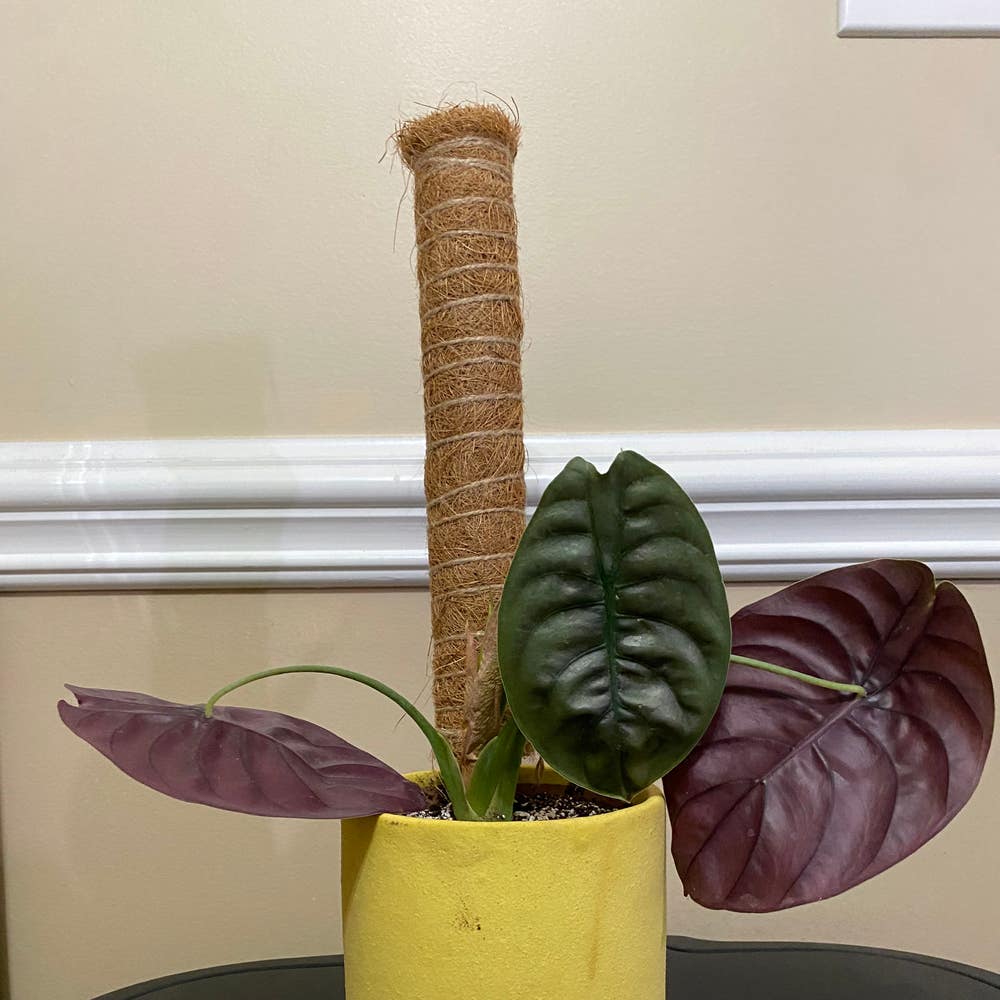
⚠️ Why Are the Leaves on My Jewel Alocasia Turning Yellow?
Alocasia cuprea
By the Greg Editorial Team
Jun 15, 2024•7 min read
This article was created with the help of AI so we can cover more plants for you. May contain errors. See one? Report it here.
Unearth the secret to reviving your Jewel Alocasia's yellow leaves for a lush, healthy plant life 🌿✨!
- Over/underwatering causes yellow leaves; adjust watering and soil for health.
- Bright, indirect light and stable temps prevent yellowing in Jewel Alocasia.
- Prune and manage pests to maintain plant health and prevent yellow leaves.
Watering Practices and Yellowing Leaves
Overwatering is the main villain in the tale of yellowing Jewel Alocasia leaves. These tropical treasures can't stand soggy shoes – too much H2O leads to a sad, yellow wardrobe. On the flip side, underwatering makes them just as miserable. It's all about finding that watering sweet spot.
🌊 How Improper Watering Causes Yellow Leaves
When you drown the roots, you're basically suffocating them. Root rot sets in, and the leaves yell "help!" by turning yellow. Conversely, too little water and the leaves throw a yellow tantrum for attention.
🚿 Steps to Correct Watering Practices
- Check the soil moisture before you water – if it's damp, hold off on the H2O.
- Adjust your watering schedule with the seasons. Jewel Alocasia likes a dry spell in winter, so ease up when the temperature drops.
- If you've overdone it, replace the soggy soil with fresh, well-draining mix to give the roots some breathing room.
- Monitor your plant – if it perks up after these changes, you're on the right track. No more yellowing leaves should appear.
Remember, your Jewel Alocasia isn't trying to give you a hard time. It just wants a drink, not a swim. Keep it damp, not drenched, and you'll both be happier for it.

Light Exposure and Temperature Effects
🌞 The Balancing Act of Light
Bright, indirect light—that's the sweet spot for your Jewel Alocasia. Too much sun and you're dealing with the leafy equivalent of a sunburn. Too little, and your plant's leaves might as well be waving white flags of surrender. Adjust your plant's position so it's basking in a glow that's just right, avoiding the harsh midday sun like a bad joke.
🌡️ Temperature: The Invisible Ingredient
Temperature swings are like mood swings for your plant—neither are fun to deal with. Keep your Alocasia away from drafts and vents. It's not being picky; it's about avoiding the botanical equivalent of catching a cold. Regular household temperatures work best. If you're repotting, give it time to acclimate before you start worrying about a few yellow leaves.
💦 Humidity: The Tropical Touch
Your Alocasia didn't sign up for a desert vacation. It craves humidity like a good spa day. Use a pebble tray or a humidifier to up the moisture in the air. This isn't just pampering; it's preventing those leaves from turning as yellow as a rubber ducky.
When the Environment's Off, Leaves Show It
Leaves turning yellow? It's not a fashion statement; it's a distress signal. If you've ruled out overwatering and nutrient issues, light and temperature are likely the culprits. Adjust the conditions, and keep a close eye. It's like being a plant detective, solving the mystery of the yellowing leaves.

Nutrient Deficiencies Leading to Yellow Leaves
🌿 Identifying Signs of Nutrient Deficiencies
Yellowing leaves on your Jewel Alocasia could be screaming for nutrients. Nitrogen deficiency often starts with older leaves turning yellow. If you see yellow edges, potassium could be the culprit. Magnesium issues? Look for yellowing between the veins. And if new growth is pale, your plant might be iron-starved.
💡 Soil Amendments and Fertilization Strategies
To combat these deficiencies, a balanced fertilizer is your best friend. But don't just throw it on like confetti at a parade. Over-fertilization can lead to a whole new set of issues, like brown leaf tips or even root damage. Always ensure the soil is moist before you fertilize to avoid burning your plant. If you're not sure what's lacking, get a soil test done. It's like a health check-up for your plant's home.
🕰 When to Fertilize
Timing is everything. Don't just fertilize on a whim; follow the package directions and only during your plant's growth season. Too much nitrogen? You'll end up with lush green leaves but no flowers or fruit. It's about finding that sweet spot.
🌱 The Right Mix
Remember, not all fertilizers are created equal. Your plant craves a mix of minerals. Skip the high nitrogen mix and opt for a homemade fertilizer or a store-bought option that includes all the essential minerals. Think of it as a gourmet meal for your green buddy.
🌿 Post-Fertilization Care
After you've given your plant its nutrient boost, keep an eye on it. Yellow leaves won't turn green again, but look for new growth to be the right color. That's the sign of a happy, healthy plant. If you're still seeing yellow, it might be time to reassess your approach.

Pruning Yellow Leaves for Plant Health
Pruning isn't just a cosmetic fix—it's critical for your Jewel Alocasia's health. Yellow leaves are like the plant's white flag, signaling surrender to stress or decay. By cutting these off, you redirect the plant's energy to the flourishing foliage.
🌱 Why Prune?
Yellow leaves can be a drain on your plant's resources. They're not just unsightly; they're freeloaders, sapping energy that could go towards new growth. Think of pruning as your plant's personal trainer, helping it to shed the excess and focus on building healthy, green muscle.
✂️ How to Prune
Grab those shears and make sure they're as clean as a whistle—dirty tools can spread disease like gossip in a small town. Snip right in front of a leaf node to encourage your plant to branch out. It's like telling your plant, "Hey, don't look back, the future is this way!"
🌿 Pruning Best Practices
- Sterilize your tools: Dip them in rubbing alcohol or a 10% bleach solution to avoid playing matchmaker for fungi and bacteria.
- Be selective: You're not shearing a sheep; target only the yellow, brown, or damaged leaves.
- Angle your cuts: A 45-degree angle is the sweet spot, allowing for optimal healing and regrowth.
- Timing is key: Spring into action during the growing season, when your plant is in its prime for recovery.
🚿 Aftercare
Post-pruning, don't leave your plant high and dry. Give it a pep talk with some water and a light feeding, if it's feeding time. Keep an eye on it like a hawk—healthy new growth is the goal, not a resurgence of the yellows.
Pest-Related Yellowing and Control Measures
🐜 Recognizing the Culprits
Pests are stealthy adversaries of the Jewel Alocasia, often leaving a trail of yellowing leaves in their wake. Mealybugs, spider mites, and aphids are the usual suspects. These tiny invaders suck the life out of leaves, causing them to lose color and vitality.
🛡️ Integrated Pest Management Strategies
Vigilance is key. Regularly inspect the undersides of leaves and the nooks where pests like to hide. If you spot any, it's time to take action. Insecticidal soap or neem oil are your go-to weapons, effective for their contact-killing properties and low environmental impact.
🚨 Immediate Action Steps
- Isolate the affected plant to prevent the spread of pests.
- Apply insecticidal soap or neem oil, thoroughly covering all surfaces.
- Repeat treatments at the recommended intervals to catch new hatchlings.
🛡️ Preventative Measures
- Keep your Jewel Alocasia dust-free; a clean plant is less inviting to pests.
- Consider preventative applications of neem oil, especially if pests are common in your area.
- Enhance air circulation around your plants to discourage pest infestation.
Remember, the goal is to create an environment where your Jewel Alocasia can thrive without the constant threat of pests. Stay proactive, and your plant will thank you with vibrant, healthy leaves.
⚠️ Safety First
This content is for general information and may contain errors, omissions, or outdated details. It is not medical, veterinary advice, or an endorsement of therapeutic claims.
Always consult a qualified healthcare professional before using any plant as food, medicine, or supplement.
Never eat any plant (or feed one to pets) without confirming its identity with at least two trusted sources.
If you suspect poisoning, call Poison Control (800) 222-1222, the Pet Poison Helpline (800) 213-6680, or your local emergency service immediately.
Spotted an error? Please report it here.
Prevent your Jewel Alocasia from turning yellow 🍂 with Greg's personalized care plans that adjust to your home's environment and access to a community for expert advice.