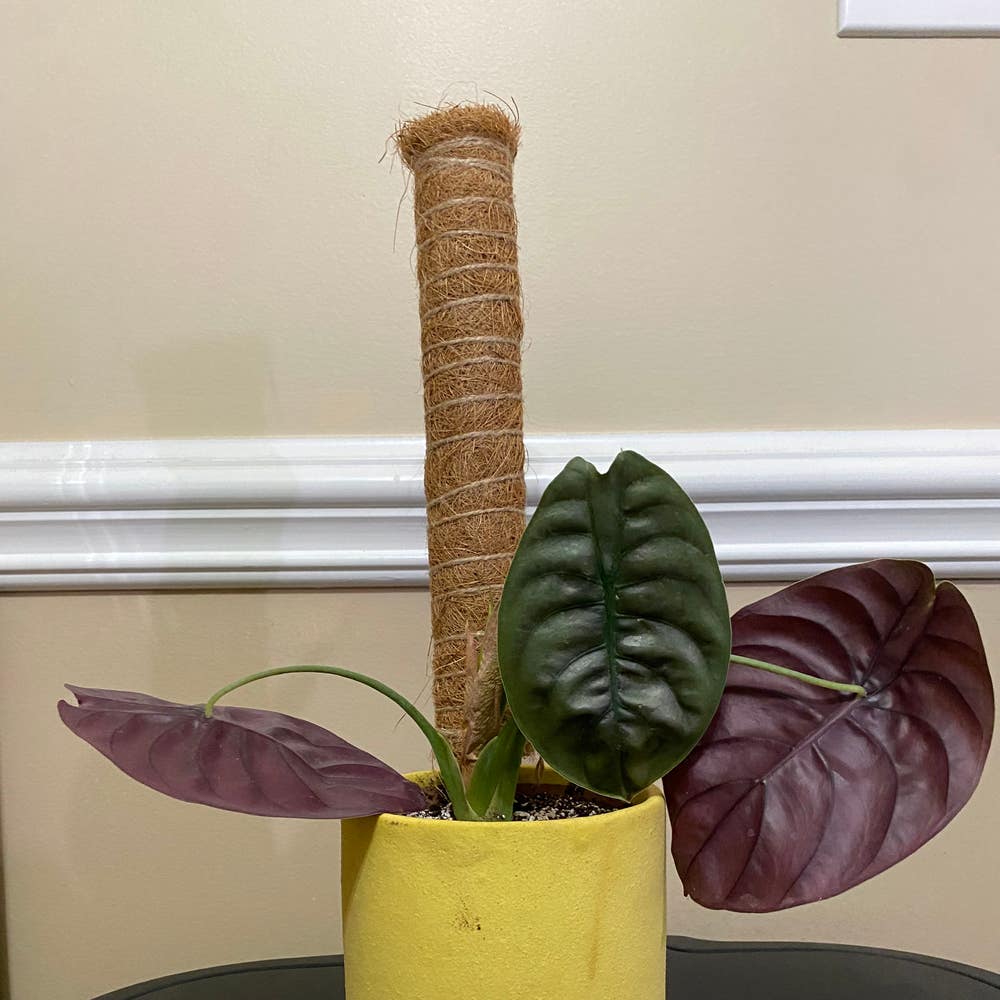
🌞 Does My Jewel Alocasia Need Direct Sunlight?
Alocasia cuprea
By the Greg Editorial Team
Jun 15, 2024•5 min read
This article was created with the help of AI so we can cover more plants for you. May contain errors. See one? Report it here.
Nurture your Jewel Alocasia to perfection by avoiding direct sunlight's pitfalls. 🌿⛔☀️
- 🌿 Bright indirect light is ideal for Jewel Alocasia, not direct sunlight.
- East or north-facing windows best suit its light needs.
- Seasonal and hemispheric adjustments necessary for optimal sunlight exposure.
Sunlight Preferences of Jewel Alocasia
Jewel Alocasia thrives in bright indirect light. Direct sunlight is a no-go; it's like putting a vampire in a tanning bed—just don't do it.
🌞 Ideal Sunlight Conditions
Position your plant in a spot where it can bask in the glow without the burn. Think of it as the plant equivalent of reading by a sunny window—cozy, not toasty.
🚫 Signs of Too Much Sun
Leaves turning into crispy critters? That's the telltale sign of too much sun. Brown spots or yellowing leaves are your Jewel Alocasia's way of crying out for sunscreen—or rather, shade.

Window Direction Impact on Jewel Alocasia
Navigating the compass of light, Jewel Alocasia thrives in a sweet spot that's not too sun-kissed.
🌅 Best Window Orientations
East or North—these are your go-to windows for the Jewel Alocasia. Morning light from the east is like a gentle wake-up call rather than a blaring alarm. North-facing windows offer a consistent soft light that won't lead to the leafy equivalent of a sunburn.
🍂 Seasonal Adjustments
As the seasons shift, so should your plant. Shorter days in winter? Scoot it closer to the light. Long, bright summer days? Pull it back, or the leaves might throw a fit. It's like a dance, with the sun leading and your Alocasia following.
🪟 Real Talk: Window Realities
Remember, walls are sunlight's nemesis. A plant off to the side of a window might as well be in another room. Be a detective—track the light, move the plant, and find that Goldilocks zone where it's just right.
🌐 Hemispheric Hints
Living in the northern hemisphere? South and West windows can work if you're savvy with shading. Southern hemisphere folks, flip the script—your northern light is the northern hemisphere's southern light. Confusing, but true.
💡 Pro Tip: Sheer Genius
Use sheer curtains to diffuse that harsh direct sunlight. It's like sunglasses for your Alocasia, keeping it cool and protected.
Remember, the goal is to avoid the drama of drooping leaves or a sun-scorched Alocasia. Keep it simple, keep it shaded, and keep it thriving.

Hemisphere Considerations for Jewel Alocasia
🌍 Understanding Sunlight Needs Across Hemispheres
Jewel Alocasia's sunlight requirements shift with hemispheric location. In the northern hemisphere, where sunlight can be less intense, especially during winter, positioning your plant to catch those rare rays is crucial. Conversely, in the southern hemisphere, the sun can be more direct and harsh, necessitating some shade to prevent scorching.
🌱 Seasonal Adjustments for Optimal Growth
As seasons change, so should your Jewel Alocasia's spot in your home. Summer in the northern hemisphere might mean pulling your plant back from that sun-drenched window, while in the southern hemisphere, your Alocasia may bask in the sun's glory without much worry. Winter flips the script; northern plant parents might need to cozy their Alocasia closer to the light, while southern green thumbs could give their plants a slight reprieve from the potent sun.
🌎 Real-World Implications
Let's get real: if you're living in a place with four distinct seasons, your Jewel Alocasia is riding the sunlight roller coaster with you. In Montreal, for example, you're looking at a grow light investment for those long, dark winters. But hey, if you're down under, where the sun slaps differently, you're playing a constant game of "keep away" from those UV rays.
💡 Pro Tip: Window Wisdom
Remember, the type of window matters. East-facing windows are your Goldilocks zone for gentle morning light. South-facing windows? They're the sun's megaphone, so use with caution and maybe some sheer curtains for a soft touch. Keep this in mind, and your Jewel Alocasia won't throw shade at you for your window choices.

Practical Tips for Sunlight Management
🕶️ Protecting from Excessive Sunlight
Sheer curtains or blinds are your first line of defense against the harsh rays that threaten your Jewel Alocasia's delicate leaves. Think of them as sunglasses for your plant—fashionable yet functional. If you catch your Alocasia starting to tan (and not in a good way), it's time to intervene with some light-diffusing decor.
🔄 Positioning and Light Diffusion
Rotate your plant buddy periodically to ensure it gets an even tan—err, I mean, evenly distributed light. No one likes a lopsided plant. And if you're using grow lights, like the Sunblaster T5HO or the Monios-L T5, remember to give your plant some space. Too close and you risk a sunburn; too far and you might as well be growing a mushroom.
🏖️ Sunshades and Seasonal Adjustments
Consider sunshades if you're in a particularly sunny spot or dealing with a heatwave. They're like putting your Alocasia under a tiny beach umbrella. And as the seasons change, play musical chairs with your plant to keep it in the Goldilocks zone—not too much light, not too little, but just right.
🏙️ Indoor vs. Outdoor Light Intensity
Remember, indoor light is the diet soda of sunlight—it's less intense. So, a little direct sun indoors might not be the villain it's made out to be. But, like diet soda, it's all about moderation. Don't let your Alocasia guzzle down too much direct sun, or you'll be dealing with the botanical equivalent of a sugar rush.
⚠️ Safety First
This content is for general information and may contain errors, omissions, or outdated details. It is not medical, veterinary advice, or an endorsement of therapeutic claims.
Always consult a qualified healthcare professional before using any plant as food, medicine, or supplement.
Never eat any plant (or feed one to pets) without confirming its identity with at least two trusted sources.
If you suspect poisoning, call Poison Control (800) 222-1222, the Pet Poison Helpline (800) 213-6680, or your local emergency service immediately.
Spotted an error? Please report it here.
Keep your Jewel Alocasia thriving 🌿 by using Greg's PlantVision to track sunlight and get personalized care reminders for the perfect spot in your home.