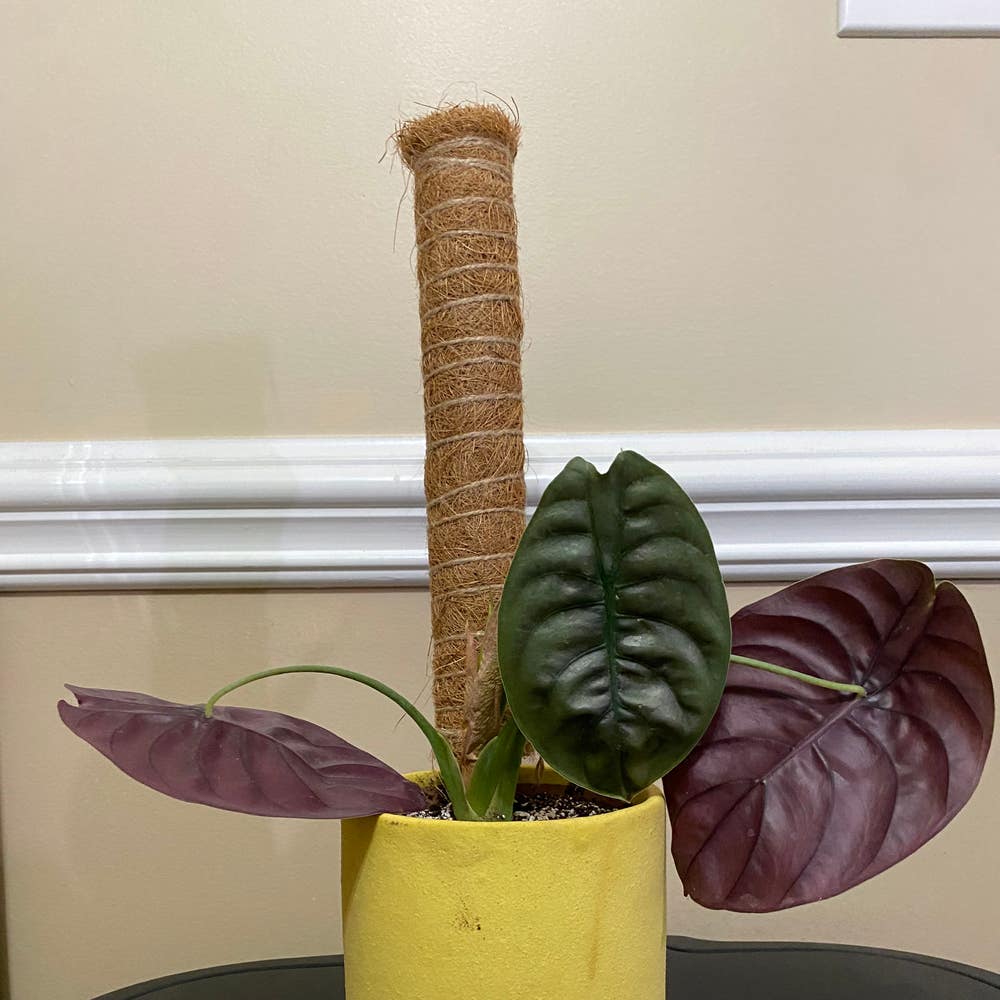
Why Are My Jewel Alocasia Leaves Falling Over?
Alocasia cuprea
By the Greg Editorial Team
Jun 15, 2024•7 min read
This article was created with the help of AI so we can cover more plants for you. May contain errors. See one? Report it here.
Prevent your Jewel Alocasia's leaves from drooping 🍃 with these game-changing care secrets.
- Over/underwatering? Yellow leaves and crispy edges signal watering issues.
- 🌡️ Keep it 65-80°F with high humidity and no drafts for happy leaves.
- 🔄 Consistent care routine with proper soil and light prevents drooping.
Diagnosing Leaf Droop in Jewel Alocasia
Identifying signs of distress in Jewel Alocasia is like unraveling a botanical mystery. Look for leaves that seem to have given up the will to stand tall, a sure sign they're not happy campers.
🚨 Signs of Distress
- Yellowing leaves may wave a flag of overwatering.
- Leaves with a crispy edge are crying out about the thirst of underwatering.
- A rotting smell? That's the stench of root rot, a silent killer.
🌞 Environmental Factors
- Light: Too little, and your Alocasia's leaves might droop like overcooked noodles.
- Temperature: Keep it steady; dramatic changes are as welcome as a snowstorm in July.
- Humidity: These tropical beauties need moisture in the air, or they'll sulk.
- Drafts: Avoid at all costs. Your plant will thank you by not going limp.
🐜 Pests and Diseases
- Pests: Sap-suckers like spider mites and mealybugs are the vampires of the plant world.
- Diseases: Wet brown spots? That's bacterial leaf spot, a sign to get your plant to the ER, stat.
🌱 Growth Patterns
- Juvenile plants might drop leaves like hot potatoes as they grow. It's not you, it's them.
By playing plant detective with these clues, you'll be on your way to restoring your Alocasia's perkiness.

Correcting Watering Practices to Prevent Leaf Droop
Watering frequency and quantity are pivotal in preventing your Jewel Alocasia from resembling a weeping willow. Here's the scoop:
💧 Adjusting Watering Frequency
- Check the soil: If the top inch feels like a desert, it's time to water. If it's damp, hold your horses.
- Room-temperature water is your plant's best friend—no shocking cold showers here.
- Drainage holes are a must. They're the escape route for any overzealous watering, keeping root rot at bay.
🚱 Tackling Root Rot
- Spot the signs: If your plant's leaves are more droopy than a teenager on Monday morning, it's time to check the roots.
- Repotting: If the roots are brown and mushy, think of it as plant triage. Fresh soil and a trim of the rotten roots might just save the day.
- Mulch: A little on top helps maintain moisture levels without turning your pot into a swamp.
Remember, your Alocasia isn't trying to win a limbo contest. Keep the watering balanced, and you'll have a plant that stands tall and proud.

Optimizing Light and Temperature for Upright Leaves
💡 Ideal Light Conditions
Bright, indirect light is the sweet spot for Jewel Alocasia. Direct sunlight is a no-go—it's like inviting a vampire into daylight. Position your plant where the light is filtered, like through a sheer curtain. This prevents the leaves from taking a nosedive.
🌡️ Temperature Tweaks
Keep the temperature consistent, between 65°F and 80°F. Think of your plant's comfort like your own—if you're reaching for a sweater or shedding layers, your plant might be stressing too. Sudden temperature changes are as welcome as a snowstorm in July, so avoid placing your plant near drafty windows or heating vents.
🍂 Seasonal Adjustments
As the seasons change, so should your plant's position. It's not being needy; it's about avoiding the leaf droop of neglect. Rotate the pot periodically for an even distribution of light—think of it as your plant doing yoga to maintain balance.
🌡️ Monitoring and Adjusting
Use a thermometer to avoid turning your plant's life into a survival reality show. If you see leaves curling or drooping, it's time to reassess the light and temperature. Adjustments should be gradual, like easing into a hot bath, to prevent shocking your green buddy.
Remember, your Jewel Alocasia isn't just another pretty face—it's a living entity that thrives with the right light and temperature. Treat it right, and it'll stand tall and proud, like a peacock flaunting its feathers.

Addressing Soil and Root Health to Combat Leaf Droop
🌱 Selecting the Right Soil Mix
Well-draining soil isn't just a preference; it's a necessity for Jewel Alocasia. Like a gourmet chef selecting the perfect ingredients, choose a mix that's airy and loose. Perlite or peat moss can transform a soil tragedy into a growth triumph, ensuring roots aren't swimming in moisture.
🌿 Repotting Techniques
When roots are as cramped as commuters on a rush-hour train, it's repotting time. Go for a pot that's a size up and always with drainage holes—nobody likes wet feet, especially not your Alocasia. Fresh soil is like a new lease on life, and a gentle trim of old roots can spur a growth spurt.
🌱 Ensuring Root Vigor
Your plant's roots are the unsung heroes, so treat them like rockstars. When repotting, be as gentle as a bomb defusal expert—these roots are the lifeline to perky leaves. And remember, root health is a marathon, not a sprint; regular checkups beat emergency interventions.
The Takeaway
In essence, think of soil as the foundation of your plant's home. Get it right, and you've set the stage for a standing ovation from every leaf on your Jewel Alocasia.
Establishing a Care Routine to Maintain Leaf Rigidity
To fend off the leaf droop in Jewel Alocasia, consistency is your mantra.
📅 Crafting a Care Schedule
Set a watering routine that's as predictable as your morning alarm. But stay alert to the seasons' whims—your plant's hydration needs will shift as the temperatures do.
🔄 Monitoring and Adjusting Care
Rotate your plant like a rotisserie chicken to ensure even light exposure. This isn't just for show; it's structural integrity we're talking about.
🌱 Soil and Fertilizer Checks
Ensure the soil is the crème de la crème of dirt—well-draining and rich in nutrients. Fertilize with the precision of a Michelin-starred chef, balancing the ingredients for the perfect growth recipe.
✂️ Pruning for Health and Posture
Trim your plant with the care of a bonsai artist. It's not just about looks; it's about channeling energy to the leaves that count.
⛓️ Support Structures
For the Alocasia that's more top-heavy than a bobblehead, a stake or tie can be a lifeline. Think of it as a plant's personal trainer, helping it stand up straight.
🔄 Regular Monitoring and Adjustments
Keep a hawk's eye on your leafy friend. If it starts to look more slouched than a teenager on a couch, it's time to tweak your care routine. Adjust faster than a chameleon changes colors when it spots a predator.
Remember, the goal is to create a care routine that's as solid as the trunk of an ancient oak, yet as adaptable as a vine winding its way up a trellis.
Troubleshooting Persistent Leaf Droop Issues
🌊 Identifying Common Pitfalls in Care Routines
Overwatering and underwatering are the usual suspects when it comes to persistent leaf droop in Jewel Alocasia. It's a balancing act; too much water and the roots get soggy, too little and the plant goes thirsty. Check the soil before watering—finger tests don't lie.
Inconsistent lighting can also mess with your plant's posture. Alocasia craves stability, so find that sweet spot where the light is just right and keep it there.
Nutrient imbalances are like a bad diet—too much or too little and your plant slouches. A balanced fertilizer is your friend, but don't go overboard. It's a boost, not a buffet.
🕵️♂️ When and How to Seek Professional Advice
If you've played detective and your Alocasia still looks like it's trying to touch its toes, it might be time to call in the pros. Extension services or local plant clinics can be gold mines for advice.
Shoot a message to an online plant community—sometimes, crowd-sourced wisdom is what you need.
And if all else fails, a trusted local nursery can often provide insight or services to help perk up your droopy plant friend. Remember, it's okay to ask for help; even plant gurus need a guru sometimes.
⚠️ Safety First
This content is for general information and may contain errors, omissions, or outdated details. It is not medical, veterinary advice, or an endorsement of therapeutic claims.
Always consult a qualified healthcare professional before using any plant as food, medicine, or supplement.
Never eat any plant (or feed one to pets) without confirming its identity with at least two trusted sources.
If you suspect poisoning, call Poison Control (800) 222-1222, the Pet Poison Helpline (800) 213-6680, or your local emergency service immediately.
Spotted an error? Please report it here.
Prevent your Jewel Alocasia's leaves from falling over by letting Greg craft a personalized care schedule 🌱, tailored to your home's environment and your plant's unique needs.