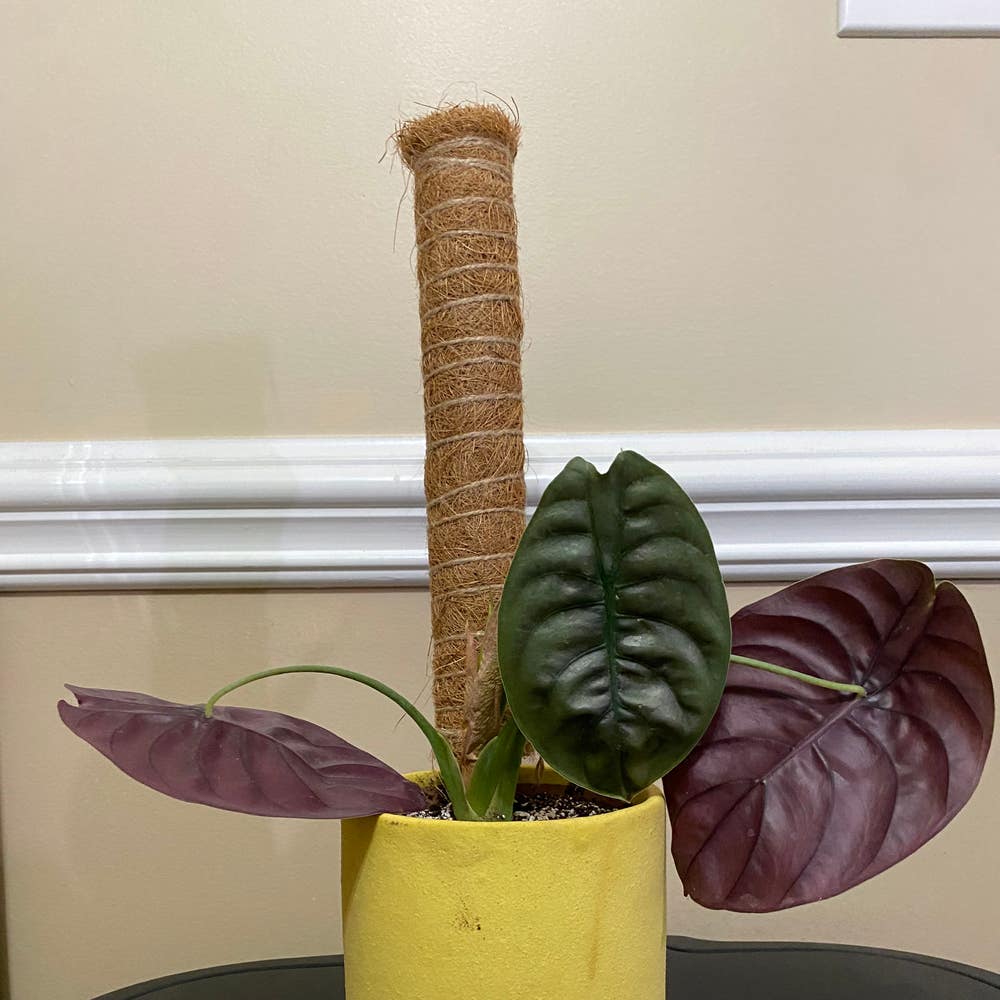
🌟 What to Do About Curling Leaves on Your Mirror Plant
Alocasia cuprea
By the Greg Editorial Team
Oct 09, 2024•6 min read
This article was created with the help of AI so we can cover more plants for you. May contain errors. See one? Report it here.
Revive your curling Mirror Plant leaves with these expert care tips! 🌱
- 🌡️ Curling leaves indicate stress from high temperatures and low humidity.
- 💧 Maintain humidity between 40%-60% and temperatures of 65°F to 80°F for health.
- 🐛 Check for pests regularly; infestations like spider mites cause curling leaves.
Causes of Curling Leaves
🌪️ Environmental Stress Factors
Curling leaves on your Mirror Plant can often be traced back to environmental stress. High temperatures above 80°F (27°C) can be detrimental, while the ideal range is between 65°F to 80°F (18°C to 27°C).
Low humidity levels, ideally between 40% to 60%, can also lead to leaf curling. Additionally, sudden temperature changes from drafts or heat sources can stress the plant, causing its leaves to curl.
💧 Overwatering and Underwatering
Watering practices play a crucial role in the health of your Mirror Plant. Overwatering can manifest as yellowing leaves, indicating potential root rot, or wilting leaves despite soggy soil, which suggests that roots are suffocating.
On the flip side, underwatering shows its symptoms through dry, crispy leaf edges and leaf drop, both signs of severe moisture deficiency.
🐛 Pest Infestations
Pest infestations are another common culprit behind curling leaves. Spider mites, identifiable by fine webbing and stippled leaves, and mealybugs, which appear as cotton-like masses, can wreak havoc on your plant.
Identifying pest damage is essential; curling leaves often signal sap-sucking pests, while discoloration, such as yellowing or browning, can indicate a more significant issue.
🌱 Nutrient Deficiencies
Nutrient deficiencies can also lead to curling leaves. Balanced fertilization is vital, as essential nutrients like nitrogen, phosphorus, and potassium support healthy growth.
Signs of nutrient deficiency include yellowing leaves, often linked to a lack of nitrogen, and stunted growth, which indicates a broader deficiency in essential nutrients.
Understanding these causes is the first step in addressing curling leaves effectively. By diagnosing the issue, you can take appropriate actions to restore your Mirror Plant's health.
Diagnosing the Problem
🌊 Assessing Watering Practices
Signs of Overwatering
Overwatering can be a sneaky culprit behind curling leaves. If your soil feels consistently soggy, it’s a clear sign that you might be giving your Mirror Plant too much love.
Inspecting the roots is crucial. Dark, mushy roots indicate root rot, which can severely harm your plant.
Signs of Underwatering
On the flip side, underwatering can also lead to distress. If the soil is dry and crumbly, your plant is likely thirsty.
Check the leaves too; dry, brittle edges are a telltale sign that your Mirror Plant needs more moisture.
🐛 Checking for Pests
Common Pests Affecting Mirror Plant
Pests can wreak havoc on your plant’s health. Spider mites are notorious for their fine webbing, while mealybugs leave behind cottony masses.
Identifying these pests early can save your plant from significant damage.
How to Identify Pest Damage
Curling leaves often signal pest activity. If you notice distinct curling patterns, it’s time for a closer look.
Don’t forget to inspect the undersides of leaves, where pests like to hide.
🌱 Evaluating Nutrient Levels
Importance of Balanced Fertilization
Nutrient deficiencies can lead to curling leaves as well. Fertilizing every 4-6 weeks during the growing season ensures your plant gets the essential nutrients it needs.
Opt for a balanced, water-soluble fertilizer to keep your Mirror Plant thriving.
Signs of Nutrient Deficiency
Watch for leaf discoloration, like yellowing or browning edges, which often indicates a nutrient deficiency.
Slow or stunted growth can also signal that your plant isn’t getting what it needs to flourish.
Understanding these diagnostic steps will empower you to take action and restore your Mirror Plant's health. Next, let’s explore how to treat those curling leaves effectively.
Treating Curling Leaves
Immediate Actions to Take 🌟
Adjusting Watering Schedule
- Check soil moisture: Use a moisture meter or your finger to gauge how wet the soil is.
- Adjust frequency: Water only when the top inch of soil feels dry to the touch.
Treating Pests
- Identify the pest: Use sticky traps or perform a visual inspection to spot any unwanted guests.
- Apply treatment: If pests are present, treat them with insecticidal soap or neem oil as needed.
Fertilizing Appropriately
- Choose the right fertilizer: Opt for a balanced NPK formula to ensure your plant gets essential nutrients.
- Apply according to package instructions: Follow the guidelines carefully to avoid over-fertilization, which can cause more harm than good.
Long-term Solutions 🌱
Improving Environmental Conditions
- Increase humidity: Consider using a humidifier or placing a pebble tray filled with water near your plant to boost moisture levels.
- Maintain stable temperatures: Keep your plant away from drafts and heat sources to prevent stress.
Regular Monitoring and Care
- Weekly checks: Make it a habit to inspect your plant's leaves for any signs of distress or curling.
- Adjust care as needed: Be proactive and responsive to any changes in your plant's condition to keep it thriving.
By taking these immediate and long-term actions, you can effectively treat curling leaves on your Mirror Plant and ensure it remains healthy and vibrant. Next, let’s explore how to prevent future curling issues with best practices for care.
Preventing Future Curling
🌱 Best Practices for Care
Ideal Watering Techniques
To keep your Mirror Plant thriving, focus on deep watering. This means saturating the soil until excess water drains out, ensuring the roots receive adequate moisture.
Adjust your watering frequency based on seasonal changes and humidity levels. During drier months, you may need to water more often, while in humid conditions, less frequent watering is ideal.
Maintaining Humidity Levels
Maintaining humidity is crucial for your plant's health. Aim for a humidity range of 40% to 60% to prevent curling leaves.
You can achieve this by misting the leaves or using humidity trays filled with water and pebbles. Both methods help create a more favorable environment for your Mirror Plant.
Regular Pest Inspections
Regular inspections can save your plant from pest infestations. Aim to check your Mirror Plant every 1-2 weeks for any signs of trouble.
Using a magnifying glass can help you spot tiny pests that might be hiding on the undersides of leaves. Early detection is key to preventing damage.
🌦️ Seasonal Considerations
Adjusting Care During Different Seasons
Your plant's needs change with the seasons, so be prepared to adjust your care routine. In winter, reduce watering frequency due to lower light levels and cooler temperatures.
Conversely, in summer, increase humidity and keep a closer eye on pests. This proactive approach will help ensure your Mirror Plant remains healthy year-round.
By implementing these best practices and seasonal adjustments, you can effectively prevent curling leaves and keep your Mirror Plant flourishing. Next, let’s explore how to treat curling leaves when they do occur.
⚠️ Safety First
This content is for general information and may contain errors, omissions, or outdated details. It is not medical, veterinary advice, or an endorsement of therapeutic claims.
Always consult a qualified healthcare professional before using any plant as food, medicine, or supplement.
Never eat any plant (or feed one to pets) without confirming its identity with at least two trusted sources.
If you suspect poisoning, call Poison Control (800) 222-1222, the Pet Poison Helpline (800) 213-6680, or your local emergency service immediately.
Spotted an error? Please report it here.
Transform your curling Mirror Plant leaves into lush greenery 🌿 with Greg's tailored watering reminders and pest alerts for thriving growth!