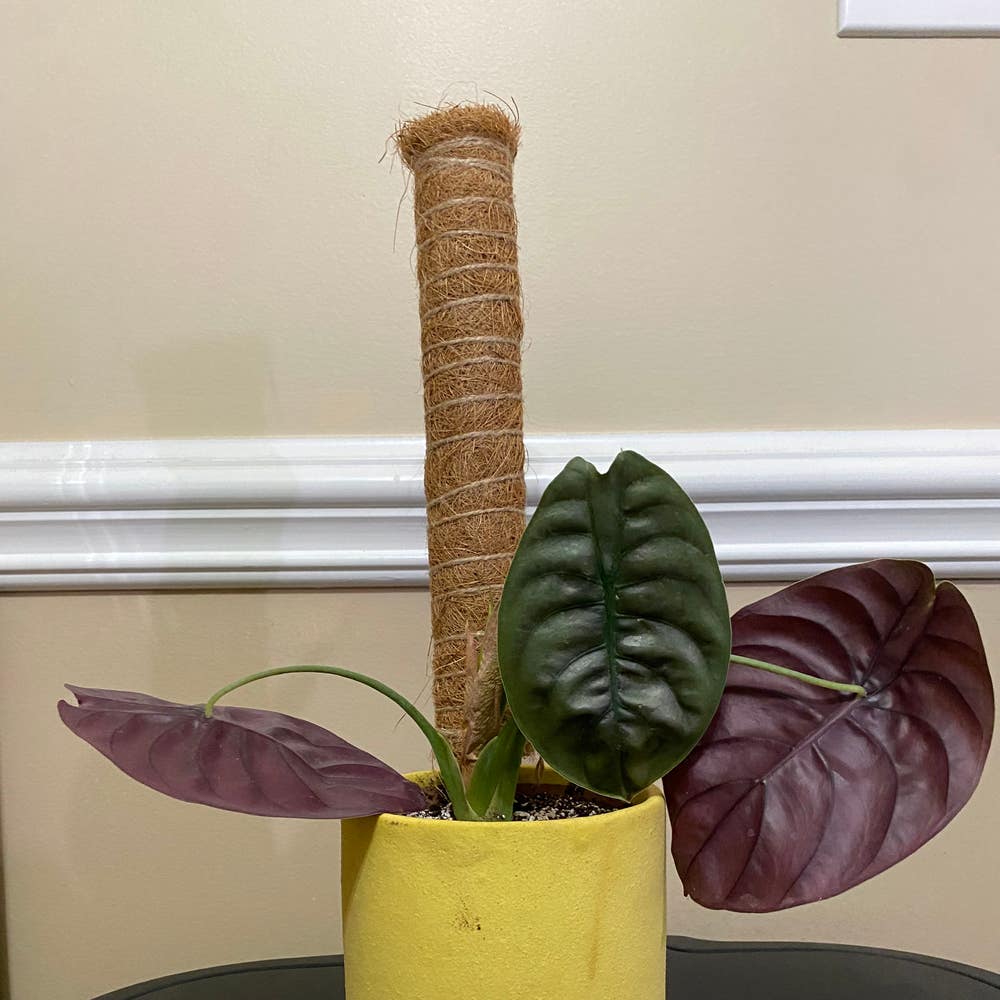
🥀 Why Are My Jewel Alocasia Leaves Droopy?
Alocasia cuprea
By the Greg Editorial Team
Jun 15, 2024•5 min read
This article was created with the help of AI so we can cover more plants for you. May contain errors. See one? Report it here.
Discover how to perk up 🌿 your Jewel Alocasia and prevent droopiness with the right care tweaks!
- Bright indirect light, 60-85°F, 60-80% humidity keeps leaves perky.
- Moist, well-draining soil and balanced fertilization prevent droopiness.
- Routine health checks and early intervention are crucial for plant vigor.
Optimizing Plant Care to Prevent Droopy Leaves
Jewel Alocasia plants are like the divas of the plant world: they demand specific conditions to strut their stuff. Here's how to keep them from throwing a fit and going all droopy on you.
🌟 Light: The Spotlight They Crave
Bright indirect light is their stage. Too much direct sun, and they'll burn out; too little, and they'll stretch awkwardly for the spotlight. If you're in a gloomy spot, grow lights are your backstage crew, keeping the show going.
🌡 Temperature: Their Comfort Zone
Keep it cozy between 60-85 degrees. Anything outside this range, and you might as well be asking them to perform in a snowsuit or a sauna. Consistency is key—no sudden drafts or temperature swings, please.
💦 Humidity: Set the Scene
Imagine a tropical forest—60-80% humidity is where they feel at home. Less than that, and they'll start to sulk, with leaves as droopy as a bad hair day. A pebble tray or humidifier can be your backstage humidity hack.
💧 Watering: The Thirst Quencher
These plants like their soil like a good cake—moist, but not soggy. Let the topsoil dry out before giving them a drink. Overwatering is the equivalent of flooding the stage during a performance—not a good look.
Remember, Jewel Alocasia plants aren't trying to be high-maintenance; they just know what they like. Treat them right, and they'll reward you with a show-stopping display.

Addressing Soil and Nutrient Issues
In the quest for robust roots and perky leaves, let's dig into the dirt on Jewel Alocasia's soil and nutrient needs.
💦 Enhancing Soil Drainage and Aeration
A Jewel Alocasia's roots despise soggy conditions as much as cats despise water. Well-draining soil is non-negotiable; it's like the difference between wearing breathable cotton or suffocating in plastic wrap. Opt for a mix that's loose and airy, one that doesn't compact over time. This ensures water can flow through without turning your plant's home into a swampy mess.
🌱 Balancing Fertilization
Fertilizer is like a spice; the right amount can enhance, but too much ruins the dish. To avoid the culinary disaster of over-fertilization, stick to a balanced fertilizer and use it sparingly. Your plant isn't hosting a nutrient rave; it's a sophisticated dinner party that requires just the right amount of nitrogen, phosphorus, and potassium. Watch for signs of deficiencies, but don't go wild with the nutrient bottle.
🌿 Nutrient Deficiencies and Toxicities
If your Alocasia is looking more like a wilted salad than a tropical treasure, it might be screaming for nutrients. Yellow leaves could be crying out for nitrogen, while weak roots may whisper for phosphorus. But remember, too much fertilizer can lead to a toxic buildup, making your plant's soil as inhospitable as a salt flat. Balance is key – think Zen garden, not fertilizer free-for-all.
🌱 Soil Amendments
Sometimes, your soil needs a boost, like a plant version of a protein shake. Adding compost can enrich the soil, giving it a buffet of nutrients while improving drainage and aeration. It's like upgrading from a studio apartment to a spacious condo with excellent airflow.
🌾 Soil pH and Microbial Life
The pH level of your soil shouldn't be an afterthought. It's the stage on which the whole nutrient absorption play unfolds. Too acidic or too alkaline, and your plant's roots can't take in the nutrients they need. And let's not forget the soil's microscopic residents; they're like the backstage crew, essential but often overlooked. They break down organic matter, releasing nutrients and keeping the soil healthy. Treat them well by avoiding compaction and maintaining a favorable pH.
Remember, your Jewel Alocasia's soil is its universe. Keep it balanced, airy, and full of life, and you'll have a plant that stands tall and proud, not droopy and distressed.

Proactive Measures for Healthy Foliage
🌱 Establishing a Routine
Consistency is the cornerstone of keeping your Jewel Alocasia's foliage from drooping. Establish a routine that includes regular plant assessment to catch early signs of distress. This means being on the lookout for subtle changes in leaf color or a slowdown in growth rate.
🕵️ Early Detection
When it comes to droopy leaves, think of yourself as a plant detective. Early signs might be as minor as a leaf with less luster, but they're clues worth investigating. Act quickly; the sooner you respond to these signs, the better your chances of preventing a full-on droop disaster.
🛠️ Intervention Strategies
Got a droopy leaf situation? Time to spring into action. Adjust your watering schedule, ensuring you're not drowning or parching your plant. Check that the light exposure is the Goldilocks amount – not too much, not too little. And keep the temperature steady; Jewel Alocasia isn't a fan of dramatic swings.
🌿 Regular Maintenance
Pruning isn't just for appearances. Removing brown or damaged leaves can prevent issues from spreading. But don't go scissor-happy; trim sparingly to avoid shocking your green buddy. Keep the surrounding area clean to discourage pests, and wipe down leaves to ensure they can soak up all that good sunlight.
📈 Monitoring the Response
After you've made your care adjustments, watch your plant's response like a hawk. Improvement should be visible within a few weeks – think perkier leaves and more vibrant color. No change? Time to reassess your strategy and possibly consider other factors like nutrient balance or pest issues.
Remember, your Jewel Alocasia relies on you to read its silent signals. Stay vigilant, and you'll be rewarded with a plant that stands tall and proud, rather than one that looks like it's trying to slink off the windowsill.

⚠️ Safety First
This content is for general information and may contain errors, omissions, or outdated details. It is not medical, veterinary advice, or an endorsement of therapeutic claims.
Always consult a qualified healthcare professional before using any plant as food, medicine, or supplement.
Never eat any plant (or feed one to pets) without confirming its identity with at least two trusted sources.
If you suspect poisoning, call Poison Control (800) 222-1222, the Pet Poison Helpline (800) 213-6680, or your local emergency service immediately.
Spotted an error? Please report it here.
Ensure your Jewel Alocasia thrives with perky leaves 🍃 by letting Greg tailor the perfect care routine, from light to watering, for your green companion's needs!