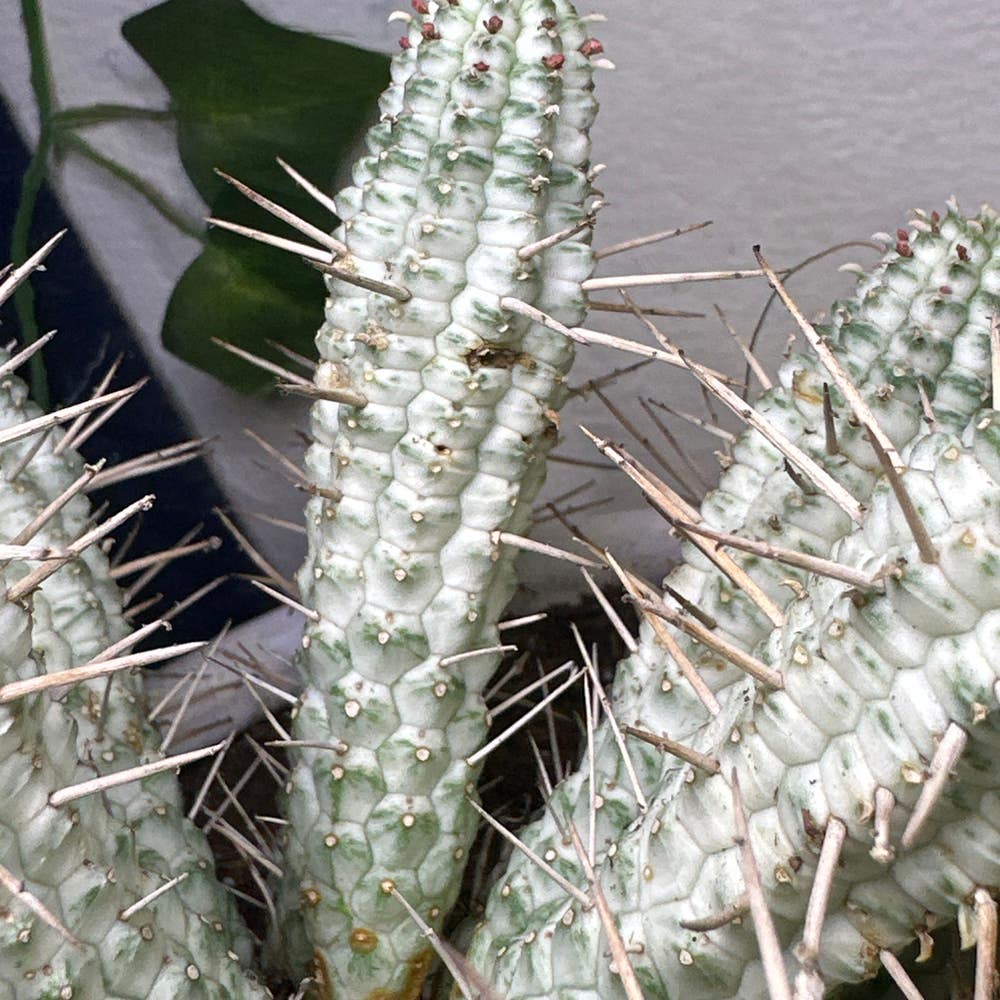
What is a Variegated Corn Cob Cactus? Complete Guide 🌽
Euphorbia venefica
By the Greg Editorial Team
Jan 24, 2025•13 min read
This article was created with the help of AI so we can cover more plants for you. May contain errors. See one? Report it here.
- 🌞 Variegated Corn Cob Cactus needs 6-8 hours of sunlight for optimal growth.
- 💧 Water only when soil is dry to avoid overwatering and underwatering issues.
- 🌱 Low maintenance and drought-resistant, perfect for eco-conscious gardeners!
How to Grow
🌞 Choosing a Location
To thrive, the Variegated Corn Cob Cactus needs full sun exposure, ideally receiving 6 to 8 hours of sunlight daily. Consider whether you’ll grow it indoors or outdoors; both options can work, but outdoor settings often provide the best light conditions.
🏜️ Soil Preparation
For optimal growth, use a well-draining cactus mix. Aim for a soil pH between slightly acidic and neutral, ideally around 6.0 to 7.0, to promote healthy root development.
🌱 Planting Techniques
When planting, ensure the top of the root ball is level with the soil surface. If you're planting multiple cacti, maintain adequate spacing to allow for air circulation and growth.
🚰 Watering Requirements
Water your cactus only when the soil has completely dried out. Watch for signs of overwatering, such as yellowing or mushy stems, and underwatering, which may cause shriveling or browning.
🍽️ Fertilizing Schedule
During the growing season, fertilize every 4 to 6 weeks with a balanced cactus fertilizer. This will provide essential nutrients to support healthy growth and vibrant coloration.
✂️ Pruning Methods
Prune your cactus to maintain its shape and health, ideally during the growing season. Use sharp, clean tools to avoid damaging the plant; gloves are a must to protect against spines.
🔍 Ongoing Care Tips
Regularly monitor your cactus for pests and diseases, as early detection is key. Adjust your care routine seasonally, ensuring it gets the right amount of light and water as temperatures change.
This foundational knowledge will set you on the right path to growing a healthy Variegated Corn Cob Cactus. Next, let’s explore how to propagate this unique plant for even more greenery!
Propagation
🌱 Methods of Propagation
Propagating your Variegated Corn Cob Cactus can be an exciting endeavor. There are two primary methods: seeds and cuttings.
Seeds
Collecting seeds from your cactus is straightforward. Ensure you gather them when they are ripe, and prepare them for sowing.
Cuttings
For cuttings, select healthy stems that are at least 4-6 inches long. This method is often faster and can yield quicker results than seeds.
📋 Step-by-Step Instructions
Propagating from Seeds
- Sowing Depth: Plant seeds at a depth of 1/4 inch in a well-draining soil mix.
- Germination Time: Expect germination to take about 2-4 weeks under optimal conditions.
Propagating from Cuttings
- Cutting Length: Use stems that are 4-6 inches long.
- Rooting Medium: Place the cuttings in a well-draining soil mix to prevent rot.
- Rooting Time: Allow 3-4 weeks for roots to develop before transplanting.
With these methods, you can expand your cactus collection or share with friends. Propagation not only enhances your gardening skills but also deepens your connection to these resilient plants.
Lifecycle
Classification 🌱
The Variegated Corn Cob Cactus is classified as a perennial, meaning it can live for several years and return each growing season. This classification highlights its resilience and ability to thrive in various conditions.
Germination Process 🌱
For successful germination, seeds require optimal conditions, including warmth and moisture. Aim for a temperature range of 70-80°F and keep the soil consistently moist but not soggy.
Seedling Stage 🌱
Healthy seedlings exhibit vibrant colors and sturdy growth. Look for firm stems and well-developed leaves, which indicate that your young cactus is thriving.
Vegetative Growth 🌱
During the vegetative growth stage, the cactus focuses on building its structure. Provide adequate light and water to encourage robust growth patterns, ensuring it has enough space to expand.
Flowering and Seed Production 🌱
Flowering typically occurs in late spring to early summer, depending on environmental conditions. Successful pollination leads to seed production, allowing the cycle to continue.
Lifespan and Growth Rate 🌱
The average lifespan of a Variegated Corn Cob Cactus ranges from 10 to 20 years. With a moderate growth rate, these cacti typically reach maturity in 3 to 5 years, making them a long-term addition to your garden.
This lifecycle overview underscores the importance of proper care at each stage. By understanding these phases, you can ensure your cactus thrives and flourishes for years to come. Next, we’ll explore the size of this unique plant and what to expect as it matures.
Size
Mature Height and Spread 🌵
The Variegated Corn Cob Cactus typically reaches an average mature height of 12 to 24 inches. Its spread can range from 6 to 12 inches, making it a compact yet striking addition to any garden or indoor space.
Growth Rate and Size Variability 📈
Several factors influence the growth rate of this cactus. Light exposure, watering practices, and soil conditions all play crucial roles in determining how quickly your cactus will thrive.
Roots
Root System Characteristics 🌱
The Variegated Corn Cob Cactus features a fibrous root system. These roots are typically shallow but extensive, allowing the plant to absorb moisture efficiently from the surrounding soil.
Common Root-Related Issues ⚠️
Root rot is a significant concern for this cactus. Signs include yellowing leaves and a mushy base, which indicate overwatering.
To prevent root rot, ensure your cactus is planted in well-draining soil and avoid excessive watering.
Identifying healthy roots is crucial; they should be firm and white. Unhealthy roots, on the other hand, may appear brown and mushy.
Another common issue is rootbound plants. A rootbound cactus has roots that circle the pot, restricting growth. Signs include stunted growth and roots emerging from drainage holes. If you notice these symptoms, it’s time to repot into a larger container.
By understanding these root characteristics and issues, you can provide better care for your Variegated Corn Cob Cactus, ensuring it thrives in your home or garden.
Next, we’ll explore the benefits of this unique cactus and why it’s a great addition to any plant collection.
Benefits
Top 5 Benefits 🌟
Aesthetic Appeal
The Variegated Corn Cob Cactus boasts a striking appearance with its unique variegated coloration. This eye-catching plant can elevate the visual appeal of any space, making it a favorite among plant enthusiasts.Low Maintenance
Perfect for busy gardeners, this cactus requires minimal care. Its hardy nature means you can enjoy its beauty without dedicating too much time to upkeep.Air Purification
Beyond its looks, this cactus contributes to indoor air quality. It helps filter toxins, making your living environment healthier.Drought Resistance
Adapted to thrive in arid climates, the Variegated Corn Cob Cactus is an excellent choice for those looking to reduce water usage. Its drought resistance makes it a sustainable option for eco-conscious gardeners.Symbolism
This cactus symbolizes resilience and adaptability. It serves as a reminder of nature's ability to thrive in challenging conditions, inspiring us to embrace our own challenges.
Symbolism and Cultural Significance 🌍
Cacti, including the Variegated Corn Cob Cactus, hold various cultural meanings across different traditions. In many cultures, they represent endurance and survival, thriving in harsh environments where other plants cannot.
This symbolism resonates with many people, making the cactus not just a decorative piece but also a source of inspiration and reflection. Embracing this plant can add a layer of meaning to your gardening experience, connecting you to a broader narrative of resilience in nature.
As we explore the benefits of this unique cactus, it’s clear that it offers more than just aesthetic value; it enriches our lives in multiple ways.
Companion Plants
🌱 Concept of Companion Planting
Companion planting is a gardening strategy that pairs plants to enhance growth and deter pests. This approach not only promotes garden diversity but also creates a more resilient ecosystem.
🌼 Best Companion Plants
When selecting companions for your Variegated Corn Cob Cactus, consider other drought-tolerant plants. Succulents, agaves, and certain herbs like rosemary thrive alongside cacti, benefiting from similar care requirements.
These plants often form symbiotic relationships, sharing nutrients and providing mutual protection against pests. For instance, planting cacti with certain herbs can deter harmful insects while enhancing the overall aesthetic of your garden.
🚫 Plants to Avoid
While some plants complement your cactus beautifully, others can be detrimental. Avoid pairing your Variegated Corn Cob Cactus with high water needs plants, such as ferns or tropical flowers, as they can create overly moist conditions.
Additionally, aggressive growers like mint can overshadow your cactus, competing for resources and space. Keeping these incompatible plants at bay ensures your cactus thrives in its environment.
In summary, choosing the right companions can significantly enhance your cactus's health and beauty. Next, let’s explore the potential toxicity of the Variegated Corn Cob Cactus to humans and pets.
Toxicity to Humans
Toxic Parts of the Plant 🦠
The Variegated Corn Cob Cactus contains toxic components primarily in its sap and spines. Handling the plant can lead to skin irritation, so it's essential to exercise caution.
Symptoms of Poisoning 🤢
If ingested or improperly handled, symptoms of poisoning may include nausea, vomiting, and dizziness. These reactions can vary in severity based on the amount of exposure.
How Poisoning Can Occur 🚨
Poisoning can occur through several routes: ingestion of the plant, skin contact with the sap, or inhalation of smoke from burning the cactus. Awareness of these exposure methods is crucial for safety.
When to Seek Medical Care 🏥
If you suspect poisoning, seeking medical care immediately is vital. Quick action can make a significant difference in treatment outcomes, so don’t hesitate to reach out for help.
Understanding the potential toxicity of the Variegated Corn Cob Cactus is essential for safe handling and care. Next, let’s explore how this cactus can affect our furry friends, particularly dogs.
Toxicity to Dogs
Toxic Parts of the Plant 🌵
The Variegated Corn Cob Cactus has specific parts that can be harmful to dogs, primarily its leaves and spines. These components contain substances that can lead to adverse reactions if ingested.
Symptoms of Poisoning in Dogs 🤢
If a dog consumes any part of this cactus, you may notice common signs of poisoning such as vomiting, drooling, and weakness. These symptoms can vary in severity depending on the amount ingested.
Prevention Measures 🚧
To keep your furry friends safe, consider placing the cactus in an area that is out of reach. You can also use deterrents like bitter sprays or physical barriers to discourage your dog from approaching the plant.
Importance of Veterinary Care 🏥
If you suspect your dog has ingested any part of the Variegated Corn Cob Cactus, seek veterinary care immediately. Prompt action can make a significant difference in your dog's recovery and overall health.
As you care for your cactus, remember to keep an eye on your pets to ensure their safety. Transitioning to the next topic, let's explore how to protect your cactus from common pests.
Toxicity to Cats
Toxic Parts of the Plant 🌵
The Variegated Corn Cob Cactus contains components that can be harmful to cats. The most toxic parts are the leaves and spines, which can cause adverse reactions if ingested or if the cat comes into contact with them.
Symptoms of Poisoning in Cats 🤢
If a cat is exposed to the cactus, watch for symptoms such as vomiting, tremors, and lethargy. These signs indicate that your feline friend may have ingested a toxic part of the plant.
Prevention Measures 🚫
To keep your cat safe, consider placing the cactus out of reach or in a location that is inaccessible. You can also use deterrents, such as citrus scents, which many cats dislike.
Importance of Veterinary Care 🏥
If you suspect your cat has been poisoned, seek veterinary care immediately. Prompt attention can make a significant difference in recovery and ensure your pet receives the necessary treatment.
As a cat owner, being aware of the plants in your home is crucial for your pet's safety. Keeping harmful plants out of reach can help create a safe and healthy environment for your furry companions.
Problems
🌱 Common Problems
Growing a Variegated Corn Cob Cactus can be rewarding, but it comes with its share of challenges. Here are some common issues you might encounter:
Incorrect Watering
Overwatering is a frequent mistake. Signs include yellowing or mushy stems, while underwatering can cause shriveling and browning.
Incorrect Light Conditions
Insufficient light can lead to leggy growth and pale coloration. If your cactus is stretching towards the light, it’s a clear sign it needs more sun.
Incorrect Temperature
Extreme temperatures can stress your cactus. Too much heat can cause sunburn, while cold drafts can stunt growth or even kill the plant.
🔍 Identifying Symptoms and Causes
Recognizing the symptoms of these problems is crucial for effective care.
- Overwatering: Look for soft, discolored stems and a foul smell from the soil.
- Underwatering: Check for wrinkled, shriveled leaves and a dry, cracked surface.
- Insufficient Light: Notice if the plant is leaning or growing slowly.
- Temperature Stress: Watch for wilting or browning edges during temperature fluctuations.
🛠️ Solutions for Each Problem
Addressing these issues can help revive your cactus and keep it thriving.
For Overwatering: Allow the soil to dry out completely before watering again. Consider repotting in fresh, dry soil if rot has set in.
For Underwatering: Increase your watering frequency, ensuring the soil is moist but not soggy.
For Insufficient Light: Move your cactus to a brighter location, ideally where it can receive 6-8 hours of direct sunlight daily.
For Temperature Stress: Keep your cactus in a stable environment, away from drafts and extreme heat sources.
By staying vigilant and responsive to these common problems, you can ensure your Variegated Corn Cob Cactus remains healthy and vibrant. Next, let’s explore the fascinating world of pests that might threaten your cactus.
Bugs
🐜 Potential Pest Issues
The Variegated Corn Cob Cactus is generally resilient against pests, but it’s not entirely immune. Regular monitoring is key to catching any infestations early.
🐞 Common Pests
Several pests can pose a threat to your cactus, including:
Spider Mites
These tiny pests can cause significant damage by sucking the sap from the cactus. Look for fine webbing and yellowing leaves as signs of their presence.
Scale Insects
Scale insects appear as small, brownish bumps on the cactus surface. They can weaken the plant by feeding on its juices, leading to stunted growth.
Mealybugs
Mealybugs are cottony white pests that cluster in leaf joints. They can cause leaf drop and overall decline if not addressed promptly.
🧪 Treatment Options
Managing pest infestations effectively is crucial for your cactus's health. Here are some treatment methods:
- Insecticidal Soap: Spray affected areas with insecticidal soap to suffocate pests.
- Neem Oil: This natural pesticide disrupts the life cycle of pests and is safe for the cactus.
- Manual Removal: For small infestations, gently wipe pests off with a cotton swab dipped in alcohol.
Regularly inspect your cactus and take action at the first sign of trouble. This proactive approach will keep your Variegated Corn Cob Cactus thriving and beautiful.
What Eats
🦌 Common Animals
When it comes to the Variegated Corn Cob Cactus, several herbivores might find it an appealing snack. Deer, rabbits, and squirrels are the primary culprits that can cause damage to your cactus.
🕵️♂️ Signs of Animal Presence
Identifying animal activity around your cactus is crucial for its protection. Look for signs such as chewed leaves, droppings, or tracks in the soil, which indicate that these creatures have been nearby.
⚠️ Damage Caused by Animals
The damage inflicted by these animals can vary. You might notice missing or damaged pads, which can hinder the cactus's growth and overall health.
🚫 Deterrent Methods
To protect your cactus, consider both chemical and organic deterrent methods. Sprays designed to repel animals can be effective, while physical barriers like fencing or netting can provide a more permanent solution.
By staying vigilant and employing these strategies, you can help ensure your Variegated Corn Cob Cactus thrives without unwanted visitors. Next, let’s explore the potential pest issues that could affect your cactus.
⚠️ Safety First
This content is for general information and may contain errors, omissions, or outdated details. It is not medical, veterinary advice, or an endorsement of therapeutic claims.
Always consult a qualified healthcare professional before using any plant as food, medicine, or supplement.
Never eat any plant (or feed one to pets) without confirming its identity with at least two trusted sources.
If you suspect poisoning, call Poison Control (800) 222-1222, the Pet Poison Helpline (800) 213-6680, or your local emergency service immediately.
Spotted an error? Please report it here.
Keep your Variegated Corn Cob Cactus thriving in full sun ☀️ with Greg's tailored watering alerts and expert care tips for a vibrant, resilient plant collection!