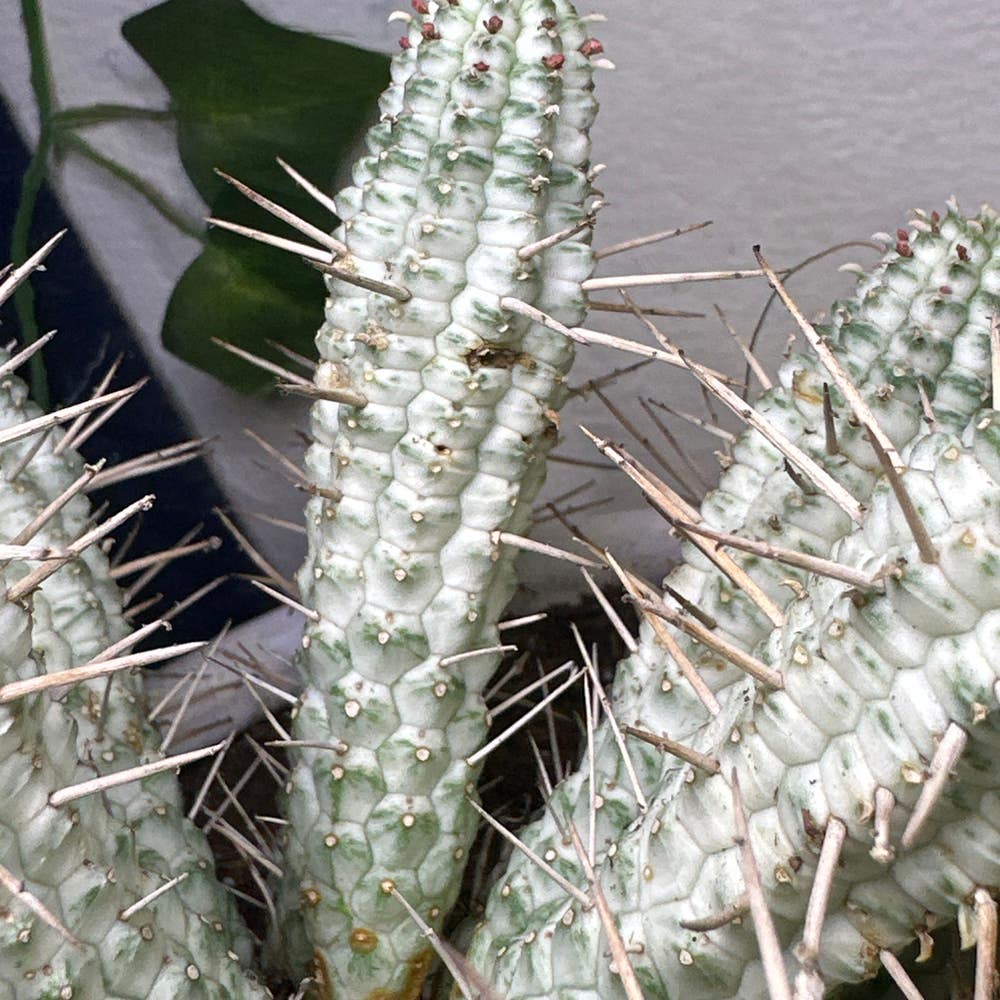
Should I Repot My Euphorbia venefica?
Euphorbia venefica
By the Greg Editorial Team
Jun 18, 2024•4 min read
This article was created with the help of AI so we can cover more plants for you. May contain errors. See one? Report it here.
- Roots peeking out? Time to repot your Euphorbia venefica.
- 🌱 Choose a pot 1-2 inches larger for healthy root growth.
- Post-repot care: Watch for stress signals, adjust watering and light.
Spotting the Tell-Tale Signs for Repotting
🌱 Root Talk: When Roots Peek Out or Go Round and Round
Roots making a break for it outside the pot? That's your Euphorbia venefica's version of a white flag. When roots circle the pot's interior or poke through drainage holes, they're not exploring—they're cramped. Like a packed elevator, there's no room to grow.
📉 Sluggish Growth: More Than Just a Lazy Plant
If your plant's growth has slowed to a glacial pace, it's not just taking a breather. It's signaling a plea for more space. A plant's growth stalling is akin to a traffic jam in the root department—everything's at a standstill.
💦 The Water Rush: When Drainage Just Isn't the Same Anymore
Notice water running through your pot like it's late for a meeting? That's bad news. It means the soil can't hold moisture because there's hardly any soil left—just a tangle of roots. The pot should hydrate, not dehydrate. If your watering routine feels like a splash-and-dash, it's time to repot.

Picking the Perfect Pot
💨 Material Matters: Balancing Breathability and Moisture
Terracotta pots are the MVPs of breathability, letting roots breathe and reducing the risk of overwatering. They're like a pair of good jeans—classic, sturdy, and they get the job done. But they're thirsty, so you'll be watering more often. Plastic pots are the low-maintenance buddies that keep soil moist longer, ideal for the forgetful waterers among us. Ceramic pots? They're the stylish ones, heavy and less porous, but make sure they've got drainage holes unless you fancy a mini swamp.
📏 Size It Up: Finding the Sweet Spot for Roots to Thrive
The rule of thumb is simple: choose a pot that's about 1-2 inches larger than the current root ball. Ignore the urge to go supersize; a mansion-sized pot won't make your Euphorbia venefica grow faster. Too big, and you risk waterlogged soil; too snug, and you'll stunt its growth. It's about giving the roots room to party without drowning them in space.
🔍 Shape Shift: Why the Right Contours Count for Euphorbia venefica
Shape might seem like a vanity feature, but it's not all about looks. Tall pots can be divas, taking their sweet time to dry out. Go for a pot that complements your Euphorbia's growth habit—a stable base for those top-heavy moments and enough depth to accommodate its root system. Remember, it's not just a pot; it's your plant's home.

The Repotting Rundown
🌱 Prep Work: Getting Your Tools and Workspace Ready
Before diving into the repotting process, assemble your gear. You'll need a new pot—preferably one size up from the current—with drainage holes. Grab a succulent and cactus mix, some compost for nutrients, and sterilized cutting tools. Clear a workspace and lay down some newspaper to catch any mess.
🪴 Gentle Extraction: How to Coax Your Plant Out Without a Fuss
Time to get the Euphorbia venefica out of its old digs. Squeeze the pot to loosen the grip, then tip and gently encourage the plant out. If it's stubborn, a dull knife can help loosen the root ball. Remember, this isn't a wrestling match; treat the roots with respect. Trim any that are dead or excessively long, but don't get scissor-happy.
🏡 Home Sweet Home: Nestling Your Euphorbia into Its New Pot
Now, introduce your Euphorbia to its spacious new home. Fill the bottom with a layer of your potting mix, position the plant, and backfill with more soil. Press lightly to secure it in place, but don't compact the soil too much. You're not making pottery; you're giving your plant a comfy bed to stretch its roots.

Post-Repotting Care: The First Few Weeks
💧 Watering Wisdom: Keeping Roots Happy After the Big Move
After repotting your Euphorbia venefica, watering is like threading a needle—too much or too little, and you miss the mark. Initially, aim for moist soil without creating a mini wetland. Overwatering is an invitation to root rot, but underwatering is akin to neglect. Strike that delicate balance.
☀️ Light and Location: Easing Your Euphorbia Back into the Limelight
Place your Euphorbia in a spot with indirect light to prevent a sunburn worse than a tourist's first day at the beach. Gradually introduce it to brighter light over a week—think of it as a plant's version of acclimatization. Keep it cozy and draft-free; your plant's no fan of sudden chills.
⚠️ Stress Signals: What to Watch for Post-Repotting
Keep an eye out for the equivalent of your plant's SOS—yellow leaves or a droopy demeanor. These are signs it's not just being dramatic; it's adjusting. Make care adjustments as needed. And remember, no fertilizing for the first 4-6 weeks. Those roots are tender and need time to settle without the shock of added nutrients.
⚠️ Safety First
This content is for general information and may contain errors, omissions, or outdated details. It is not medical, veterinary advice, or an endorsement of therapeutic claims.
Always consult a qualified healthcare professional before using any plant as food, medicine, or supplement.
Never eat any plant (or feed one to pets) without confirming its identity with at least two trusted sources.
If you suspect poisoning, call Poison Control (800) 222-1222, the Pet Poison Helpline (800) 213-6680, or your local emergency service immediately.
Spotted an error? Please report it here.
Ensure your Euphorbia venefica thrives 🌿 with Greg's custom reminders for the perfect repotting time and post-care environment.