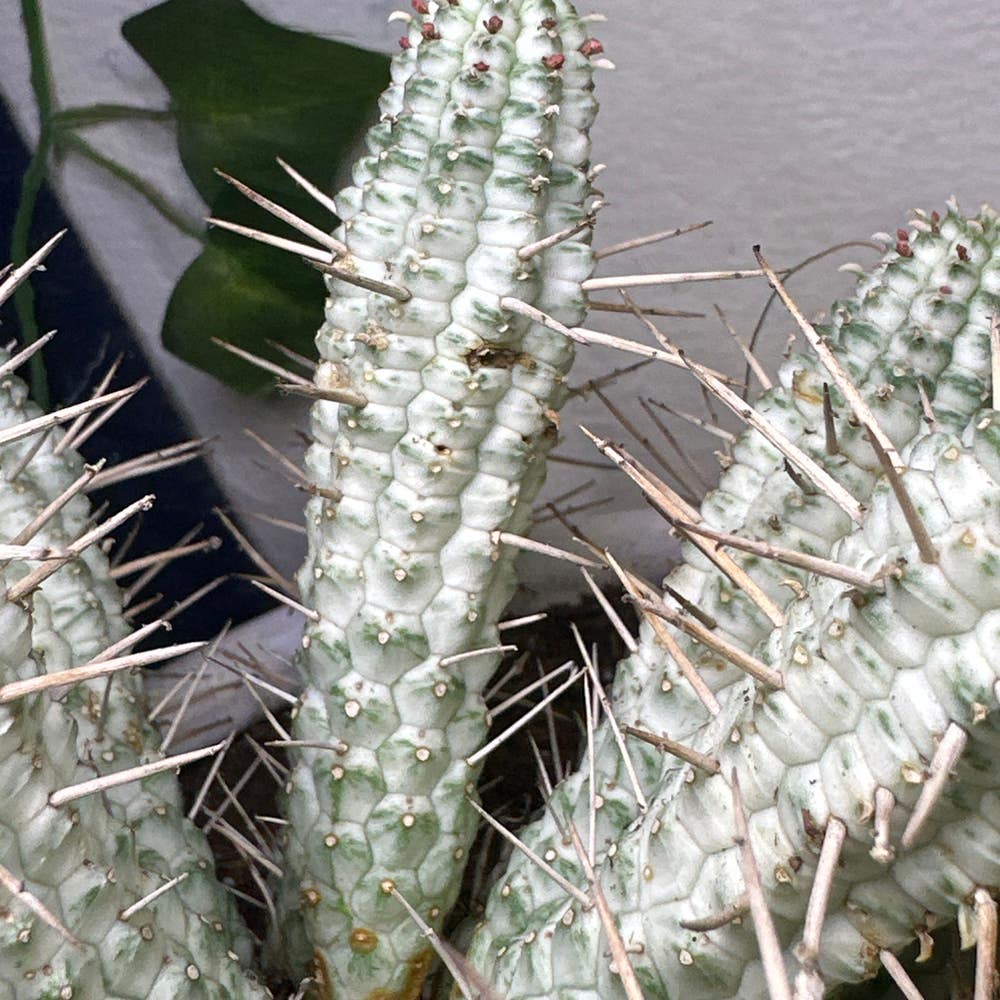
🌽 Best Potting Soil Mix for Corncob Cactus
Euphorbia venefica
By the Greg Editorial Team
Jun 18, 2024•4 min read
This article was created with the help of AI so we can cover more plants for you. May contain errors. See one? Report it here.
- 🌵 Coarse sand and perlite are must-haves for Corncob Cactus soil.
- Avoid vermiculite and peat moss to prevent root rot.
- Hoffman’s and Kellogg Garden Organics are top commercial soil picks.
Spotting and Fixing Unhappy Soil
🚨 Recognizing the SOS signs from your soil
Yellow leaves or a general look of despair in your plant can be a tattletale sign of soil distress. If your cactus is sporting a base that feels like a wet sponge, it's time to worry. Roots should be firm and white, not soft and discolored. A musty odor? That's the soil's cry for help, signaling potential root rot or mold.
🌱 Turning sad soil into glad soil
Quick fixes for common soil issues include improving drainage by ensuring your pot has proper drainage holes and mixing in materials like perlite or coarse sand. To combat mold, cut back on watering, increase airflow, and let your plant catch some rays. In dire cases, repot with fresh, sterile soil. If the soil feels as unyielding as concrete, it's a sign that your soil is spent and needs replacing to give your plant a new lease on life.

The Dream Team: Soil Components for Corncob Cactus
🌵 The must-haves in your soil mix
Coarse Sand and Perlite: The Dynamic Duo
Coarse sand isn't just a day at the beach for your cactus; it's a lifeline. It ensures water moves through the soil like a sprinter, not a window shopper. Perlite, on the other hand, is the popcorn of soil—aeration is its game, keeping your cactus's roots breathing easy.
🚫 What to avoid in your cactus's crib
Soil No-Nos: The Usual Suspects
Beware of soil ingredients that are more villainous than helpful. Vermiculite and peat moss may seem beneficial, but they're moisture misers, holding onto water like a miser with gold. This can spell disaster for your cactus, leading to root rot.
The Overzealous Organics
While organic matter is crucial, too much of it is like a rich dessert—best in moderation. Avoid heavy compost, manure, or anything that retains more water than a camel. Your Corncob Cactus craves a balance, not a banquet.

Picking the Perfect Commercial Cactus Mix
🌵 What to look for on the label
When scouring for a commercial cactus mix, the label is your best friend. Key ingredients should include perlite or pumice for drainage, and limestone to maintain pH balance. If the mix is heavy on unpronounceable chemicals, consider it a red flag. Organic matter, like compost or worm castings, should be front and center, offering a buffet of nutrients for your Corncob Cactus.
🏆 Top picks for Corncob Cactus
Several commercial mixes stand out for their consistent performance. Look for brands that have a track record of success with cacti and succulents. A light mix that mentions organic ingredients and boasts good drainage properties is a solid choice. While specific brand recommendations may vary, mixes like Hoffman’s Organic Cactus and Succulent Soil or Kellogg Garden Organics Palm, Cactus, and Citrus Mix are often praised by cactus enthusiasts. Remember, even the best bag may need a tweak, so don't be afraid to add a bit of extra perlite or organic matter to tailor it to your cactus's needs.

Mixing It Up: DIY Soil Mix for Corncob Cactus
🌵 Gathering your ingredients
To kickstart your DIY soil mix journey, you'll need to source high-quality components. Coarse sand and perlite are essential for drainage and can be found at your local garden center or hardware store. Organic matter is crucial too; consider coir or peat moss for moisture retention, available at gardening shops or online. Remember, the goal is to create a mix that mimics the cactus's arid natural habitat.
📋 Step-by-step to soil mix bliss
- Choose a container large enough for mixing without making a mess. A plastic tub or wheelbarrow works wonders.
- Measure out your ingredients using a consistent volume, like a bucket or pot, to maintain the right proportions.
- Start with a base of potting soil; one part should do it.
- Add in two parts pumice or a substitute like perlite for that airy structure. No pumice? No panic. Perlite is your friend.
- Mix in one part coir or peat moss to keep the moisture balanced. If you're using coir, remember to expand it first by breaking it down.
- Stir the mix with a trowel or shovel until it's as even as your commitment to cactus care.
- Test for drainage by watering the mix; it should drain quickly without pooling.
- Lastly, check for aeration by ensuring the mix is loose and crumbly, not compacted.
Remember, the perfect soil mix is a balance of drainage and moisture retention. Adjust the ratios as needed, and don't shy away from a little trial and error. Your Corncob Cactus will thank you.
⚠️ Safety First
This content is for general information and may contain errors, omissions, or outdated details. It is not medical, veterinary advice, or an endorsement of therapeutic claims.
Always consult a qualified healthcare professional before using any plant as food, medicine, or supplement.
Never eat any plant (or feed one to pets) without confirming its identity with at least two trusted sources.
If you suspect poisoning, call Poison Control (800) 222-1222, the Pet Poison Helpline (800) 213-6680, or your local emergency service immediately.
Spotted an error? Please report it here.
By customizing your cactus care with Greg's tailored moisture alerts 🌵, you'll conquer soil mix challenges and ensure your corncob cactus flourishes with just the right touch.