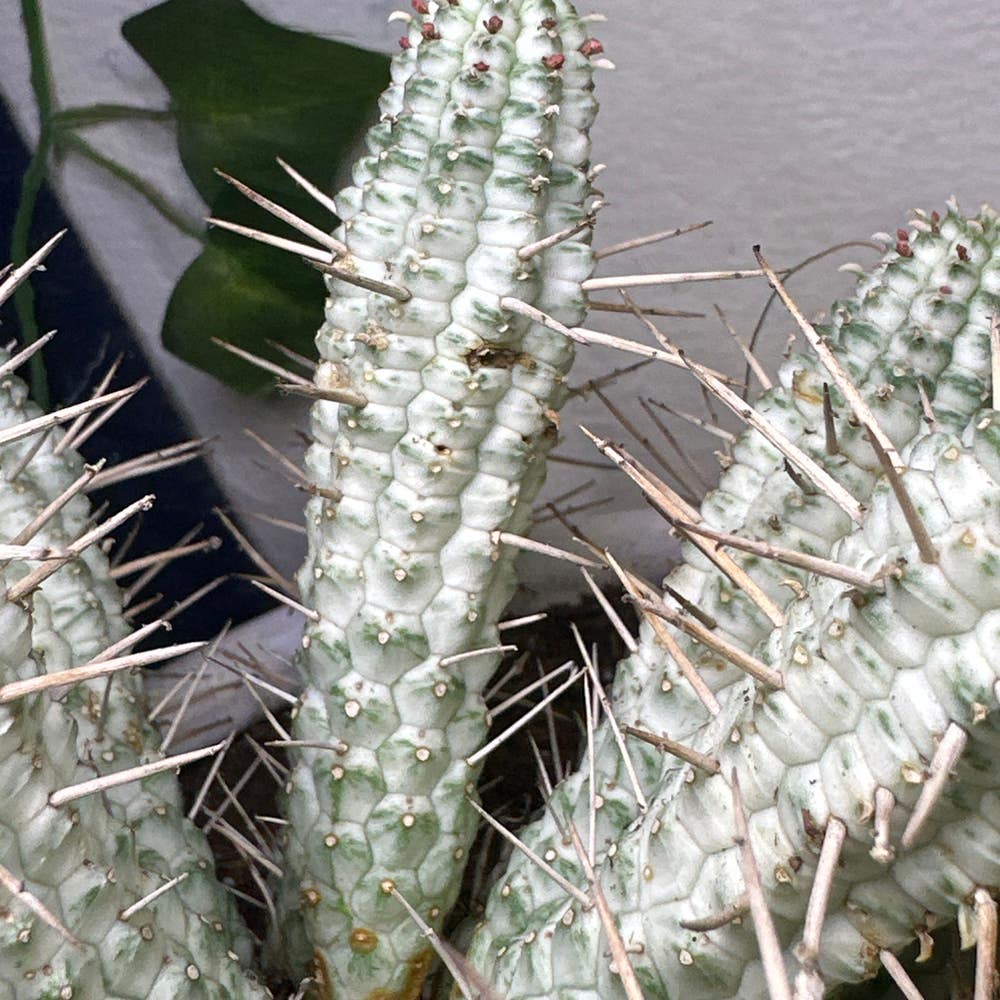
🌵 How Much Humidity Does My Corncob Cactus Need?
Euphorbia venefica
By the Greg Editorial Team
Jun 18, 2024•3 min read
This article was created with the help of AI so we can cover more plants for you. May contain errors. See one? Report it here.
- 40-60% humidity ideal for Corncob Cactus health.
- 🌵 Shriveled or moldy? Check humidity with a hygrometer.
- Group plants or use humidifiers to increase; fans or dehumidifiers to decrease.
The Sweet Spot: Ideal Humidity for Corncob Cactus
Finding the ideal humidity for your Corncob Cactus is like tuning a guitar – it needs to be just right. These cacti prefer their air like their soil: not too wet, not too dry. The sweet spot? 40-60% relative humidity.
🌵 Signs of Too Low Humidity
When the air's drier than a stand-up comedian's humor, your cactus feels it. Shriveled leaves are a cry for help, a sign that your plant's thirstier than a marathon runner without a water station.
🌧️ Signs of Too High Humidity
Conversely, if your cactus starts looking like it's sweating more than a nervous public speaker, that's too much moisture. Yellowing or a moldy base are your cactus's way of saying the humidity's cranked up too high. Keep it in check, or you'll be dealing with a fungal fiesta.

Measuring Up: Tools to Track Humidity
🌡️ Hygrometers: Your Secret Weapon
Hygrometers are the undercover agents in the world of plant care, giving you the scoop on humidity levels without breaking a sweat. They come in digital forms, often paired with thermometers, because let's face it, temperature and humidity are the Bonnie and Clyde of plant comfort zones. Place one near your Corncob Cactus, but dodge direct sunlight and drafts like you're avoiding spoilers for the latest hit show.
🌦 Reading the Signs: Local Weather as a Humidity Indicator
Your local weather forecast isn't just for deciding whether to grab an umbrella or sunglasses. It's a treasure trove of clues for indoor humidity levels. Keep an eye on those humidity percentages broadcasted alongside the temperature. They're like the headlines for what's happening in the air around your green buddy. If the outside world is a moisture fest, chances are your indoor jungle is soaking it up too. Conversely, a dry spell outdoors often means your indoor air is thirsty as well.

Balancing Act: Adjusting Humidity for Your Corncob Cactus
🌿 Boosting Humidity
🌱 Plant Buddies
Grouping plants together creates a microclimate that naturally elevates humidity. It's like your plants are throwing a potluck, and everyone's bringing moisture to the table.
🚫 The Misting Myth
Misting might seem like a quick fix, but it's more of a temporary relief than a long-term solution. Overdoing it can invite pests and diseases, turning your cactus's home into a not-so-fun fungal fair.
💨 Humidifiers: The High-Tech Humidity Hero
A humidifier is like a personal rain cloud for your Corncob Cactus. Keep it on a whisper-quiet setting to maintain that just-right moisture level without creating a tropical storm.
🌵 Reducing Humidity
🌀 Airflow Aficionado
A fan is your plant's best friend when it comes to reducing humidity. It's like giving your cactus a breeze whisperer that wards off excess dampness.
🌬️ Dehumidifiers: Sucking the Moisture Out
When the air feels more like a swamp than a desert, a dehumidifier is your go-to gadget. It's like having a moisture vacuum that keeps your cactus happy and dry.
📍 The Right Spot
Location, location, location. Placing your Corncob Cactus in the right spot can affect its vibe. Avoid areas with high humidity, like bathrooms, to prevent your plant from living in a moisture minefield.

⚠️ Safety First
This content is for general information and may contain errors, omissions, or outdated details. It is not medical, veterinary advice, or an endorsement of therapeutic claims.
Always consult a qualified healthcare professional before using any plant as food, medicine, or supplement.
Never eat any plant (or feed one to pets) without confirming its identity with at least two trusted sources.
If you suspect poisoning, call Poison Control (800) 222-1222, the Pet Poison Helpline (800) 213-6680, or your local emergency service immediately.
Spotted an error? Please report it here.
Keep your Corncob Cactus thriving 🌵 by using Greg to monitor and adjust your home's humidity, ensuring it's always at the ideal level.