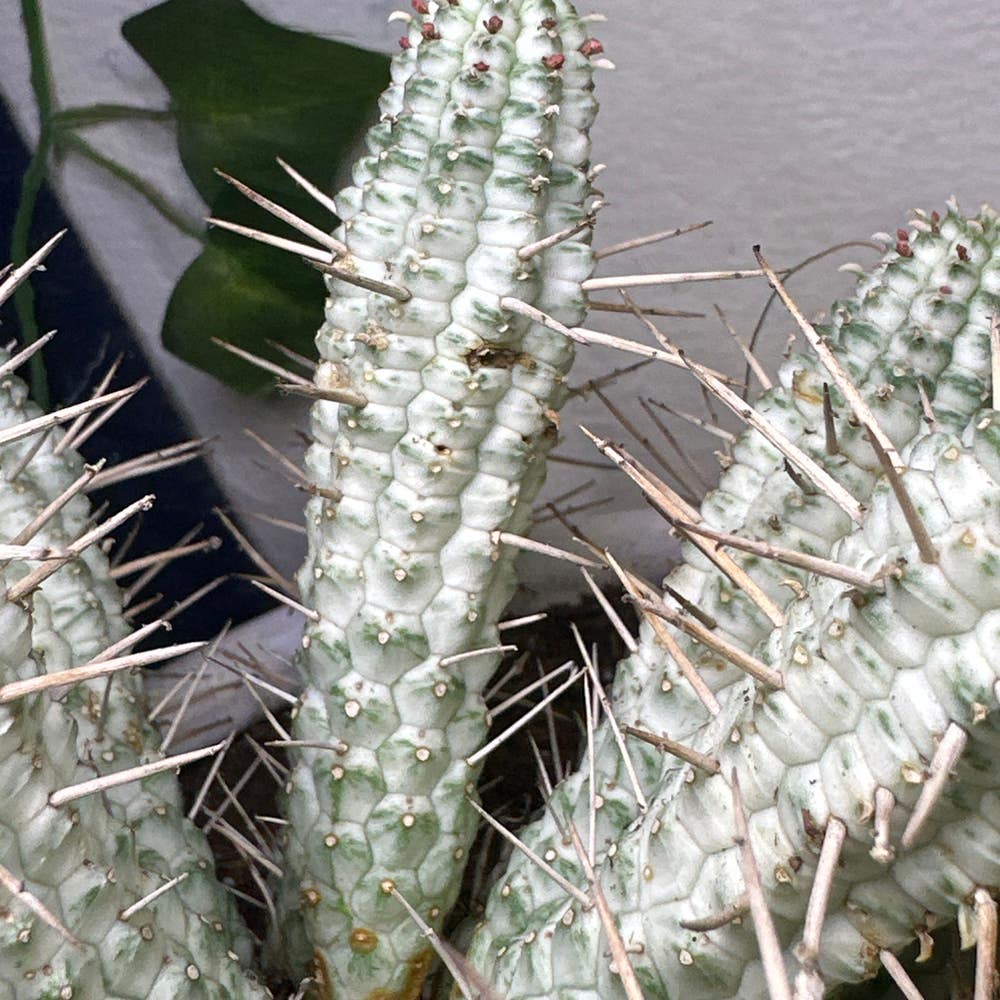
Why Are There Brown Spots on My Euphorbia venefica?
Euphorbia venefica
By the Greg Editorial Team
Jun 18, 2024•4 min read
This article was created with the help of AI so we can cover more plants for you. May contain errors. See one? Report it here.
- Over/underwatering and sunburn cause brown spots on Euphorbia venefica.
- Balance light and water for a spot-free, thriving plant.
- Regular inspections prevent severe issues; think plant health insurance.
What's with the Brown Spots?
🕵️ Spotting the Culprits
Brown spots on your Euphorbia venefica can be as varied as the reasons behind them. They might appear as small, isolated dots or large, irregular patches, often on the leaves' edges or tips. Location and pattern are your first clues in the brown spot detective game.
🕵️ The Usual Suspects: Causes of Brown Spots
💦 Too Much Love: The Overwatering Connection
Overwatering is the most affectionate killer. Your Euphorbia venefica's roots might be drowning in love, leading to soft, brown spots on the leaves. Remember, your plant's not a fish; it doesn't need to swim.
🏜️ Thirsty Roots: How Underwatering Plays a Role
On the flip side, underwatering can leave your plant's roots gasping. The result? Dry, crispy spots that signal a thirsty plant. It's a tough love scenario where less isn't always more.
🌞 Sunburnt Leaves: When Your Plant Gets Too Much Sun
Like a beachgoer without sunscreen, your Euphorbia venefica can get sunburnt. Too much direct sunlight causes bleached, lifeless spots, especially on the most exposed parts. It's a tan gone wrong.

Kicking Brown Spots to the Curb
💧 Watering Wisdom
Finding the right watering balance for your Euphorbia venefica is crucial. Overwatering can lead to root rot, while underwatering stresses the plant, both manifesting as brown spots. The soil should feel like a well-wrung sponge—moist but not soggy. Water thoroughly, then allow the soil to dry slightly between waterings.
🌱 Soil Sleuthing
To check soil moisture without guesswork, use a moisture meter or the finger test—insert your finger up to the second knuckle. If the soil feels dry at that depth, it's time to water. Consistency is key, but be prepared to adjust based on your plant's feedback and seasonal changes.
☀️ Creating a Cozy Home
Light and shade balance is essential. Euphorbia venefica thrives in bright, indirect light. Too much direct sunlight can cause sunburn, leading to brown spots. Rotate your plant regularly to ensure even light exposure.
🌡️ Temperature Tips
Avoid plant stress by keeping your Euphorbia venefica away from drafts and sudden temperature changes. Maintain a steady temperature that mimics the plant's natural habitat—not too hot, not too cold.
🐛 Battling Bugs and Blights
Regularly inspect your plant for pests and diseases. Early identification is the best defense. Look for telltale signs like sticky residue or discolored leaves.
💥 Fight Back
If you spot trouble, isolate the affected plant and treat it with appropriate remedies. Neem oil or insecticidal soap can be effective against pests, while fungicides may be required for certain diseases. Always follow the manufacturer's instructions carefully.
Remember, the goal is to create a stable environment that prevents issues from arising in the first place. Proactive care beats reactive panic every time.

Stopping Spots Before They Start
🌟 The Perfect Pad for Your Plant
Crafting the ideal environment for your Euphorbia venefica is like setting the stage for a star performer. Light, water, and soil are the non-negotiables for a thriving plant.
Light
Bright, indirect light is your Euphorbia's best friend. Direct sunlight? Not so much—it's the equivalent of a harsh spotlight that can leave your plant with unsightly burns.
Water
💧 Water sparingly, allowing the soil to dry out between waterings. Overwatering is the fast track to root rot and those dreaded brown spots.
Soil
A well-draining cactus or succulent mix is the ticket. It's like a comfy bed that doesn't hold onto the wetness for too long.
Plant Patrol: Regular Check-Ups
Routine inspections are your chance to play detective. Keep an eye out for the early signs of stress or infestation.
Visual Inspection
🔍 Look for changes in leaf texture, color, or shape. Anything out of the ordinary could be a cry for help.
Proactive Measures
Be the guardian your Euphorbia deserves. A little 🛡️ preventive care goes a long way—think of it as health insurance for your plant.

⚠️ Safety First
This content is for general information and may contain errors, omissions, or outdated details. It is not medical, veterinary advice, or an endorsement of therapeutic claims.
Always consult a qualified healthcare professional before using any plant as food, medicine, or supplement.
Never eat any plant (or feed one to pets) without confirming its identity with at least two trusted sources.
If you suspect poisoning, call Poison Control (800) 222-1222, the Pet Poison Helpline (800) 213-6680, or your local emergency service immediately.
Spotted an error? Please report it here.
Prevent those pesky brown spots 🌟 on your Euphorbia venefica with Greg's custom reminders for the perfect water and light balance, ensuring your plant's health and happiness.