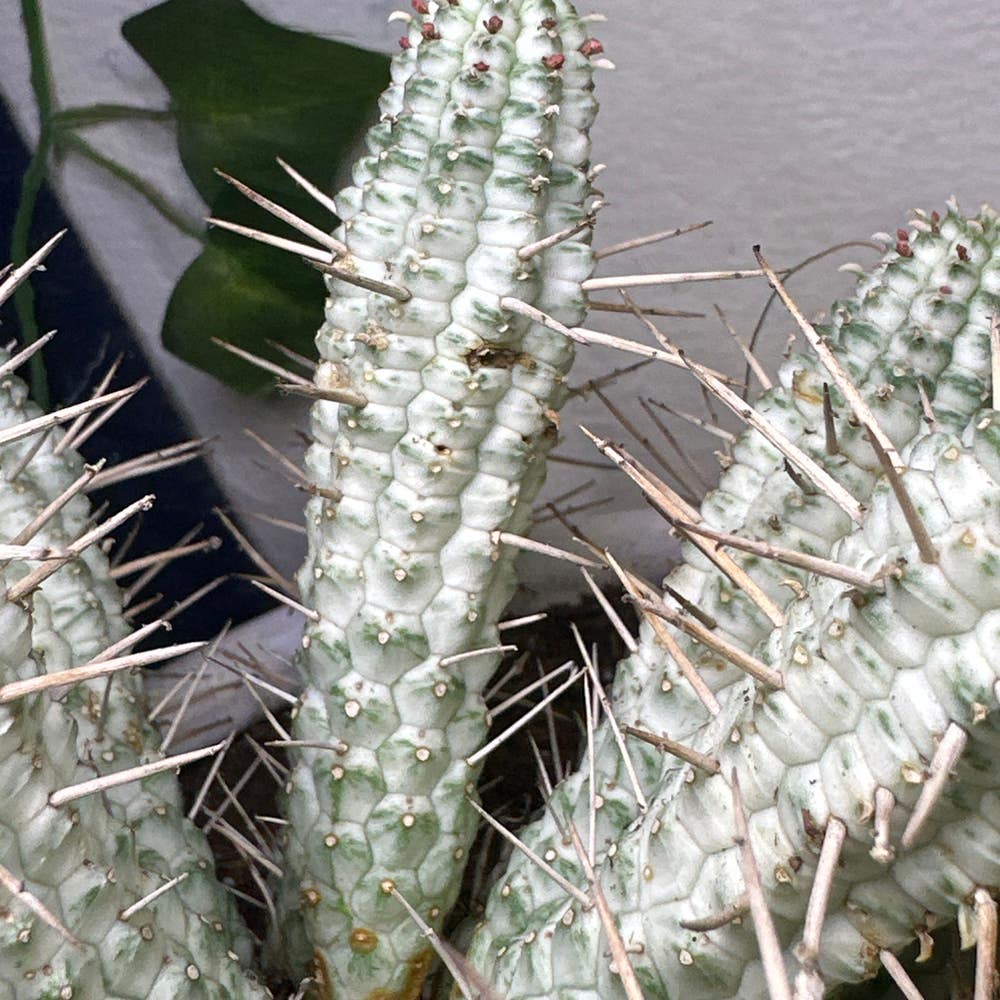
Why Are My Euphorbia venefica Leaves Curling?
Euphorbia venefica
By the Greg Editorial Team
Jun 18, 2024•5 min read
This article was created with the help of AI so we can cover more plants for you. May contain errors. See one? Report it here.
- 🌞🌡️ Sunlight and temperature balance is crucial to prevent leaf curling.
- 💧 Watering just right avoids over/underwatering issues and root rot.
- 🕵️♂️ Regular inspections for pests and diseases ensure healthy Euphorbia venefica.
Spot the Signs: Identifying Leaf Curling Causes
🌞 Environmental Culprits
Too much sun or a lack of it can make or break your Euphorbia venefica's leaf health. If your plant's leaves resemble a piece of fried bacon, it's time to reassess its sunbathing habits. Temperature fluctuations are another mood killer for this plant; keep it away from drafts and sudden changes in heat to avoid leaf curling.
💧 Humidity: Friend or Foe to Euphorbia venefica?
Humidity levels can turn your plant's day from good to bad. Too dry, and you'll find the leaves curling like they're trying to conserve every last drop of moisture. Too humid, and you might as well be in a rainforest. Aim for that Goldilocks zone of moisture in the air.
🐜 Pests and Pathogens
Unwanted Guests: Common Pests Linked to Leaf Curling
Pests like spider mites and mealybugs are notorious for turning lush leaves into their personal all-you-can-eat buffets. Look for subtle signs of infestation, such as fine webbing or a sticky residue, and show these party crashers the door.
Fungal and Bacterial Foes: Recognizing Disease Symptoms
Diseases can be stealthy, but symptoms like yellowing leaves or brown spots are the red flags you need to watch for. These could indicate a fungal or bacterial infection, and catching them early is key to saving your plant from a downward spiral.

Water Woes: The Balancing Act
💦 Overwatering Overwhelm
Limp leaves and a soil consistency that's reminiscent of a wet sponge are telltale signs that your Euphorbia venefica is getting more water than it can handle. If the pot feels like a mini swamp, it's time to dial back on the watering.
Root rot is the silent killer that follows overwatering. It's the plant equivalent of a sinking ship; once it starts, it's a race against time to save your Euphorbia.
🏜️ Underwatering Unease
When the tips of your Euphorbia venefica's leaves start resembling crispy crackers, it's a clear signal the plant is thirsting for moisture. Dry, lifeless soil is a red flag that you're underwatering.
If the pot feels lighter than your conscience on cheat day, it's a sign that your plant is in desperate need of a drink. Hydrate accordingly, but don't turn the soil into a mud bath.
🚰 Drainage Dilemmas
The key to avoiding both over and underwatering is ensuring proper drainage. Your Euphorbia venefica's pot should not be holding water like a dam.
If the soil is more waterlogged than a rainforest floor, consider a mix that's better at draining, perhaps with a bit of gravel or perlite. Your plant's roots need to breathe, not swim.

Tactical Treatment: Turning Over a New Leaf
🌿 Environmental Adjustments
🌞 Tweaking Light and Temperature
Euphorbia venefica has a Goldilocks zone for light and temperature. Too much sun and the leaves throw a fit; too little and they sulk. Find that sweet spot where the light is bright but indirect, and the temperature is steady—no wild swings from sauna to freezer.
💧 Humidity Hacks
Humidity can be a silent leaf curler. These plants don't want to swim through the air, nor do they enjoy desert dryness. Aim for moderate humidity and watch your plant perk up. If your air is drier than a stand-up comedian, consider a humidifier or a pebble tray with water.
🐜 Pest Patrol and Disease Defense
🚪 Evicting Pests
Pests are like bad roommates; they eat your food and never clean up. If you spot any freeloaders, show them the door with a strong stream of water or insecticidal soap. Neem oil can also be a game-changer, but test it on a leaf first to avoid a plant meltdown.
⚔️ Battling Back Against Diseases
Diseases can turn your Euphorbia venefica into a botanical horror show. If you see funky spots or rot, it's time to play plant doctor. Remove affected areas with clean, sharp tools. Disinfect the cuts and consider a fungicide, but always read the label—your plant's life depends on it.

Prevention: The Best Cure
🕵️ Routine Inspections
Regular check-ups are crucial. Like a personal trainer keeping tabs on your fitness, inspect your Euphorbia venefica with the same diligence. Look for early signs of distress, such as discoloration or pests. Catching these early can mean the difference between a quick fix and a full-blown plant crisis.
🔄 Care Consistency
Watering is not a guessing game. It's about precision and timing. Ensure the soil is dry before giving your plant a drink. Overwatering is like overeating—it feels good at the moment but leads to regrettable outcomes.
Light and temperature need to be just right. Think of your Euphorbia venefica as a Goldilocks plant—not too hot, not too cold. Bright, indirect sunlight is the sweet spot.
Humidity should be moderate. If your plant's leaves could talk, they'd ask for a spa day, not a sauna session. Keep the air around your Euphorbia venefica fresh and moving to avoid stagnant, moisture-laden environments.
Remember, the best offense is a good defense. Keep your Euphorbia venefica's care on point, and you'll keep those leaves uncurled and flourishing.
⚠️ Safety First
This content is for general information and may contain errors, omissions, or outdated details. It is not medical, veterinary advice, or an endorsement of therapeutic claims.
Always consult a qualified healthcare professional before using any plant as food, medicine, or supplement.
Never eat any plant (or feed one to pets) without confirming its identity with at least two trusted sources.
If you suspect poisoning, call Poison Control (800) 222-1222, the Pet Poison Helpline (800) 213-6680, or your local emergency service immediately.
Spotted an error? Please report it here.
Ensure your Euphorbia venefica thrives with crisp leaves 🍃 by letting Greg tailor your plant care routine to prevent leaf curling, as guided by this article's expert advice.