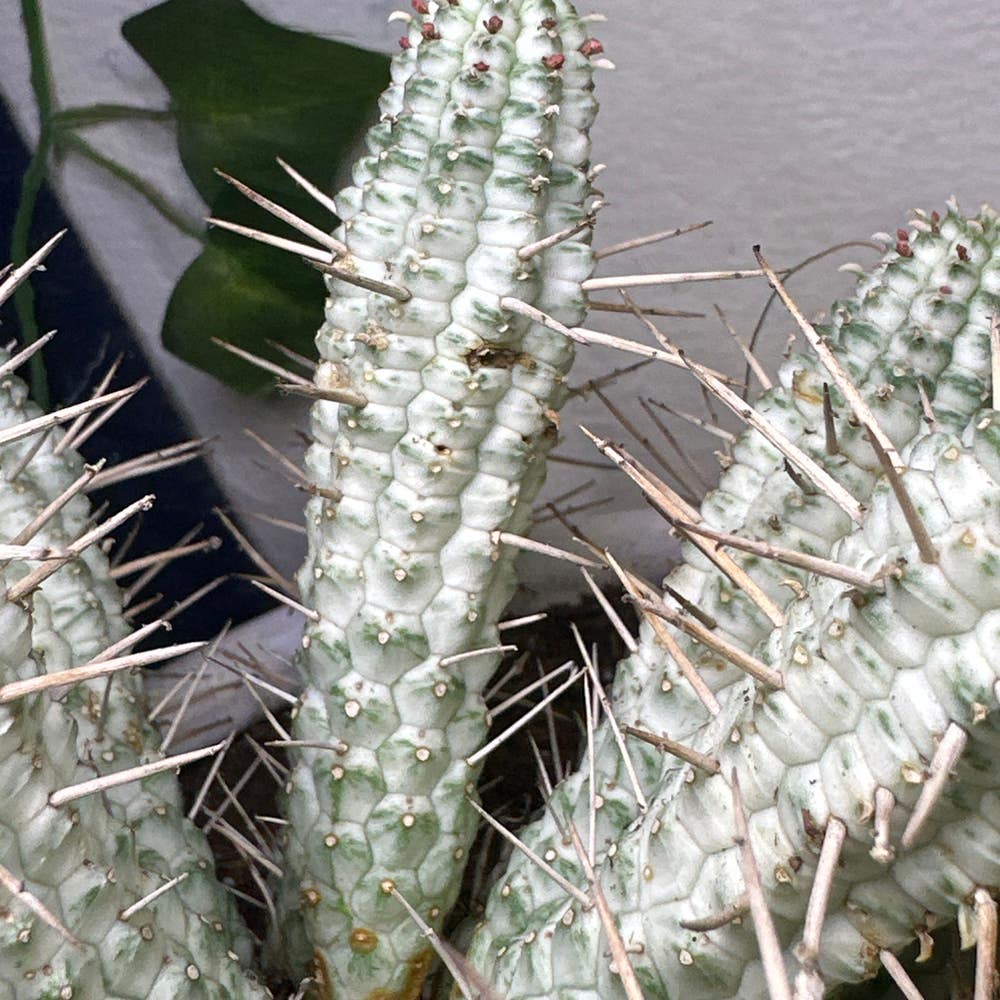
🌽 Why Does My Corncob Cactus Have Yellow Leaves?
Euphorbia venefica
By the Greg Editorial Team
Jun 18, 2024•4 min read
This article was created with the help of AI so we can cover more plants for you. May contain errors. See one? Report it here.
- Yellow leaves signal aging or care issues, like over/underwatering or nutrient needs.
- 🌞🌵 Sunburn shows as crispy patches; use indirect light and sheer curtains.
- Pests and diseases cause yellowing, so inspect regularly and use neem oil if needed.
Spotting Trouble: When Yellow Isn't Mellow
🍂 Natural Aging vs. Warning Signs
Yellow leaves on a Corncob Cactus can be misleading. If it's the older, lower leaves that are changing color, they might just be taking a final bow. However, if the top leaves are turning yellow, it's time to re-evaluate your care routine.
💦 Too Much H2O? The Overwatering Conundrum
Overwatering is a common misstep. Musty soil is a red flag, indicating that your cactus is more waterlogged than a sunken ship. To remedy this, let the soil dry out completely before giving your cactus another drink.
🌵 Thirsty Spikes: The Underwatering Equation
Conversely, a cactus with brown tips and a wilted appearance is a cry for help. It's begging for hydration, but don't just flood it—water deeply and then allow the soil to dry out to avoid the pendulum swing back to overwatering.

Sun Kissed or Sun Scorched?
🌞 Reading the Leaves: Sunburn Symptoms
Even the hardiest cacti can get too much sun. Sunburn on your Corncob Cactus will show up as crispy, brown patches, often on the most exposed parts of the plant. These areas might look bleached, with the green color fading to a pale, washed-out tone. If your cactus is sporting what looks like a bad tan, it's time to reassess its sunbathing habits.
🏖 Shady Solutions: Preventing the Burn
Protection is key to preventing sunburn. Start by moving your cactus to a spot with indirect sunlight, especially during the sun's peak hours. Consider using a sheer curtain to soften the rays. Rotating the plant regularly can help ensure all sides get their fair share of light without overdoing it. And remember, gradual changes are better than sudden shifts to prevent shock.

Feeding Frenzy: Nutrients and Your Cactus
🚜 The Yellow Flag of Nutrient Deficiency
Yellowing leaves on your Corncob Cactus can be a red flag for nutrient deficiency. It's like your cactus is waving a tiny yellow banner, begging for a balanced meal. Iron deficiency will have new growth looking washed out, while a lack of magnesium turns leaf veins into a yellow road map. If the older leaves are turning yellow but the new ones are still green, your cactus might be hinting at a sulfur shortage. And let's not forget nitrogen—without it, your cactus's color fades faster than a cheap dye job.
🌱 A Balanced Diet: Fertilizing Fundamentals
Think of fertilizing your Corncob Cactus as a precision task—it's more about the scalpel than the hammer. A balanced, water-soluble fertilizer with an even NPK ratio is what you're aiming for. But remember, moderation is your mantra; over-fertilizing can lead to root burn, turning your cactus's leaves as yellow as a school bus. Stick to the recommended dosage, and if you're using tap water, consider switching to filtered or rainwater to avoid salt buildup. It's like giving your cactus a spa day—minus the cucumber slices. And if you're ever in doubt, a soil test can be as enlightening as a lightbulb moment.

Bug Battles and Disease Defenses
🐛 Pests and Pathogens: The Yellow Leaf Culprits
Yellowing leaves on your Corncob Cactus can be a red flag for pest and pathogen infestation. Spider mites are notorious for their web-spinning shenanigans, leaving your cactus speckled. Mealybugs and aphids are the sticky and sap-sucking duo turning your plant's life sour. Fungal foes like mold and mildew thrive in moist conditions, showcasing their presence with fuzzy growths. It's a jungle out there, and these are the usual suspects.
🛡️ Fortifying Your Cactus: Prevention and Cure Tactics
To keep your cactus from becoming a bug buffet, vigilance is key. Regular inspections can spot trouble before it escalates into a crisis. Introduce ladybugs or lacewings to naturally curb aphid and mite populations. They're like your personal garden security team. For those uninvited fungal guests, ensure your cactus's soil is well-draining and keep your tools sanitized. When chemical intervention is necessary, opt for insecticidal soap or neem oil – they're tough on pests but gentle on your green buddy. Remember, the best defense is a good offense; proper care and a clean environment are your cactus's armor.
⚠️ Safety First
This content is for general information and may contain errors, omissions, or outdated details. It is not medical, veterinary advice, or an endorsement of therapeutic claims.
Always consult a qualified healthcare professional before using any plant as food, medicine, or supplement.
Never eat any plant (or feed one to pets) without confirming its identity with at least two trusted sources.
If you suspect poisoning, call Poison Control (800) 222-1222, the Pet Poison Helpline (800) 213-6680, or your local emergency service immediately.
Spotted an error? Please report it here.
Unravel the mystery of your Corncob Cactus's yellow leaves and nurture 🌵 it back to health with Greg's precise care adjustments and proactive pest management!