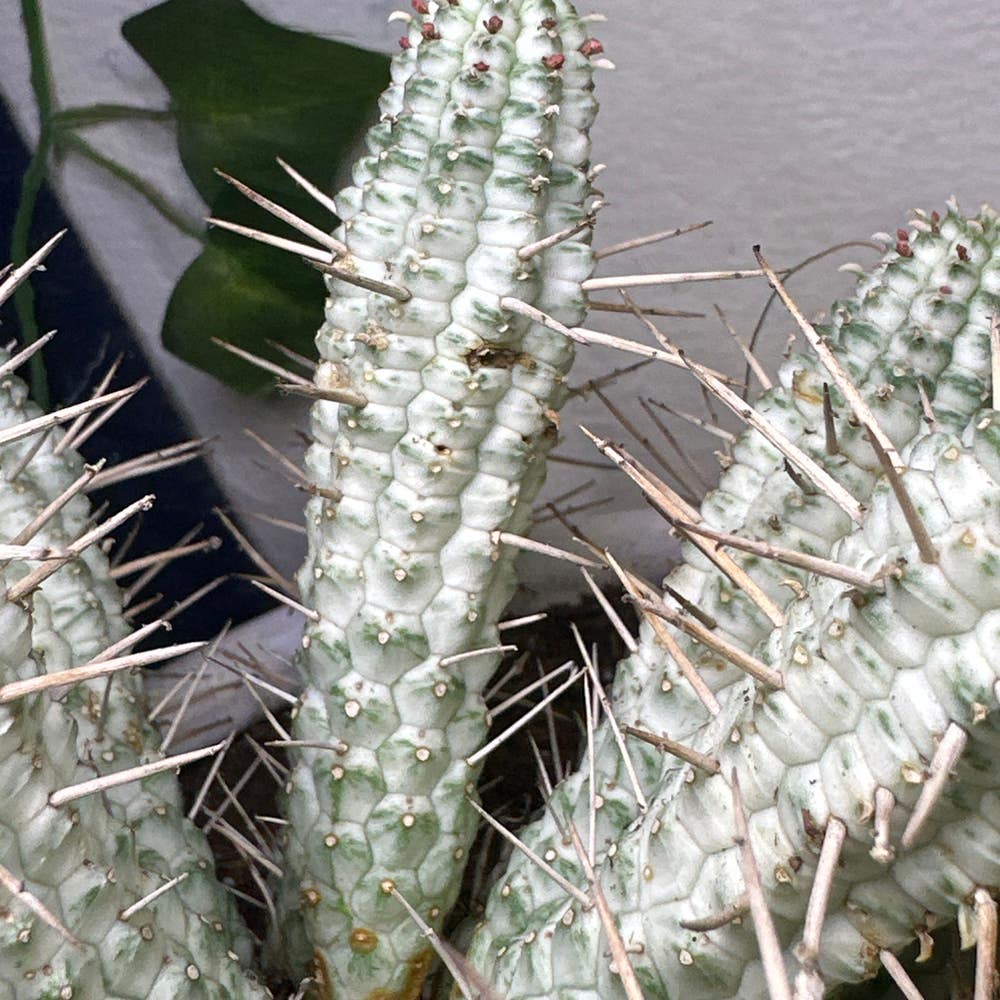
Why Are My Euphorbia venefica Leaves Falling Over?
Euphorbia venefica
By the Greg Editorial Team
Jun 18, 2024•4 min read
This article was created with the help of AI so we can cover more plants for you. May contain errors. See one? Report it here.
- Overwatering leads to limp leaves; let soil dry before watering again.
- Bright, indirect light is crucial; rotate plant for even growth.
- Combat pests and diseases with insecticidal soaps and good air circulation.
When Water Woes Weigh Down Your Euphorbia
💧 Too Much H2O: The Overwatering Problem
If your Euphorbia venefica is looking more like a limp noodle than a perky plant, overwatering might be the culprit. Mushy leaves and soil that sticks to your fingers are distress signals. It's time to reassess your watering habits before root rot turns your plant into a goner.
How to Dry Out the Dilemma: Adjusting Your Watering Routine
First, let's get those roots some air. Hold off on the water and let the soil dry out. Check the soil's moisture by feeling an inch below the surface; if it's dry, it's safe to water. Remember, your Euphorbia prefers a drink only when it's thirsty, not a constant flood.
🚰 The Drainage Game
Choosing the Right Soil Mix
Your Euphorbia's roots need to breathe, and the right soil mix is like a good pair of lungs. Mix in perlite or coarse sand with regular potting soil to create a well-draining environment. This keeps the roots snug but not suffocating.
Picking the Perfect Pot
Now, about that pot—make sure it's got drainage holes. A pot without them is like a bathtub with no drain, and nobody wants to swim 24/7. Terracotta pots are a bonus for their wicking properties, helping to keep the soil's moisture level just right.

Light Levels: Finding the Sweet Spot
⛅️ Stretching for the Sun: How Low Light Leads to Limp Leaves
Euphorbia venefica craves bright, indirect light to maintain its upright posture. Too little light, and you'll witness a sad display of droopy leaves.
🌟 Understanding the light needs of Euphorbia venefica
Euphorbia venefica thrives in a Goldilocks zone of light—not too much, not too little. It's a delicate balance to prevent the leaves from falling over in despair.
💡 Practical tips for perfect placement and light sources
- Rotate your plant regularly to ensure even growth and prevent it from leaning towards the light like a sun-starved zombie.
- If natural light is scarce, artificial grow lights can be a game-changer. LED options are particularly effective for perking up your Euphorbia venefica.
- Keep an eye on the seasonal shifts in sunlight; what works in summer may not cut it in winter.
- Reflective surfaces can amplify light conditions. A strategically placed mirror can work wonders without a single move of the pot.
- Test the light levels with a lux meter or simply observe your plant's response. If it's stretching out, it's time for a brighter spot.
- Remember, location is key. A few feet can make the difference between a plant's slump and its stand-up performance.

Bug Battles and Disease Defenses
🐛 Unwanted Guests: Pests That Cause Plant Pout
Pests can turn your Euphorbia venefica from statuesque to slumped. Mealybugs, spider mites, and scale insects are the usual suspects. They suck the life out of stems, leaving them weak and weary. Check for sticky residue or a cotton-like fluff—clear signs of an infestation.
Combat these critters with insecticidal soaps or neem oil, targeting the undersides of leaves where they love to lurk. For a natural approach, enlist ladybugs and lacewings; they're like tiny, hungry mercenaries in your garden.
🍄 Fungal Foes and Viral Villains
Fungal diseases manifest as black spots or wilted shoots. A rotten smell? Could be bacterial trouble. These issues can escalate quickly, turning your plant from lush to mush.
Remove diseased sections with the precision of a plant surgeon. For fungal foes, consider fungicides, but opt for eco-friendly options. Prevention is paramount—ensure good air circulation and avoid overhead watering to keep the foliage dry.

Proactive Plant Parenting: Preventing the Plop
🌱 Consistency is Key: Routine Care for Robust Stems
Euphorbia venefica thrives on predictability. Establish a care schedule that mirrors its natural habitat. This means watering when the topsoil feels dry, not just when you remember. Light is another pillar of this routine; ensure your plant gets its daily dose of bright, indirect sunshine. Temperature fluctuations are a no-go; keep the environment stable to avoid stressing your green companion.
🕵️ Vigilant Vigilance: Regular Health Checks
Regular check-ups are the frontline defense against the droop. Inspect the leaves and stems during each watering session for signs of distress. Soil moisture should be your gauge; aim for moist, not marshy. If the stems are still sagging despite proper watering, consider a lighting audit—perhaps your plant is stretching for more sun. And don't forget the roots; a quick peek at the drainage holes can give you a heads up on potential root rot before it's too late.
⚠️ Safety First
This content is for general information and may contain errors, omissions, or outdated details. It is not medical, veterinary advice, or an endorsement of therapeutic claims.
Always consult a qualified healthcare professional before using any plant as food, medicine, or supplement.
Never eat any plant (or feed one to pets) without confirming its identity with at least two trusted sources.
If you suspect poisoning, call Poison Control (800) 222-1222, the Pet Poison Helpline (800) 213-6680, or your local emergency service immediately.
Spotted an error? Please report it here.
Keep your Euphorbia venefica perky 🌵 with Greg's tailored watering schedules and light optimization reminders, ensuring your spiky friend never droops from neglect.