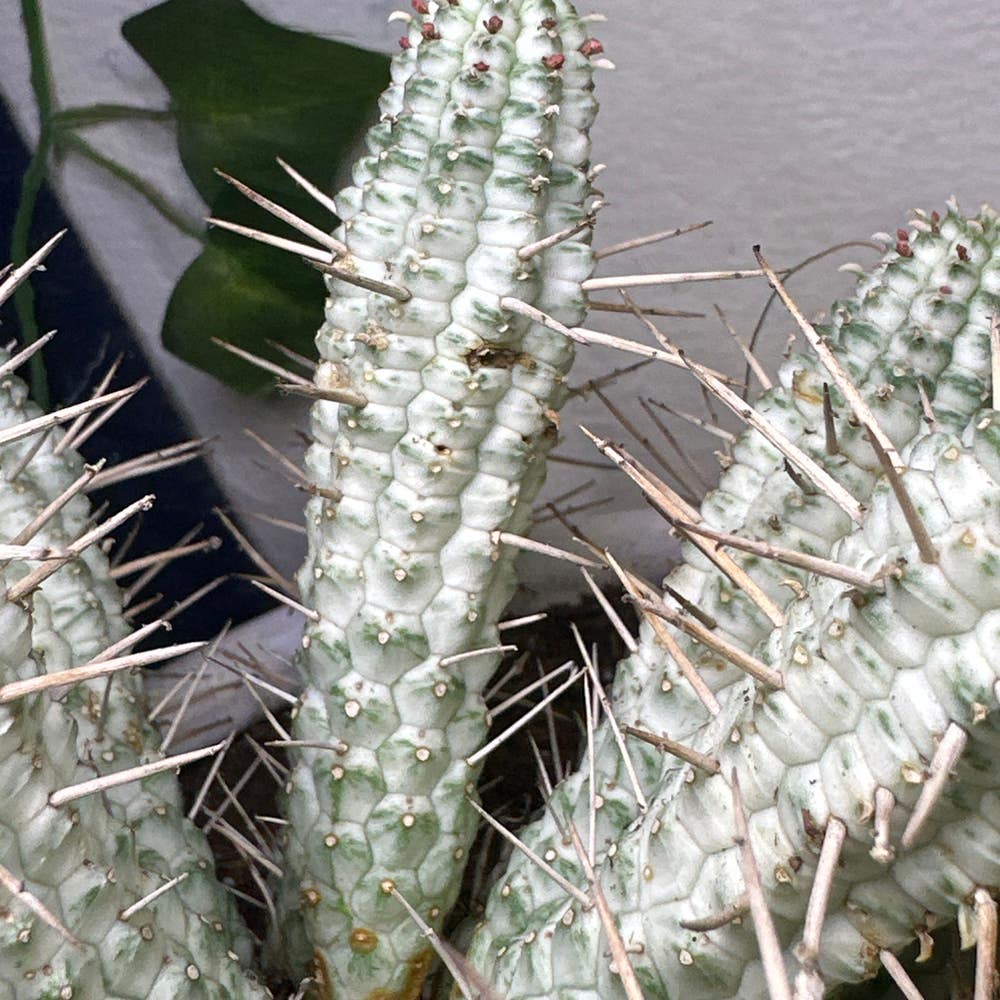
🌽 Why Are My Corncob Cactus Leaves Dropping?
Euphorbia venefica
By the Greg Editorial Team
Jun 18, 2024•4 min read
This article was created with the help of AI so we can cover more plants for you. May contain errors. See one? Report it here.
- Moderate watering is key; water when top inch of soil is dry.
- 🌡️ Stable environment prevents stress, avoid sudden light and temperature changes.
- 🌵 Inspect and treat pests regularly to keep your Corncob Cactus healthy.
Spotting the Signs: When Your Corncob Cactus is Unhappy
🏜️ Underwatering Woes
Shriveled stems on your Corncob Cactus? Dry soil is a dead giveaway it's time to water. But don't flood the desert; moderation is your mantra.
How to quench its needs without going overboard
Water when the top inch of soil is as dry as a stand-up comedian's wit. Deep soak the roots, then let them breathe.
Overwatering Overkill
Soft, yellowing stems are the cactus equivalent of a white flag. Too much water is a no-go. Let the soil dry out like a good joke.
Finding the balance: Watering your Corncob Cactus just right
Balance is key. Think of watering like a perfectly timed punchline – enough to hit the mark, but not so much it flops.
Environmental Stress Signals
Wilting leaves? Your Corncob Cactus might be throwing shade at its conditions. Light and temperature shifts can cause drama.
Keeping your Corncob Cactus comfy: Adapting to new environments
Keep it in a spot that's as consistent as your favorite sitcom. Indirect sunlight and stable temps will keep your cactus from being a diva.
Pest Problems
Pests are the uninvited party crashers. Inspect regularly for freeloaders looking to sap your cactus's vitality.
Evicting pests and safeguarding your Corncob Cactus
Isolate infested plants faster than you'd unfriend a spoiler. Treat with targeted pest control to keep your cactus from ghosting you.

First Aid for Fallen Leaves
🌵 Rescuing from Root Rot
Root rot in Corncob Cacti often stems from overwatering. If your cactus's soil is more waterlogged than a swamp, it's time to take action.
🧐 Diagnosis
Check the roots: healthy ones are firm and white, while rotten roots are mushy and brown. If the roots are more depressing than a flat soda, it's root rot.
💉 Treatment
- Unpot the cactus, gently shake off the old soil, and bid it goodbye.
- Rinse the roots to get a clear view of the damage.
- With sterilized scissors, cut away the rotten roots. It's like giving your cactus a life-saving haircut.
- Let the roots air out before repotting in fresh, well-draining soil. Think of it as moving your cactus into a new, upscale apartment.
🌡️ Calming the Climate
Stress from environmental changes can make your cactus drop leaves faster than a teenager drops their dirty clothes on the floor.
🌿 Stabilizing Environment
- Gradually introduce your cactus to new light conditions to avoid shock. It's not a fan of surprise changes.
- Maintain a consistent temperature and humidity level. Your cactus craves stability more than a hermit crab without a shell.
🌍 Acclimatization Tips
- When moving your cactus, do it over several days. It's not a race.
- Monitor the cactus for signs of distress. If it's more dramatic than a soap opera, dial back the changes.

Prevention is Key: Keeping Your Corncob Cactus Intact
💧 Mastering the Art of Watering
Creating a tailored watering schedule is crucial for the Corncob Cactus. This isn't about dousing your plant on a whim; it's about observing and responding to its needs. During the growing season, water thoroughly every 2-3 weeks, allowing the soil to completely dry out between sessions. In the dormant season, cut back significantly. Think of it as a desert dweller's spa retreat—minimal and refreshing.
Tools and techniques for accurate soil moisture assessment include using your finger to test dryness, or for a more tech-savvy approach, soil moisture meters. These gadgets give you a clear signal to water or wait, taking the guesswork out of your plant care routine.
🌵 Crafting the Perfect Environment
Ensuring the right light, temperature, and humidity for your Corncob Cactus is like setting the stage for a solo performance. Bright, indirect sunlight will make your cactus bask in glory, while direct, scorching rays could lead to a sunburned fiasco. Keep the temperature consistent, avoiding cold drafts or excessive heat.
Seasonal adjustments are the secret sauce to a thriving Corncob Cactus. As the seasons change, so should your care strategy. In summer, your cactus is all about that sun-kissed life, but come winter, it's more about cozy, indirect light and reduced watering. Remember, your cactus's comfort zone is as important as your own.

⚠️ Safety First
This content is for general information and may contain errors, omissions, or outdated details. It is not medical, veterinary advice, or an endorsement of therapeutic claims.
Always consult a qualified healthcare professional before using any plant as food, medicine, or supplement.
Never eat any plant (or feed one to pets) without confirming its identity with at least two trusted sources.
If you suspect poisoning, call Poison Control (800) 222-1222, the Pet Poison Helpline (800) 213-6680, or your local emergency service immediately.
Spotted an error? Please report it here.
Find the sweet spot for your Corncob Cactus care with Greg's 🌵 custom reminders and environment tracking, making leaf drop a thing of the past.