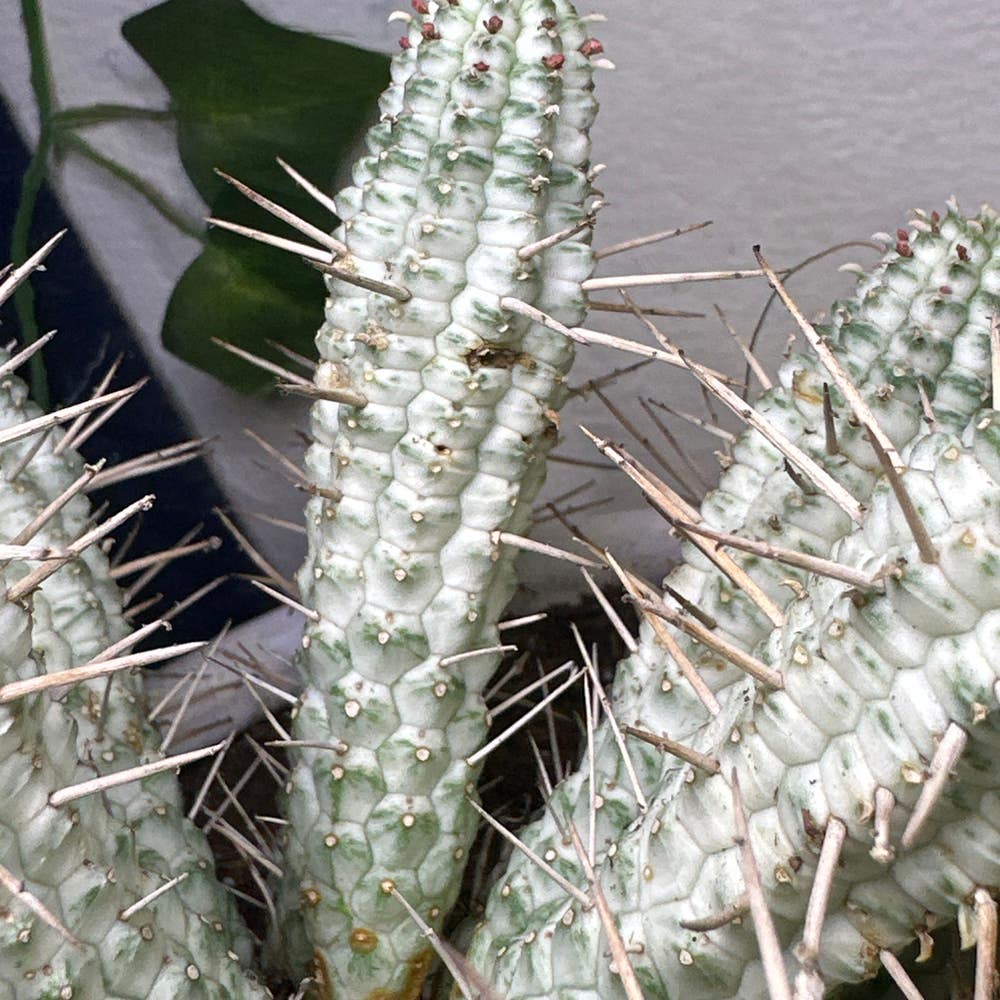
🌵 Why Are My Corncob Cactus Leaves Droopy?
Euphorbia venefica
By the Greg Editorial Team
Jun 18, 2024•3 min read
This article was created with the help of AI so we can cover more plants for you. May contain errors. See one? Report it here.
- Wrinkles and wilting? Underwatering your cactus could be the cause.
- Soft and discolored? Overwatering might be drowning your cactus.
- Leggy growth and pale? Your cactus craves more light.
Spotting the Signs of Distress
💧 Visual Clues of Underwatering
Wrinkles and wilting on your Corncob Cactus aren't a style choice; they're distress flares. If the soil's as welcoming as a desert, it's time to water.
💦 Overwatering Symptoms
A cactus that's softer than your favorite plush toy is crying out from too much water. Discoloration? That's your green friend waving a white flag.
🌞 Light and Temperature Warnings
Leggy growth and a pale complexion are your cactus's way of saying it's not getting the right light diet. If it's leaning like it's trying to escape the pot, reassess its sunbathing habits.

Getting to the Root of the Problem
🌵 Assessing Soil and Drainage
Poor drainage is a cactus's nightmare. It's like putting on a wetsuit and forgetting the snorkel. Your Corncob Cactus's roots can't breathe underwater. Make sure your soil isn't packed tighter than a rush-hour subway. It should be loose, allowing water to flow through like a gossip in a small town.
🕵️ Checking for Root Health
Digging into the soil, you're looking for roots that are firm and white, not brown and mushy. Root rot is a stealthy invader, turning your plant's foundation into a mushy mess. It's the silent killer, often unnoticed until your cactus starts to droop like it's had one too many. If the roots are more slime than sublime, it's time for an intervention.

The Right Way to Water
💧 Fine-Tuning Your Watering Routine
Check the soil before you water; if it's dry to the touch, it's time for a drink. Your cactus's thirst isn't on a schedule, so adjust your watering habits with the seasons. Overwatering? Move your cactus to the shade and ease up on the hydration.
🌱 The Role of Pot Size and Soil Type
Choose a pot that fits your cactus like a comfortable shoe—not too big, not too small, with drainage holes to avoid waterlogging. The soil should be as loose and airy as a cloud, allowing for quick drainage and preventing root rot. Remember, a happy cactus is all about the right pot and soil combo.

Light and Temperature: The Balancing Act
⛅️ Finding the Sweet Spot for Sunlight
Bright, indirect sunlight is the VIP pass for a Corncob Cactus's health. Too much direct sun can lead to a cactus version of a sunburn, while too little leaves it looking pale and underwhelmed. Rotate your plant to ensure even exposure, preventing one side from hogging all the limelight.
🌡️ Keeping the Temperature Just Right
Aim for a stable temperature range, ideally between 18-24ºC (64-75ºF). Avoid placing your cactus near drafty windows or too close to heaters. Think of it as setting up a personal comfort zone for your spiky friend, where it's warm enough to thrive without breaking a sweat.
⚠️ Safety First
This content is for general information and may contain errors, omissions, or outdated details. It is not medical, veterinary advice, or an endorsement of therapeutic claims.
Always consult a qualified healthcare professional before using any plant as food, medicine, or supplement.
Never eat any plant (or feed one to pets) without confirming its identity with at least two trusted sources.
If you suspect poisoning, call Poison Control (800) 222-1222, the Pet Poison Helpline (800) 213-6680, or your local emergency service immediately.
Spotted an error? Please report it here.
Keep your corncob cactus perky and healthy 🌵 by letting Greg guide you on watering schedules, sunlight exposure, and ideal temperatures based on your specific environment.